
What to Discuss with Neighbors Before Building a Fence: The Professional Protocol
A fence is more than a boundary; it's a permanent piece of shared infrastructure that can either solidify a neighborhood’s character or spark a decade-long dispute. You want the security and aesthetic finish of a professional build, yet the thought of property line arguments or asking for cost-sharing often feels like a social minefield. Precision matters. Learning exactly what to discuss with neighbors before building a fence is the essential first step to ensuring your project stands as a testament to good design rather than a spite fence accusation.
We'll show you how to master the art of neighborly diplomacy while maintaining the technical precision required for a high-end installation. This professional protocol moves you from the initial concept to a completed physical result that enhances your property value. We'll outline the entire conversation, covering everything from boundary surveys and HOA permits to the final aesthetic choices that protect both your investment and your reputation. You'll gain a clear plan to navigate local regulations and financial discussions with total confidence, transforming a potential conflict into a collaborative success.
Table of Contents
The Pre-Construction Protocol: Why Communication is a Structural Necessity
Communication is the first pillar of any successful build. While most homeowners view a new fence as a private upgrade, it is actually a shared visual and structural boundary. Proactive dialogue yields a high "Good Neighbor" ROI by preventing expensive legal injunctions that can halt construction after the posts are already set. You don't want your investment labeled a "spite fence," a term often used for structures built primarily to annoy or obstruct a neighbor. Avoiding this label requires transparency and a clear understanding of what to discuss with neighbors before building a fence to ensure the project benefits everyone involved.
There's a critical distinction between a courtesy notification and a request for permission. Unless you're building on a shared property line or seeking financial contribution, you're usually providing a professional courtesy. However, your contractor needs this conversation to happen before the trucks arrive. At The Martinez Company, we prioritize stability and precision. A neighbor who is surprised by a construction crew is a neighbor who might call code enforcement, causing delays that compromise the project’s momentum and your peace of mind.
The Legal Stakes of the Property Line
Guesswork has no place in high-end construction. While fences have served as basic markers throughout history, as detailed in general information on fences, modern legalities require absolute precision. A property survey is a precise legal document that identifies the exact boundary lines and topographical features of a piece of land to ensure accurate fence placement. Relying on old markers or "handshake" agreements is a recipe for future litigation. We recommend a professional boundary survey to distinguish between shared lines and internal setbacks, ensuring your fence remains a permanent asset rather than a legal liability.
HOA and Local Ordinance Alignment
Before you present your vision to the neighbor, you must align it with local reality. Research height restrictions and material requirements through your HOA or city planning office. Present your plan as a neighborhood value add. Instead of focusing on privacy alone, emphasize how high-quality materials and professional craftsmanship will elevate the entire street's aesthetic. This approach transforms a potentially contentious boundary into a shared improvement that protects property values for both parties.
Essential Technical Details to Align on Before Breaking Ground
Technical coordination is where a project transitions from a sketch to a permanent structure. Understanding what to discuss with neighbors before building a fence involves moving past general pleasantries into the specifics of structural coordination. Height is often the first point of friction. While a 6-foot privacy fence is standard, it can significantly impact a neighbor’s "right to light" or obscure a cherished view. Material selection also carries weight. Choosing premium Western Red Cedar or high-end masonry provides mutual benefits, ensuring the structure remains a durable asset for both properties rather than a deteriorating eyesore.
The "Finished Side" rule is a non-negotiable point of etiquette and, in many jurisdictions, a legal requirement. Standard practice dictates that the "pretty" side of the fence faces the neighbor. This demonstrates respect for the community aesthetic and prevents accusations of selfishness. Additionally, you must verify utility easements. Building over a buried line or blocking access to a transformer can lead to the forced removal of your new structure. Our team at The Martinez Company handles these precision property line alignments to ensure your build is both legal and lasting.
Construction Logistics and Access
A build site is a dynamic environment. Discussing heavy equipment access is vital, especially if machinery needs to cross a shared lawn or driveway. Set clear expectations regarding construction noise and daily start times. Most professional crews operate between 7:00 AM and 5:00 PM, but confirming this with your neighbor prevents early morning frustrations. If you have an "open perimeter" phase where the old fence is down, plan for the safety of pets and children to ensure no one wanders into the work zone.
Drainage and Structural Impact
Structural integrity extends below the surface. A new fence should never act as an accidental dam that redirects rainwater onto a neighbor’s yard. Proper engineering ensures that concrete footings are placed with precision, avoiding existing shared structures or root systems. Mismanagement of water runoff is a leading cause of property line disputes that can escalate into costly civil cases. Professional grading and post-placement prevent soil erosion, securing the land’s stability for decades to come.
Navigating the Financial and Maintenance Dialogue
Money often represents the highest hurdle in residential construction. While a new boundary fence benefits both properties, the financial responsibility isn't always a simple split. Determining what to discuss with neighbors before building a fence requires a transparent dialogue about investment and long-term value. You must decide whether the project will be a joint venture or a solo endeavor. Joint ownership shares the burden of cost but requires a consensus on every design choice. Conversely, sole ownership grants you total creative control but places the entire financial and maintenance weight on your shoulders.
Negotiation is an art. Approach the conversation with a clear budget and a professional mindset. If a neighbor sees the value in the upgrade, they're more likely to participate. If they don't, you need a plan to move forward without creating a lasting rift. Stability in your neighborhood relationships is just as important as the stability of the fence posts themselves.
The Cost-Sharing Framework
A 50/50 cost split is the standard for fences placed directly on a shared property line. This arrangement works best when both parties agree on the material and height. If you desire a premium upgrade, such as clear-grade cedar or custom masonry, while your neighbor prefers a basic functional option, etiquette dictates that you cover the price difference. Don't rely on verbal agreements. Document the specific terms in a simple written contract. This prevents future disputes and ensures both parties understand their financial obligations before the first post is set.
If a neighbor refuses to contribute, don't let it stall your vision. You can proceed with the build by placing the structure entirely within your property line setbacks. This ensures you maintain full legal ownership and control over the project's aesthetic finality. It's a clean solution that avoids social tension while securing your property’s perimeter on your own terms.
Long-Term Structural Stewardship
The build doesn't end when the contractor leaves. Fences require ongoing stewardship to maintain their structural integrity and visual appeal. Discuss who will be responsible for staining, pressure washing, and clearing vegetation from the base of the structure. In the event of storm damage, a shared fence usually requires a shared repair effort. However, if you chose sole ownership, those repairs are your responsibility alone. At The Martinez Company, we build for permanence. Since 2014, our focus on precision has helped homeowners avoid the frequent repairs that lead to neighborly friction. A professional build is an investment in peace as much as it is an investment in wood and concrete.
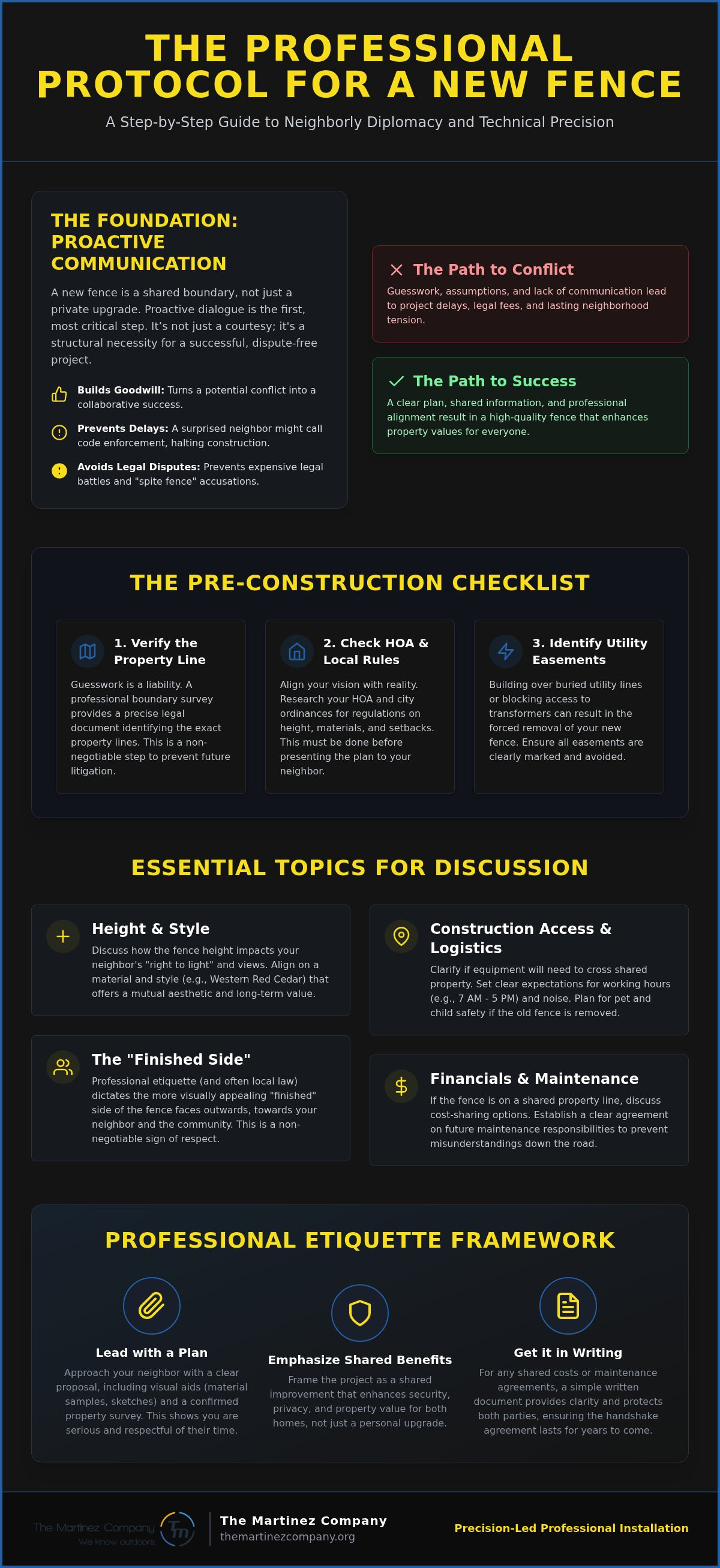
The Professional Etiquette Framework: How to Lead the Conversation
Leadership in construction begins long before the first post hole is dug. Surprises lead to setbacks. By offering a lead time of 2 to 4 weeks, you demonstrate a level of professional courtesy that sets a positive tone for the entire build. This window allows neighbors to adjust their schedules, secure their pets, or raise technical questions without feeling rushed. Knowing exactly what to discuss with neighbors before building a fence includes mastering the delivery of your proposal. Don't rely on a casual shout over the existing line. Instead, schedule a brief meeting and bring a "Visual Aid" strategy to the table. Presenting site plans and material photos transforms a vague idea into a concrete vision, reducing anxiety and building trust through transparency.
Adopting a "Reliable Visionary" mindset allows you to handle objections with calm authority. You aren't just asking for permission; you're leading a transformation of the shared environment. Once the verbal agreement is reached, close the loop immediately. Send a brief email summarizing the heights, materials, and timeline discussed. This written record serves as a touchstone for both parties, ensuring the transition from abstract planning to physical structure remains seamless and undisputed. To ensure your project begins with this level of expert coordination, you can schedule your professional fence consultation with our team today.
A Sample Conversation Script
Your opening statement should be clear, direct, and aspirational. Start by saying, "I have decided to invest in a high-end fence upgrade to enhance our shared property line's security and aesthetic appeal." This establishes the project as a value-add rather than a nuisance. Address the "why" by focusing on mutual benefits like privacy or increased property value. Finally, pivot to the "ask." Instead of asking if you can build the fence, ask about the logistics: "The installation is scheduled for the week of the 12th; does that timeline create any conflicts for you?" This approach maintains your momentum while respecting their boundaries.
Managing Difficult Personalities
Even the best-laid plans can encounter resistance. When facing a difficult neighbor, remain authoritative yet accessible. If a boundary is challenged, rely on the "Protective Expert" stance by referencing your professional survey. Facts settle what emotions cannot. If a disagreement persists regarding the exact property line or material choice, suggest involving a professional surveyor or a neutral third-party mediator. Maintaining a professional distance prevents personal friction from compromising the structural integrity or the eventual success of your project.
Executing the Vision: From Handshake to High-End Installation
The final word in neighborly diplomacy isn't spoken; it's built. While mastering what to discuss with neighbors before building a fence sets the stage for a peaceful project, the actual execution of the build determines the long-term social and structural success of the boundary. A professional installation serves as a visual guarantee of competence. It eliminates the eyesores and structural failures that typically spark post-construction resentment. At The Martinez Company, we approach every project with a focus on precision, durability, and aesthetic finality. We ensure that the "how" of the build is just as impressive as the "what," transforming your property line into a statement of high-end design.
Precision is our hallmark. A fence that leans or a gate that drags isn't just a maintenance headache; it's a social liability. By choosing an elite contracting partner, you ensure that every post is perfectly aligned with the legal property markers identified in your survey. This level of meticulousness prevents the creeping boundary shifts that often lead to future litigation. We bridge the gap between abstract planning and a permanent physical result, delivering a structure that stands as a testament to your commitment to quality and community standards.
The Value of Structural Integrity
Stability begins beneath the surface. Precision concrete footings are the bedrock of a fence that remains straight and secure for decades, resisting the shifting soil and high winds that compromise lesser builds. There is a vast difference between the "good enough" approach of a weekend DIY project and the Martinez standard of perfection. Utilizing high-grade materials like Western Red Cedar is essential for achieving long-term permanence and resisting the warping that often leads to boundary disputes. Our team selects only the finest lumber and masonry components, ensuring your investment remains a source of pride for both you and your neighbor.
Your Next Step in Property Transformation
The time for planning has passed. It's time for execution. Moving from a concept to a completed physical structure requires a partner that handles the heavy lifting of professional construction with rugged confidence. Since 2014, we have specialized in high-quality installations that prioritize structural integrity and aesthetic perfection. We manage the logistics, the precision alignment, and the final finish so you don't have to. Take the final step in securing your perimeter and elevating your outdoor living space. Partner with The Martinez Company for your high-end fence installation.
Securing Your Property with Professional Precision
A high-end fence is more than a boundary; it's a permanent investment in your home’s value and community standing. By mastering exactly what to discuss with neighbors before building a fence, you move from abstract anxiety to a concrete plan for success. Technical alignment on height and materials, combined with clear financial agreements, prevents social friction before it starts. You've navigated the complexities of etiquette and logistics, ensuring your project remains a bridge to better property value rather than a wall between neighbors.
The Martinez Company has maintained exacting standards in fence installation and concrete work since 2014. We are specialists in durable cedar and concrete construction, bringing a commitment to stability and perfection to every project. Our team handles the heavy lifting of precision property line alignment so your build remains a structural and social triumph for decades. Don't settle for a temporary fix when you can achieve aesthetic finality and peace of mind.
Your journey from a handshake to a high-end installation starts with a single decision. Build for permanence.
Frequently Asked Questions
Do I legally have to talk to my neighbor before building a fence?
Legally, requirements vary by jurisdiction, but most local ordinances and HOA bylaws mandate notification for boundary structures. Even without a legal mandate, proactive communication is a structural necessity to prevent costly construction delays. Knowing exactly what to discuss with neighbors before building a fence helps you navigate these local rules while maintaining neighborhood diplomacy. Transparency ensures that your project moves from a concept to a completed physical result without legal interference.
What is the "good side" of the fence, and who should get it?
The "good side" refers to the finished face of the fence where the structural posts and rails are not visible. Professional etiquette and many municipal codes require this side to face your neighbor's property. This practice maintains a consistent community aesthetic and demonstrates a commitment to high-level craftsmanship. At The Martinez Company, we ensure every installation meets these aesthetic standards, providing a polished result that enhances property values for everyone involved.
Can my neighbor stop me from building a fence on my own property?
A neighbor cannot stop a build that is entirely on your property and complies with all local zoning and HOA regulations. They can, however, file a complaint if they believe the structure violates height limits or drainage rules. This is why having a clear plan and a professional survey is vital. It allows you to maintain an authoritative stance, proving that your project meets every legal and structural requirement for permanence.
How far back from the property line should a fence be built?
Fence placement depends on local setback ordinances, which dictate the distance required between a structure and the property line. Some regions allow construction directly on the boundary line, while others require a setback of two to six inches. Consulting a professional survey is the only way to ensure accuracy. This precision prevents future encroachment disputes and ensures the structural integrity of your build remains undisputed for decades to come.
Is it normal to ask a neighbor to pay for half of a new fence?
Asking for a 50/50 cost split is common for fences placed on a shared property line that offer mutual security. However, if you desire a high-end upgrade like premium cedar while they prefer basic materials, you should offer to cover the cost difference. This is a key part of what to discuss with neighbors before building a fence to ensure financial transparency. Clear documentation prevents future friction regarding maintenance and ownership responsibilities.
What happens if my neighbor builds a fence on my property?
If a neighbor builds a fence that encroaches on your land, it is considered a legal trespass. You should first confirm the encroachment with a professional boundary survey. Once the facts are established, you can formally request that the structure be moved to the correct line. Addressing this early prevents "adverse possession" claims and protects your property's long-term value. Our experts prioritize precision to ensure our builds never face these issues.
Should I get a survey before talking to my neighbor?
Yes, securing a professional boundary survey is the most important step before engaging in a dialogue. Facts settle what emotions cannot. Bringing a certified site plan to the meeting establishes you as a "Reliable Visionary" who values accuracy and permanence. It provides a definitive answer to property line questions, allowing the conversation to focus on design and logistics rather than arguments over where your land ends and theirs begins.
How do I handle a neighbor who complains about the noise during construction?
Managing construction noise requires clear communication and strict adherence to professional work hours. Notify your neighbor at least two weeks in advance that crews will be on-site, typically between 7:00 AM and 5:00 PM. Professional installers prioritize efficiency to minimize the duration of the disruption. By setting these expectations early, you demonstrate respect for their peace while moving purposefully toward the completion of your high-end outdoor transformation.


Comments