
Commercial Property Improvement Contractor: A 2026 Planning Guide
What if your next property upgrade isn’t a generic remodel, but a focused plan built around how the site actually works? Finding a commercial property improvement contractor starts with that distinction. Identify which changes matter, define the work, and plan construction around employees, customers, tenants, and daily operations.
When project scopes vary, contractor descriptions can make comparisons difficult. A clear plan connects each improvement to a specific property need instead of letting a list of possible upgrades drive the project. It also gives you a practical way to describe the work and assess whether the result meets your expectations.
This guide explains how to prioritize improvements, shape a workable scope, and plan construction with operations in mind. You’ll learn how concrete work, fencing, and outdoor living improvements can support a commercial property’s use, and what to consider from the first project goal through the final walkthrough. The Martinez Company provides construction services for commercial properties, including concrete, fence installation, and outdoor living work, with a focus on precision and durability. Start with the need, then build toward a lasting improvement.
Table of Contents
What a Commercial Property Improvement Contractor Can Do for Your Building or Site
Match Commercial Property Improvements to the Work the Site Actually Needs
How to Evaluate a Commercial Property Improvement Contractor Without Guesswork
Plan Commercial Property Improvements from First Priorities to Final Walkthrough
Bring Your Commercial Property Improvement Plan to The Martinez Company
What a Commercial Property Improvement Contractor Can Do for Your Building or Site
A commercial property improvement contractor turns a specific need at an existing building or site into a defined construction project. Rather than treating every concern as a full remodel, the contractor can focus on selected upgrades that improve how the property functions, looks, or serves the people who use it. Examples include replacing or adding a concrete surface, installing a fence to define an area, or making an outdoor space more useful.
The role involves more than completing physical work. Like a General contractor, a commercial contractor helps move a project from its goal through construction and completion. A useful scope begins with how the property is used, then identifies the work needed to address the owner’s priorities. Define the issue first, then shape the project around a practical, durable outcome.
When does a commercial property need an improvement project?
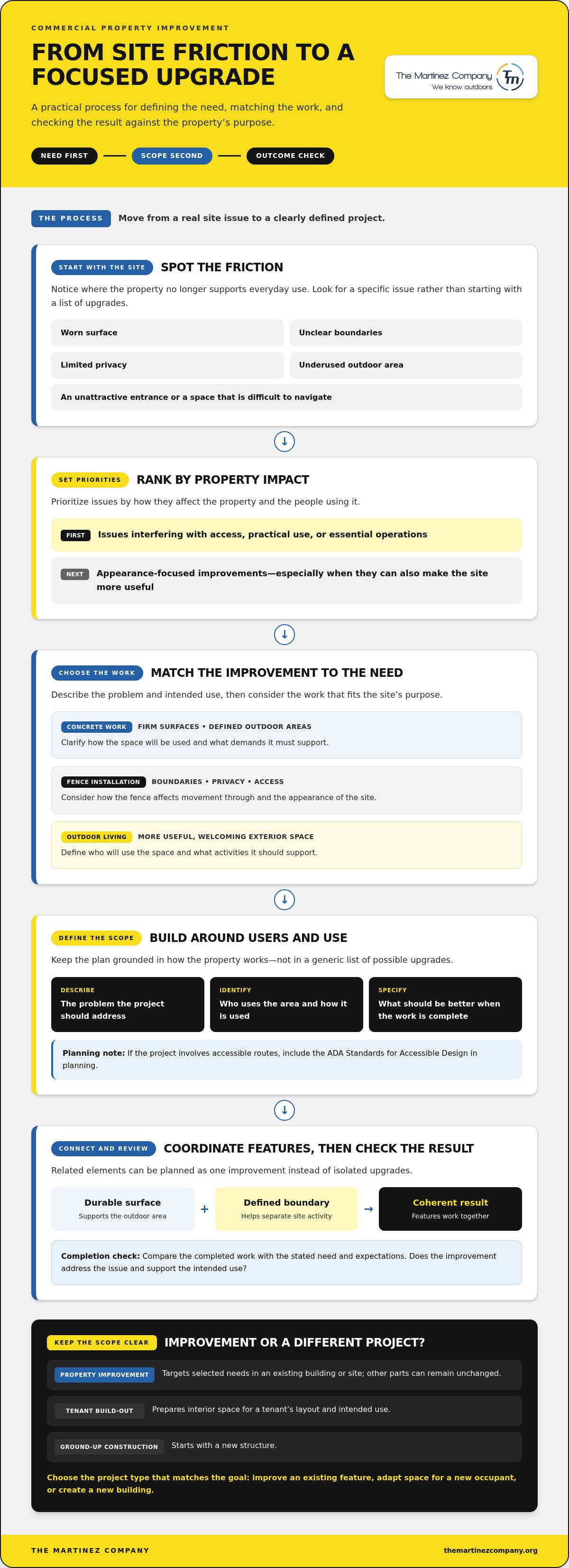
An improvement project may be worth considering when business needs change and a space no longer supports everyday use. An area that once worked well may now be inefficient, underused, or difficult for employees, customers, or tenants to navigate. Look for specific signs of friction: a worn surface, unclear boundaries, limited privacy, an unattractive entrance, or an outdoor area with little practical use.
Rank potential work by its effect on the property. Address issues that interfere with access, practical use, or essential operations before prioritizing visual upgrades. Then consider whether an appearance-focused improvement could also make the site more useful. A defined outdoor area, for example, may support both a more organized layout and better use of exterior space. This approach keeps the scope grounded in current needs while leaving room for enhancements that support longer-term goals.
How is a property improvement different from a build-out?
A property improvement targets selected needs in an existing building or site, while a build-out creates or substantially adapts a space for a particular occupant or use.
Improvement work may be limited to one area or feature without transforming an entire commercial interior. A targeted concrete project, fence installation, or outdoor living construction can address a specific site need while leaving other parts of the property unchanged. The appropriate scope depends on the intended use and the owner’s priorities.
A tenant build-out typically prepares interior space for a tenant’s layout and intended use. Broad commercial remodeling can affect a larger portion of a building, while ground-up construction starts with a new structure. These construction categories are related, but they aren’t interchangeable. Before planning, decide whether the goal is to improve an existing feature, adapt space for a new occupant, or create a building from the ground up. That distinction helps keep the scope focused and the result aligned with the property’s needs.
Match Commercial Property Improvements to the Work the Site Actually Needs
Start with the property’s purpose, not a list of upgrades. A surface used for regular foot traffic has different requirements from an outdoor area intended for customer use. A commercial property improvement contractor can help define construction work around the site’s intended function. For a focused project, describe the problem first, identify who uses the area, and specify what should improve when the work is complete.
When does commercial concrete work make sense?
Concrete work can be a practical option when a property needs a firm surface or a defined outdoor area. Start by noting how people will use the space and the demands it faces during normal operations. For example, consider whether the area is primarily for circulation, access, or outdoor use. These details help shape the project scope and design. Construction details should reflect the specific site and intended use, so define the need before settling on a solution.
How can fencing and outdoor spaces improve a commercial site?
Fencing can establish boundaries, provide privacy, shape access, and contribute to a property’s appearance. Outdoor living construction can make an underused exterior area more functional. Begin by deciding who the space is for and what it needs to support. If the project involves accessible routes, include the ADA Standards for Accessible Design in planning.
Next, consider how features work together. A defined outdoor area may need a durable surface, while a fence may help separate it from other site activity. Planning connected elements as one improvement can create a more coherent result than treating each feature as an isolated upgrade. The Martinez Company provides commercial contracting, concrete, fence installation, and outdoor living construction, with attention to precision and durability. Explore commercial property improvement work as you shape a scope around the site’s needs.
How to Evaluate a Commercial Property Improvement Contractor Without Guesswork
A contractor’s broad capabilities matter less than how well the proposed work fits your property’s needs. Start with the scope. Does it describe the issue, the intended result, and the areas affected? Can the contractor explain how the project will move from planning through construction and completion? The Martinez Company provides commercial contracting and carries projects from concept to completion, with a focus on precision and durable construction.
Check that the work categories match your project. A defined concrete, fencing, or outdoor living scope calls for relevant construction experience, not simply a broad promise to handle any job. Examples of completed work can help you understand that fit. Compare the details: how clearly the work is described, how the proposed approach reflects the property’s use, and how communication will support the project from start to finish.
Code considerations also belong in project planning. The International Building Code (IBC) provides model-code provisions for the built environment, but applicable requirements depend on the project and location. Include code-related considerations in planning discussions when they affect the proposed work.
What makes a project scope clear and workable?
Describe the property need in plain language, then state the desired result and the areas involved. Separate essential construction from optional design enhancements so priorities remain visible. For example, identify which work is necessary to improve how the site functions and which changes would mainly affect its appearance. A clear scope gives the construction plan a firm starting point and makes it easier to review whether the completed work meets the original goal.
How should operational disruption shape your decision?
Map busy periods, entry routes, and areas that need to remain usable. Note how employees, customers, or tenants move through the site and where construction activity could affect that flow. These details can help inform the work sequence and coordination with daily operations. They cannot eliminate all disruption, but they bring its likely impact into planning instead of leaving it until construction is underway.
A commercial property improvement contractor should be able to explain the proposed work in terms of both the construction scope and the property’s use. Keep the discussion focused on clear priorities, relevant work categories, and a practical path from plan to completion. That gives you a stronger basis for moving ahead with improvements designed for the site and its ongoing needs.
Plan Commercial Property Improvements from First Priorities to Final Walkthrough
A well-planned improvement project follows a clear sequence: define the property need, set the scope, account for site conditions and operations, carry out the work, and review the finished result. This sequence helps owners move from a concern to a durable outcome without losing sight of how the property is used.
What should owners prepare before construction planning?
Give the commercial property improvement contractor a practical picture of the site and the intended result. Before planning begins, note the areas involved, the issue in each area, who uses the space, and what a successful improvement should accomplish. Include relevant site details and operating constraints, such as routes that need to stay open or periods when activity is busiest.
Document the need. Describe the property issue and the people or activities it affects.
Set the desired outcome. State what should work better when the project is complete.
Define the scope. Identify the areas and construction work involved, separating essential items from optional enhancements.
Plan for site conditions. Consider access, existing features, intended use, and how material choices support the goal.
Coordinate operations. Share busy periods, entry routes, and spaces that must remain usable so they can inform the work sequence.
Review the completed work. Walk through the project against the agreed scope and intended outcome.
Some improvements may make sense as a combined project; others may be phased to keep priorities manageable. Decide which work is essential now and which can wait. This helps focus the current scope while preserving a clear direction for future improvements.
What should happen during construction and completion?
Keep communication tied to the agreed work. Progress updates should clarify what has been completed, what comes next, and whether access or daily operations need to adjust. If a site condition leads to a proposed change, discuss how it affects the scope before proceeding. That conversation helps everyone understand the decision and how it relates to the project goal.
At the final walkthrough, review the finished work against the agreed scope. Check that the completed areas reflect the planned outcome, and identify any items that need discussion. The walkthrough connects the original property need to the finished construction.
From first priorities to final walkthrough, define the need, plan the scope, coordinate the work, and review the result. The Martinez Company carries commercial projects from concept to completion with a focus on precision and durability. Plan your commercial improvement project with a clear goal and a defined scope.
Bring Your Commercial Property Improvement Plan to The Martinez Company
A strong improvement plan connects four things: the property’s need, the work required, the effect construction may have on the site, and the result you want to achieve. With those priorities clear, it’s easier to shape a focused project instead of treating every possible upgrade as equally urgent. The Martinez Company provides commercial contracting to move construction projects from concept to completion.
How does The Martinez Company approach property improvement work?
The Martinez Company focuses on quality construction, precision, and durability. Its commercial contracting includes defined improvement scopes, with concrete, fence installation, and outdoor living construction available to address different property goals. Concrete can provide a durable surface or a defined area; fencing can establish boundaries or shape access; outdoor living construction can make an exterior space more useful.
The aim is to align the work with how the property serves its users. A clear project brief connects the construction scope to that purpose, whether the priority is function, appearance, access, or a more useful outdoor area. Careful craftsmanship matters from understanding the intended result through carrying out the work. The finished improvement should suit the property’s intended use.
What is the next step for your commercial property?
Begin with a short outline. Note the areas you want to improve, the problem each area presents, who uses the space, and what you want to be different when the work is complete. Add site or operational considerations that may affect access and construction. Then separate essential work from enhancements that could be considered later.
This preparation gives your conversation with a commercial property improvement contractor a practical starting point. It keeps the discussion centered on the property’s needs and the scope that can address them. From there, the project can move toward construction with a defined purpose and a result in view.
Bring your priorities into focus and turn a clear improvement goal into carefully executed construction with The Martinez Company.
Turn Your Property Priorities Into a Durable Plan
A successful improvement starts with a clear need, a focused scope, and a realistic understanding of how construction may affect the people who use the property. Match each upgrade to its purpose, then communicate access and operational needs before work begins. These steps keep decisions grounded in the site’s use and the result you want.
The right commercial property improvement contractor connects project goals to well-executed construction. The Martinez Company provides commercial contracting, concrete work, fence installation, and outdoor living construction. With precision and durability at the center of its work, the company moves defined project goals toward lasting improvements.
Start by outlining the property issue, the areas involved, and your desired outcome. Then take the next step with The Martinez Company: Start planning your commercial property improvement project. A clear goal is the foundation for a stronger property.
Frequently Asked Questions
What does a commercial property improvement contractor do?
A commercial property improvement contractor carries out targeted construction work to upgrade an existing business property or site. A project may focus on function, access, appearance, or outdoor use, depending on the property’s needs. The Martinez Company provides commercial contracting, concrete work, fence installation, and outdoor living construction. Start by identifying the issue, who uses the space, and the result you want, then define a scope that connects the work to that goal.
How do I choose a commercial property improvement contractor?
Choose a contractor whose work aligns with your project and whose process is clear. Define the property issue and desired result, then evaluate scope clarity, communication, relevant work categories, and how construction may affect site access and operations. The Martinez Company handles commercial contracting, concrete, fencing, and outdoor living construction, taking projects from concept to completion. A well-defined scope gives the project a practical foundation and clarifies the intended result.
What improvements can make a commercial property more functional?
Useful improvements depend on how people use the property. Concrete work can create durable surfaces or defined outdoor areas. Fencing can establish boundaries and support privacy or access needs, while outdoor construction can make exterior areas more useful. Commercial contracting can bring related work into a defined project scope. Prioritize changes that address a real site or operational need, then consider optional enhancements that support the property’s appearance and intended use.
Can commercial property improvements be completed while a business is operating?
Construction may affect access and how people use parts of a property, so operational needs should shape planning. Before work begins, identify busy periods, essential entrances, and areas that need to remain usable. Share those details as the scope and work sequence are developed. The level of disruption depends on the project, site conditions, and agreed plan, so account for operational needs early rather than assuming daily activity will remain unchanged.
What should a commercial property improvement project plan include?
A useful project plan defines the property issue, desired outcome, affected areas, and essential work. It should also account for site conditions, access, how the property operates, and the construction categories involved. Separate required improvements from optional enhancements so priorities stay clear. Include a shared understanding of how progress will be communicated and how the finished work will be reviewed against the agreed scope. These details give the project a practical foundation for execution.
Is a commercial property improvement contractor different from a general contractor?
The terms can overlap, and the project scope is often the clearest distinction. A general contractor may oversee a broad range of construction work, while a commercial property improvement project often focuses on targeted upgrades to an existing business property or site. The Martinez Company provides commercial contracting as well as concrete, fencing, and outdoor living construction. Focus on whether the work categories and project approach align with the property’s needs and intended result.
When should a business improve its commercial property?
Consider an improvement project when the property no longer supports how the business or its visitors use the space. Worn surfaces, awkward access, underused exterior areas, or unclear boundaries can signal a need for changes. First define the problem and the result you want. Then distinguish essential work from upgrades that can wait. This keeps the project focused on practical priorities and gives each improvement a clear purpose.


Comments