
Pool Safety Fence Regulations & Ideas: 2026 Guide
What if a pool safety fence could protect the swimming area without making the backyard feel closed in? That balance starts with knowing which rules apply to your property. Pool safety fence regulations and ideas vary by state and local jurisdiction, so a design that looks right still needs to meet the requirements enforced where you live.
It’s reasonable to want dependable protection and an outdoor space you enjoy. The International Swimming Pool and Spa Code can be a useful reference, but local adoption and amendments determine what applies. Fence height, openings, gate operation, and placement shape the plan, while material, color, and sightlines affect how the barrier fits beside the pool, patio, and landscaping.
This guide covers which authorities to check before building, how to compare common materials and designs, and what to consider for gates, visibility, and maintenance. Start with the rules, then use your site conditions and priorities to plan a durable pool barrier that complements the backyard.
Table of Contents
Pool safety fence regulations: what homeowners should verify first
Pool safety fence design: balance visibility, access control, and backyard style
Pool safety fence materials compared: mesh, metal, glass, and wood
Plan a pool safety fence project with this practical site checklist
Build a pool safety fence that brings compliance and craftsmanship together
Pool safety fence regulations: what homeowners should verify first
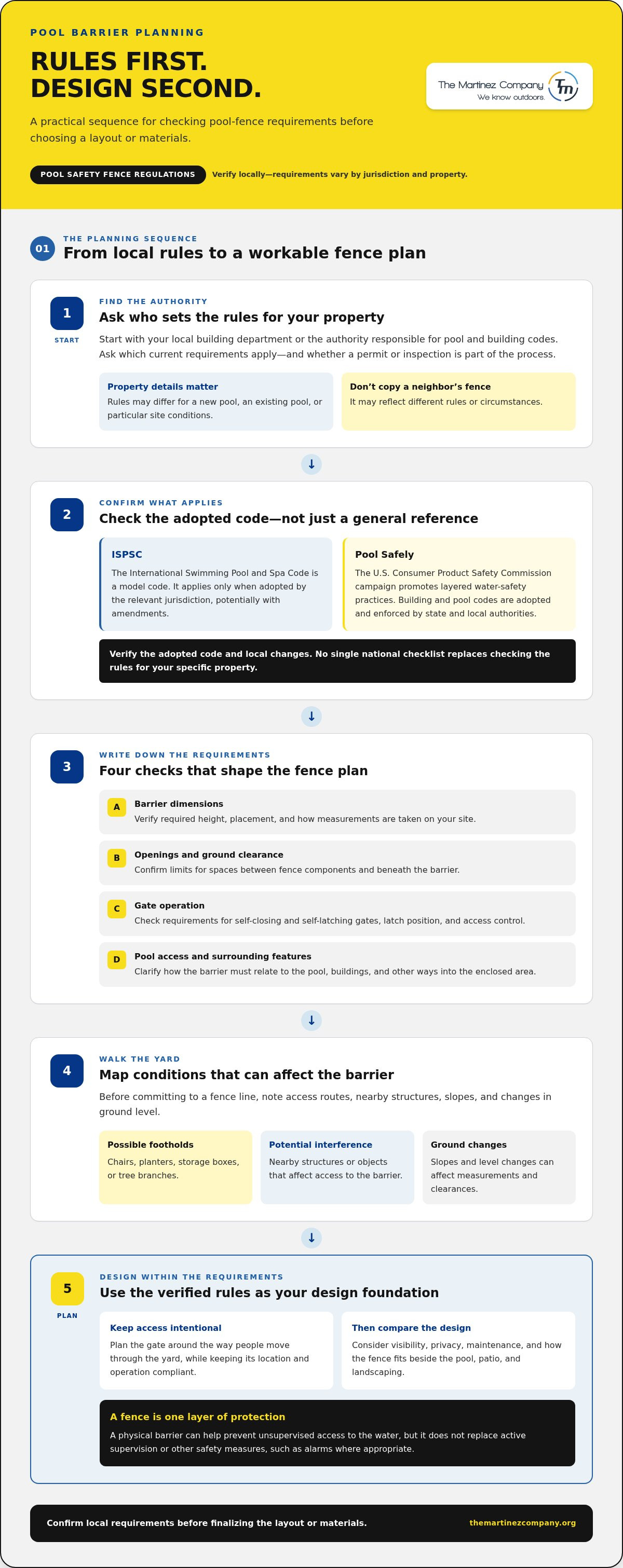
A pool safety fence is a physical barrier designed to help prevent unsupervised access to the water. It’s an important layer of protection, not a substitute for active supervision or other safety measures such as alarms where appropriate. Plan the barrier around the pool and the way people move through the yard, then verify the rules before settling on a layout or materials.
Federal safety guidance and local building requirements serve different purposes. The U.S. Consumer Product Safety Commission’s Pool Safely campaign promotes layered water-safety practices. Building and pool codes, however, are adopted and enforced by state and local authorities. Requirements may address barrier height, openings, gate operation, and placement, and can vary by jurisdiction and property.
No single national checklist replaces checking the rules that apply to your specific property. Establish the required safety standard first, then shape the design around it. That is the starting point for making pool safety fence regulations and ideas useful for your project.
Which pool fence rules apply to a home?
Start with your local building department or the authority responsible for pool and building codes. Ask which current requirements apply to your property and whether a permit or inspection is part of the process. Rules may differ for a newly built pool, an existing pool, or a property with particular site conditions. A neighbor’s fence is not a reliable template because its design may reflect different rules or circumstances.
The International Swimming Pool and Spa Code (ISPSC) is a model code. It applies only when adopted by the relevant jurisdiction, potentially with amendments. Confirm the adopted code and local changes rather than relying on a general online summary or an edition that may not govern your project.
What should a pool-barrier compliance checklist cover?
Before choosing fence materials or finalizing the layout, write down the requirements that will shape the design. Check each item against current local rules:
Barrier dimensions: Verify required height, placement, and how measurements are taken on your site.
Openings and ground clearance: Confirm limits for spaces between fence components and beneath the barrier.
Gate operation: Check requirements for self-closing and self-latching gates, latch position, and access control.
Pool access and surrounding features: Clarify how the barrier must relate to the pool, buildings, and other ways into the enclosed area.
Next, walk the yard and note anything that could affect the barrier’s intended function. A chair, planter, storage box, tree branch, or nearby structure could provide a foothold or interfere with access. Slopes and changes in ground level can also affect measurements and clearances. Record these conditions before committing to a fence line so they can be considered in the layout.
Clear answers on the rules give the design a practical starting point. With requirements documented, you can compare styles and materials while keeping the necessary dimensions and access features in view.
Pool safety fence design: balance visibility, access control, and backyard style
Once the required barrier placement is clear, design choices shape how the fence looks and works in daily use. The best pool safety fence regulations and ideas begin with access control, then consider visibility, privacy, and how the pool connects to the rest of the yard. A beautiful fence still needs to perform its essential job.
Plan the barrier around safe access first, then refine its appearance. Preserve the required boundary, make entry intentional, and coordinate the fence with the deck, patio, planting beds, and outdoor gathering areas.
How can a pool fence preserve sightlines?
Open designs, such as spaced metal pickets or transparent panels, can keep the pool visible from commonly used areas. More private styles, including solid or semi-private panels, may screen neighboring views but can make it harder to see activity across the barrier. Neither approach replaces active adult supervision.
Check sightlines from the kitchen, patio seating, and other places where people regularly spend time. Look for posts, tall plants, umbrellas, and pool equipment that interrupt the view. A clear view from one angle may disappear from another, especially as landscaping grows or outdoor furniture moves.
Where should the pool fence gate go?
Place the gate along a natural route between the home, patio, and pool, while keeping entry into the enclosed area deliberate. A gate on the path to an outdoor dining space, for example, may support everyday circulation, but its location and operation must still comply with local requirements.
Walk the usual routes before finalizing the layout. Consider where wet-foot traffic will pass, where guests will approach, and whether another route could bypass the intended entry point. Keep the gate’s swing and landing area clear of furniture, planters, and other obstructions.
Treat the fence as part of the outdoor layout, not a line added after everything else is built. On a compact deck, careful gate placement can preserve usable space. Around a larger patio, the barrier may follow the pool zone while leaving room for seating and planting outside it. Aligning fence lines with existing hardscape can create a deliberate transition between swimming, relaxing, and entertaining areas.
For open sightlines: Favor a visually lighter design and keep nearby planting low where views matter.
For more screening: Consider how privacy panels affect views into the pool area from the home.
For smoother circulation: Map regular walking routes and keep the gate approach unobstructed.
These choices work best when coordinated with the whole yard. A carefully planned fence installation can account for the surrounding outdoor environment, helping the barrier feel purposeful rather than visually disconnected.
Pool safety fence materials compared: mesh, metal, glass, and wood
Choose a fence material for the way you use and maintain your backyard, while keeping safety requirements at the center of the decision. Visibility, privacy, upkeep, and appearance vary by material and product. No material can make up for a barrier that misses required dimensions, gate provisions, or sound installation. Confirm each material’s specifications and suitability against the rules that apply to your property.
Use this comparison to narrow your options, not as a declaration that one material is universally safest. Actual performance depends on the product, installation, site conditions, and ongoing care.
When might mesh, metal, or glass suit a pool area?
Mesh may appeal when you want a visually light boundary, but products and installation systems differ, so review their specifications. Metal creates a defined, structured edge while leaving views open; its finish and care needs should suit the site’s exposure. Glass can keep the pool in view, though fingerprints, water marks, and detailed panel supports require ongoing attention.
What should homeowners consider with wood pool fencing?
Wood can add visual warmth and screening around a pool, patio, or neighboring view. Weather exposure can make routine inspection and maintenance important. Board spacing, openings, height, and the fence’s condition must meet applicable requirements. Don’t assume a familiar board-on-board or picket arrangement is compliant; verify the proposed design locally.
Before deciding, consider what you want to see from the house, how much privacy the pool area needs, and how much upkeep fits your routine. Then compare specific products and installation details against your site conditions and governing rules. This keeps pool safety fence regulations and ideas grounded in practical performance as well as the look of the finished outdoor space.
Plan a pool safety fence project with this practical site checklist
A clear site plan turns pool safety fence regulations and ideas into practical decisions. It connects the required barrier line with the conditions of the yard, from existing concrete to the route guests take between the house and patio. Work through these steps before finalizing a layout.
Verify the governing requirements. Confirm current local rules for barrier placement, dimensions, openings, and gates. Record any permit or inspection steps that apply so the plan starts with the right constraints.
Map the pool zone. Sketch the pool edges, house, patios, outdoor equipment, nearby structures, and paths people use most often. Mark where the proposed barrier could enclose the pool while preserving the required access arrangement.
Document the site conditions. Note concrete decks, other hardscape, planting beds, retaining features, slopes, and changes in ground level. These details can affect fence alignment, post locations, and the construction approach.
Compare materials against the layout. Consider visibility, privacy, maintenance, and how each option fits the site. Check that product specifications and the proposed installation can satisfy applicable requirements.
Plan gates and coordinate the build. Mark gate locations along natural routes, then make sure those routes don’t create unintended access into the pool area. Review the complete plan with patios, landscaping, and outdoor living features in view.
How do you prepare the pool area for fence planning?
Make the sketch useful, not decorative. Include pool edges, home entrances, proposed gates, patios, equipment, and everyday walking routes. Add notes about hard surfaces and grade changes, including where a deck meets soil or a slope crosses the possible fence line. Use these observations to shape the design, while verifying clearances, placement, and access provisions against local codes.
How can the fence coordinate with the finished backyard?
Once the required line is established, compare fence materials and finishes with nearby patios and outdoor living features. Consider sightlines from seating areas and how the barrier meets existing hardscape. Plan planting and furniture so they don’t block gates or create climbable access. These details help integrate the fence while keeping its function clear.
Concrete decks and uneven ground deserve particular attention. A surface transition or slope may affect where fence components can go and how installation should be coordinated with surrounding construction. Document these conditions rather than assuming the barrier can follow a straight line without adjustment.
A coordinated plan brings together fence layout, materials, site conditions, and the backyard beyond the pool. The Martinez Company provides fence installation and outdoor living construction, bringing these elements together as part of a considered project.
Build a pool safety fence that brings compliance and craftsmanship together
A well-planned fence project connects the barrier’s intended safety function with the realities of the property. The layout must reflect requirements verified for that specific home, while material choice, ground conditions, and nearby outdoor features shape how the fence can be built. Consider these elements before construction begins rather than treating the fence as an afterthought.
What does a well-planned fence build bring together?
Accurate layout translates the project plan into a carefully finished structure. The construction approach depends in part on the material and site. A concrete deck may affect post placement, while a slope or retaining feature can influence how the barrier follows the ground. Adjacent patios and paths also matter, particularly where gate access and everyday circulation meet. Local requirements remain the standard the design must satisfy.
That coordination brings craftsmanship together with practical design. A fence should sit securely in its setting, work with the surrounding hardscape, and preserve the access arrangement established in the plan. Consider the fence, gate, patio, and planting as parts of one outdoor project, with each detail contributing to a finished space that feels intentional.
How can homeowners move from ideas to a finished fence?
Start with three essentials: verify the requirements that apply to your property, define what matters most in visibility and privacy, and document the pool area and its conditions. Bring those decisions into the construction plan. The Martinez Company provides fence installation and outdoor living construction, bringing the broader outdoor environment into the project.
Before moving forward, gather the local requirements, a site sketch, preferred materials, and notes on concrete, slopes, existing hardscape, and common walking routes. These details help shape a project plan around the home instead of relying on a generic layout. They also make it easier to consider how the barrier will fit beside patios and other outdoor living features.
Pool safety fence regulations and ideas are most useful when they lead to clear, property-specific decisions. Confirm the rules, settle your design priorities, and coordinate site details before construction begins. The result can move from requirements and sketches to a durable barrier designed for its place in the backyard.
Ready to put your site plan into action? Plan your fence installation as part of a considered outdoor living project with The Martinez Company.
Shape a safer pool area around the way you live
Turn the ideas that fit your household into a clear project direction. Think about how you want the pool area to feel on an ordinary afternoon: open to views from the patio, screened for privacy, or visually connected to the rest of the yard. Then let verified requirements guide how those preferences take shape. The strongest pool safety fence regulations and ideas support the barrier’s purpose while helping the outdoor space feel considered and comfortable.
A well-planned fence can do more than mark a boundary. It can create a deliberate transition between swimming, relaxing, and entertaining, with materials and placement that suit the home and landscape. Plan the fence alongside the surrounding outdoor features so the finished layout works as a whole.
Explore fence and outdoor living construction with The Martinez Company, and move your project from initial ideas toward a backyard designed with care.
Frequently Asked Questions
Are pool safety fences required everywhere?
Pool safety fence requirements aren’t identical everywhere. They depend on applicable state and local laws and which codes a jurisdiction has adopted. Federal safety guidance can recommend protective practices, but it isn’t automatically the enforceable rule for a home. For current direction, contact the local building department or code authority with your property details. Ask which provisions apply and whether rules differ for your pool or property type.
Can a pool safety fence be installed on an existing concrete deck?
It may be possible, but the deck’s condition, layout, and construction affect the plan. Existing joints or edges, for example, may influence where posts can be placed and which anchoring method is appropriate. Include the pool and deck in the same site review rather than assuming every concrete surface accepts the same installation. The completed barrier must still meet the requirements that apply to your property.
Are removable mesh pool fences safe for children and pets?
No fence material alone guarantees safety for children or pets. The system’s construction, correct installation, gate function, and ongoing condition all matter, as does attentive adult supervision. Before selecting a removable mesh system, read the manufacturer’s installation and care instructions and verify that its specifications fit local barrier rules. Treat the fence as one layer of protection, not as a substitute for watching children around water.
Does a pool alarm replace a safety fence?
An alarm and a barrier serve different purposes, so don’t assume one replaces the other. An alarm may alert someone to activity, while a fence creates a physical boundary. Whether an alarm is accepted as an alternative depends on the applicable rules and the particular installation. Check with the relevant code authority before relying on an alarm to satisfy a requirement, and consider safety layers as complementary measures.
How often should a pool safety fence and gate be inspected?
Check the fence and gate regularly, and inspect them again after storms, landscaping work, impacts, or other changes near the pool. Look for loose or damaged components, a gate that catches or fails to close properly, and new objects that affect access. Follow the manufacturer’s maintenance instructions and applicable local requirements. If you find a problem, address it promptly rather than waiting for the next routine check.
Can landscaping or patio furniture be placed next to a pool fence?
Landscaping and furniture can be placed nearby only if they don’t interfere with the barrier’s function, visibility, or gate access. A chair, storage box, or raised planter, for example, could obstruct the gate or create a way to climb over the fence. Before changing the layout, consider the item’s height and position, check local requirements, and reassess the barrier as plants grow or furnishings move.


Comments