
Concrete Walkway Design Ideas: 12 Ways to Shape a More Beautiful, Functional Path
A concrete walkway can do more than connect the door to the gate. Its route, finish, and relationship to the landscape can make the whole yard feel more connected. The key is to plan the path around how people move through the property, then choose details that suit the home and outdoor space.
These concrete walkway design ideas can help you compare curved and geometric layouts, decorative textures, and finishing details while keeping comfort, drainage, and durability in view. Whether you need a direct entrance path or stepping-style sections that link a patio with the garden, start with the destinations people need to reach.
From there, consider how the walkway meets doors, paving, and planting. Compare surface finishes in the context of everyday use, and note where water flows across the site. A clear plan helps the finished walkway feel intentional rather than added on, with a route that naturally guides people from one outdoor space to the next.
Table of Contents
Concrete walkway design ideas begin with the route your outdoor space needs
Build concrete walkway design ideas around scale, shape, and surroundings
Compare concrete walkway finishes and patterns before choosing a look
Plan concrete walkway design ideas for comfort, drainage, and upkeep
Turn your concrete walkway design into a finished outdoor feature
Concrete walkway design ideas begin with the route your outdoor space needs
A well-planned walkway provides a firm surface underfoot and guides movement through the landscape. Start by listing the places people need to reach, then let those everyday routes shape the path’s direction, width, entry points, and connections. A useful design makes the destination easy to find and the route comfortable to follow.
Consider these starting concepts:
Direct entry path: A clear route from the driveway or parking area to the front door.
Gentle curve: A softer approach that moves around planting or reveals the garden gradually.
Garden route: A path that makes a seating area, planting bed, or other garden feature easy to reach.
Patio connection: A practical link between the home’s entrance and an outdoor living area.
Choose a layout that responds to daily use, existing features, and the home’s architecture. A crisp line can complement strong geometric forms, while a subtle bend may sit more naturally among informal planting. Avoid adding curves or branches just for decoration. Each part of the route should make movement easier or strengthen the overall design.
Which concrete walkway layout fits the space?
A straight route provides direct access and makes the destination clear at a glance. It can suit a front entrance where the shortest, clearest approach is the priority. A curve can work around a tree or garden bed, soften a rigid yard, or reveal the destination in stages. Either layout can work well when it follows a real route instead of making people take an awkward detour.
Branching paths are useful when they connect distinct destinations, such as a door, patio, and separate garden area. Before adding a branch, ask whether it leads somewhere people need to go. To test a proposed shape, mark it with a garden hose, rope, or temporary stakes, then walk it from both directions. Check where it meets doors and other surfaces, and notice whether turns feel natural alongside existing features.
How should a walkway connect the home and yard?
Trace the trips people make often: from the entrance to parking, from the kitchen door to a patio, or from the yard to a garden space. These patterns show where a walkway can make movement easier. Consider whether someone can use the route comfortably while carrying groceries, tending plants, or walking alongside another person. Plan clear transitions at doors and adjoining paved areas so the path doesn’t stop abruptly at a threshold.
A well-planned walkway is a purposeful connection between destinations, designed to make everyday movement through the property feel natural. Start with that purpose rather than choosing a shape based on appearance alone. For broader context on sidewalk construction and materials, including concrete, see the overview of sidewalk design and construction.
Then compare the route with the house and yard around it. The concrete walkway design ideas that work best balance direct access with a considered visual line, giving the path a clear purpose from the first step to its final connection.
Build concrete walkway design ideas around scale, shape, and surroundings
A walkway should feel proportionate to the home and landscape, not like a narrow strip squeezed between features or an oversized platform dominating the yard. Consider the scale of the entry, the space around it, and the way people will use the route. A main approach should feel comfortable and welcoming. A secondary garden path can be more modest if it still serves its purpose.
Look at the whole setting before settling on dimensions. A broad facade and open lawn can support a more generous route, while a compact entry may call for a restrained path that leaves room for planting. Check how the concrete will meet steps, doorways, patios, and surrounding ground. Account for drainage and comfortable transitions early, rather than treating them as details to solve after selecting a decorative finish.
How do you choose a walkway shape?
Straight lines suit structured landscapes and make a direct route easy to follow. They can echo the geometry of a home with defined edges, formal planting, or a strong front approach. Gradual curves bring a softer rhythm, follow an existing garden feature, or gently offset a formal setting. Use bends with purpose. Decorative turns that confuse the route or make everyday access less convenient weaken the design.
Changes in direction can also draw attention toward an entrance or garden focal point. Before committing to a line, look at it from inside the home and from the yard. The route should look considered from multiple viewpoints and remain easy to follow underfoot.
How can landscaping make concrete feel intentional?
Give the walkway a clear edge. A planting bed, low border, or contrasting zone of greenery can frame the concrete and tie it into the yard. Open lawn creates a different effect, letting the path stand out as a crisp line across an uncluttered space. Choose plants with their mature size in mind, and leave enough room to keep growth from spilling onto the usable surface or obscuring the route.
Lighting can reinforce the layout after dark. Placed beside an entrance, turn, or change in level, it helps define the route and makes it easier to see. Keep planting and lighting from obstructing movement. The surface should remain clear and comfortable to use.
Build the plan in sequence: decide how the path will be used, confirm its proportions, and account for water movement and transitions before adding borders, planting, or lighting. This keeps appearance grounded in practical needs. For a connected outdoor setting, concrete construction for outdoor spaces can help bring a defined concept through to a finished feature.
Compare concrete walkway finishes and patterns before choosing a look
A concrete finish can make a walkway feel understated and practical or highly decorative. It also affects the surface texture and how the path relates to the home, planting, and other hardscape. Compare appearance with everyday use before choosing. A path exposed to rain, frequent foot traffic, or yard debris may call for different priorities than a sheltered garden route. The right choice depends on the site and how you plan to use it.
Use these broad differences as a starting point:
Broom finish: A brushed texture gives plain concrete a simple, directional pattern. It suits a clean, functional design without an elaborate motif.
Exposed aggregate: The surface reveals stones within the concrete, creating a varied appearance that can echo natural elements in the landscape.
Stamped concrete: Patterns pressed into the surface add visual detail, with designs that can suggest materials such as stone or brick.
Smooth-looking concrete: A restrained, even appearance can support a minimal or contemporary setting. Consider the intended use and exposure when choosing the finish.
What concrete finish suits a walkway?
Textured finishes create more surface variation than smooth-looking concrete. Exposed aggregate makes the stones part of the design, while a broom finish keeps the pattern simple and consistent. Compare how each option looks and feels with the walkway’s location, expected use, and exposure to weather. Texture alone doesn’t guarantee a particular level of traction, so assess the complete project rather than assuming a finish will perform the same in every setting.
Should you choose stamped concrete or a simpler pattern?
Stamping adds a repeating visual motif to a continuous concrete surface, giving the path a more decorative presence. Simple scoring or clean geometry creates a quieter look that can complement modern architecture or let nearby landscaping stand out. Match the pattern’s scale to the walkway: an intricate motif may feel crowded on a narrow route, while a broader pattern can look more balanced across a larger area.
Color matters, too. A restrained tone can help the walkway blend with the home, while stronger contrast makes it read as a defined landscape feature. Consider nearby walls, paving, and planting together. Aim for a coordinated palette rather than a surface that competes with everything around it. Review how the color and pattern work across the full route, including its edges and transitions.
Picture the finish in its actual setting before choosing. Will trees shade the surface? Will the path be exposed to weather or crossed with muddy shoes? Could leaves or soil make a highly patterned texture harder to keep tidy? These practical questions help you choose a finish that fits your maintenance preferences as well as your visual goals.
Strong concrete walkway design ideas balance texture, color, and pattern with the path’s purpose. Decide what should lead: a simple, cohesive route or a more prominent feature. Then coordinate the finish with the home’s architecture and surrounding landscape, letting appearance and practical use shape one complete design.
Plan concrete walkway design ideas for comfort, drainage, and upkeep
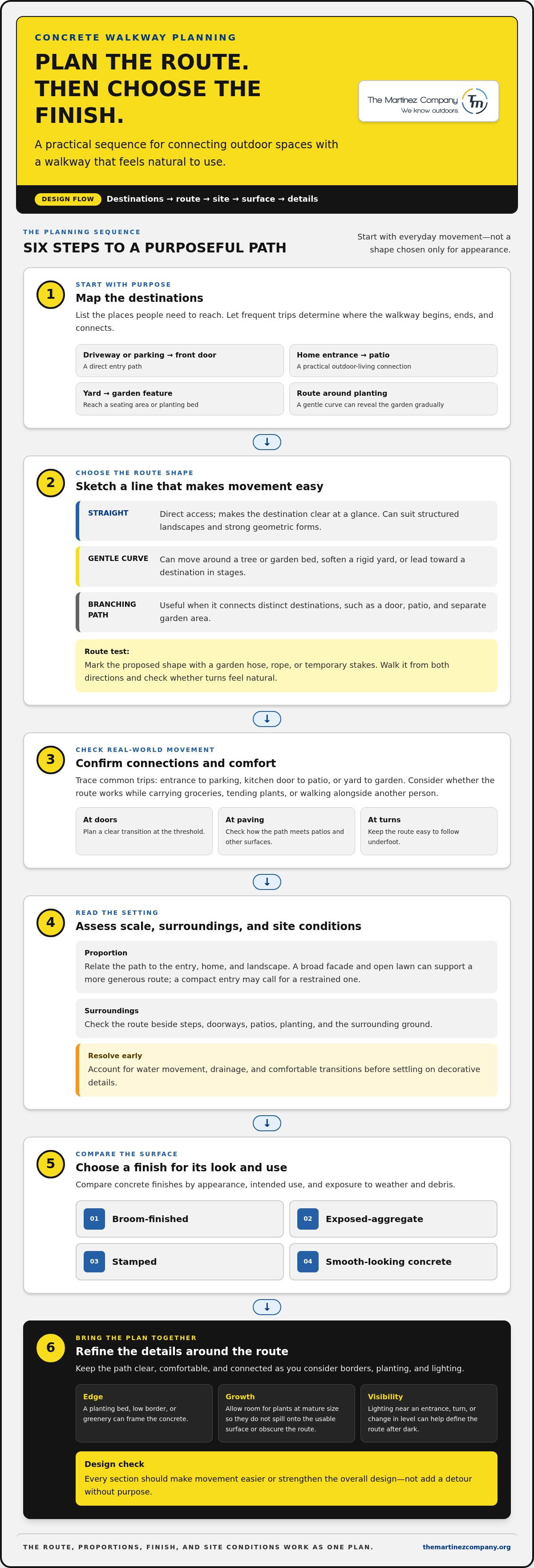
A strong walkway plan takes shape before the concrete is poured. Consider how people will use the route, how the ground behaves, and what the finished surface will need to withstand. These decisions work together: an attractive finish can’t make up for awkward transitions or water collecting beside the path. Plan practical details alongside appearance so the walkway can serve the property well over time.
Use this sequence to move from inspiration to a clear, buildable plan:
Map destinations. Mark the doors, parking areas, patio, garden, and other places the walkway should connect.
Sketch the route. Draw the proposed line, then mark entry points, turns, branches, and transitions to existing surfaces.
Assess the site. Note trees, established hardscape, changes in level, drainage paths, and areas where water gathers or flows.
Choose a finish. Compare texture and appearance with the route’s intended use and exposure to weather and debris.
Refine the details. Record preferred width, borders, edges, intended use, and care preferences in a project brief.
How do you plan a concrete walkway before construction?
Mark the route on the ground before settling on its final alignment. Walk it as you would on an ordinary day, and check that connections feel natural at doors, steps, and adjoining surfaces. A useful project brief captures the desired route, width, finish, and borders, as well as site features that could affect placement. Clear notes help carry the concept through to construction.
What helps a concrete walkway stay functional?
Prioritize a clear, stable route and comfortable transitions where concrete meets steps, lawn, or other paving. Plan for water to move away from the walkway and adjacent structures instead of pooling beside them. Site conditions and applicable standards guide construction details, so account for both in the design. Surface texture, shade, weather exposure, and expected foot traffic also influence what will work best.
Include upkeep in the decision. Leaves, soil, and other outdoor debris may collect differently on a textured or patterned surface than on a simpler one. Consider how the walkway can be swept or washed as part of regular care, and choose a finish that suits the maintenance you’re prepared to do. Routine cleaning helps preserve appearance, but it can’t replace sound planning and construction.
Well-considered concrete walkway design ideas bring route, drainage, transitions, finish, and care into one plan. The Martinez Company has focused on construction and renovation since 2014, with concrete work for outdoor projects. Plan your concrete walkway with The Martinez Company and turn a clear brief into a considered path.
Turn your concrete walkway design into a finished outdoor feature
A successful walkway brings its decisions together. The route should lead naturally between destinations, its proportions should suit the home and yard, and its finish should support the desired look and everyday use. Existing surfaces, changes in level, and water movement all influence how those ideas become a practical plan. Treat each choice as part of one design rather than a collection of separate details.
A clear project brief helps keep the vision intact as the work moves from concept to construction. It gives the design a practical reference point and makes it easier to weigh visual preferences against the needs of the property. Keep the brief specific, while allowing room to adapt details to the site.
What belongs in a concrete walkway project brief?
Gather a concise set of notes and references before the design is finalized. Include:
Destinations and layout: Identify the places the path should connect, along with your preferred route, entry points, curves, or branches.
Intended use: Describe how people will use the walkway, such as reaching an entrance, carrying items to a patio, or accessing a garden.
Visual priorities: Note the finish, color direction, pattern, edges, and relationship to the home and surrounding landscape that you want the design to achieve.
Reference images: Collect examples that show the patterns, finishes, borders, and landscape relationships you like. Use them to clarify the effect you want rather than assuming every detail will transfer unchanged.
Site observations: Record nearby trees, existing hardscape, level changes, and places where water flows or collects, since these can influence layout and construction planning.
These details help distinguish essential goals from optional decoration. A reference photo may show a finish you admire, while your notes explain that a clear, easy-to-follow route matters most. That distinction gives the design a firm foundation.
How can a contractor bring the walkway concept to life?
Turning a brief into finished work means relating the preferred look to the actual property. The Martinez Company’s construction services bring route, proportions, transitions, and finish together around the site. Concrete work then carries those decisions into an outdoor feature designed to serve a purpose and add visual definition.
The Martinez Company provides concrete work alongside residential construction and outdoor living projects. Bringing the design and its practical demands together helps move a walkway from an early sketch toward a finished feature.
Ready to move from ideas to a buildable plan? Explore concrete and construction services with The Martinez Company.
Give your walkway plan a clear next step
Choose one idea to carry forward: a path that makes the entrance more welcoming, a connection that opens the yard for everyday use, or a design that gives the landscape a stronger sense of direction. Let that goal guide your decisions and keep the finished walkway rooted in how you want to experience your outdoor space.
The strongest concrete walkway design ideas become more than inspiration when shaped around the property and built with care. Turn your preferred look into a clear plan, then take the next step toward making it part of your home.
Explore The Martinez Company's concrete and construction services to move your walkway vision toward a finished outdoor feature. A purposeful path can change the way you arrive, move through, and enjoy your yard.
Frequently Asked Questions
What is the best design for a concrete walkway?
The best design is the one that fits how you move through the property and how the house meets its outdoor spaces. For a front door beside a garage, a direct approach can make arrivals intuitive. A side entrance used for garden access may benefit from a route that avoids planted beds. Compare sketches from key viewpoints, including the street and rooms overlooking the yard, before settling on a layout.
Can concrete walkways look attractive?
Yes, concrete can look polished and purposeful rather than plain. Concrete walkway design ideas can include restrained color variation, narrow contrasting borders, or a surface pattern that echoes nearby brick or stone. Keep one feature dominant: if the surface has a strong pattern, let planting and edging stay quieter. This balance helps the walkway feel designed for the home instead of competing with its facade.
How wide should a concrete walkway be?
No single width works for every walkway. Set it according to traffic, access, and site constraints. A route used by one person heading to a garden has different needs from an entrance where people pass each other or carry bulky items. Mark the proposed edges and test the space with typical movement, such as carrying a box or opening a gate. Final dimensions should fit the property and applicable requirements.
Is a textured concrete finish better for a walkway?
A textured finish isn’t automatically better. It may be useful when you want more surface character, but its suitability depends on exposure and use. For a walkway beneath trees, consider how texture may hold leaves or soil and how you’ll clean it. For a frequently used entrance, include surface feel and traction in the decision. Assess the specific finish in relation to its location, not as an isolated sample.
Can you add a concrete walkway beside a patio?
Yes, a concrete walkway can connect directly with a patio and make the transition feel intentional. Align one walkway edge with the patio edge, for example, or use a related border while choosing a distinct surface treatment. Check where the surfaces meet, especially near doors and outdoor dining areas, so furniture, gates, and foot traffic remain easy to manage. Plan drainage across both areas together rather than treating each surface separately.
How do you maintain a concrete walkway?
Maintain a concrete walkway by clearing loose debris and cleaning it in a way suited to the installed finish. Sweep away leaves and soil regularly, then deal with spills or organic residue before they linger. Avoid harsh tools or cleaning products unless they’re appropriate for that surface. Shade, rainfall, nearby trees, and foot traffic all affect how often care is needed, so follow the project-specific maintenance guidance for the concrete and finish.


Comments