
How Long Should a Wood Fence Last? Lifespan, Wear, and Care
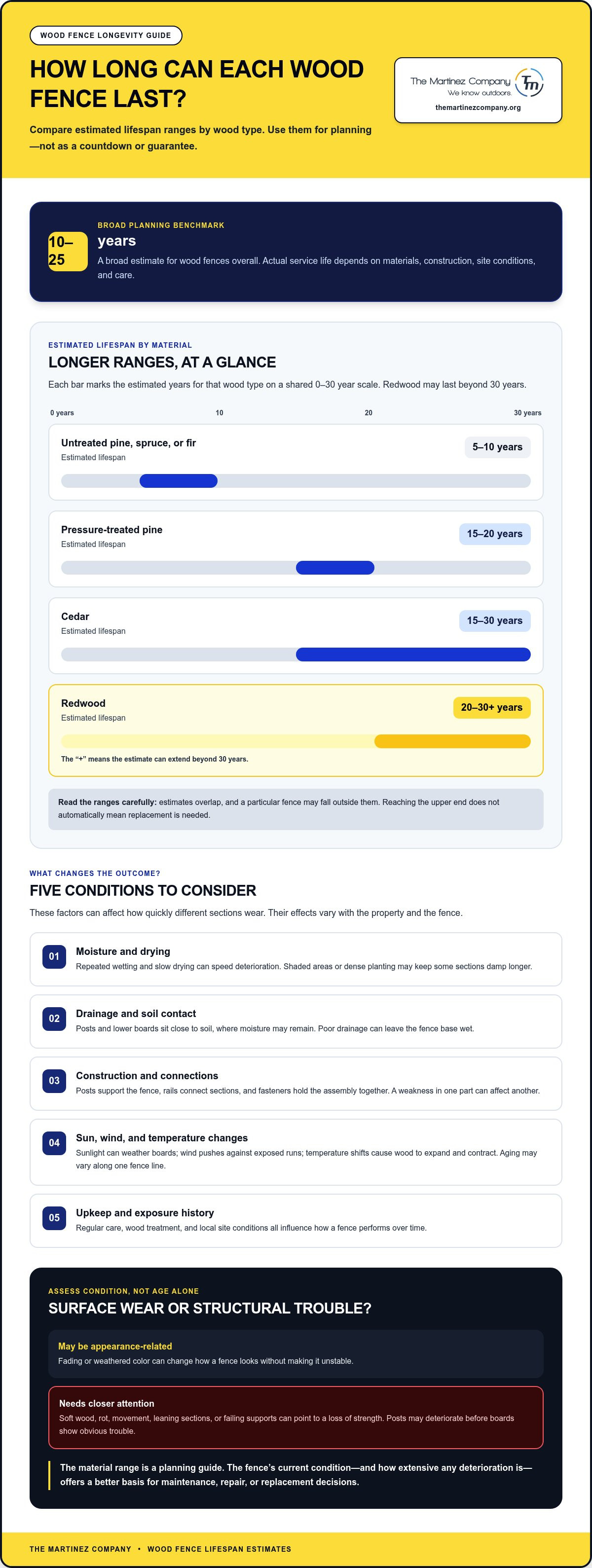
What if the same wood fence could last a decade or several decades, depending on what it’s made of and how it’s exposed? If you’re asking how long should a wood fence last, the answer depends on the wood, construction, and conditions around it. Untreated pine, spruce, or fir may last 5 to 10 years, while pressure-treated pine often lasts 15 to 20. Cedar can reach 15 to 30 years, and redwood 20 to 30 years or more.
Those ranges are a starting point, not a verdict on a fence at your home. Moisture, drainage, sun exposure, upkeep, and construction all affect how quickly wood wears. Posts may deteriorate before boards show obvious trouble. Fading or weathering can be normal; soft wood, rot, or a leaning section may point to a structural problem.
This guide covers realistic lifespan ranges for common wood types, conditions that shorten or extend them, and warning signs to look for. You’ll also learn how to weigh maintenance, targeted repairs, or replacement based on the fence’s condition, not just its age.
Table of Contents
How long should a wood fence last? Start with a realistic range
A wood fence’s longevity is an estimate, not a guaranteed service life. A broad benchmark is 10 to 25 years, but the answer to how long a wood fence should last depends on more than the calendar. Typical estimates are about 15 to 20 years for pressure-treated pine, 15 to 30 years for cedar, and 20 to 30 years or more for redwood. Use these ranges to plan, not to predict exactly how long an individual fence will last.
Species and treatment are only part of the picture. Repeated wetting, slow-drying areas, soil contact, construction quality, and regular care can all affect performance. Wood preservation can improve resistance to deterioration, but it doesn’t make wood immune to its surroundings. For background on wood preservation techniques, including common treatment approaches, see this overview.
A lifespan estimate is a planning range, not a product specification or workmanship guarantee. A fence may need attention earlier than expected or remain serviceable beyond a typical estimate. Its current condition is a better guide than its age alone.
Why two wood fences can age at different rates
Two fences that look nearly identical when installed can age differently. One may sit in a well-drained, open area and dry quickly after rain; another may be shaded by trees or bordered by dense planting that keeps it damp. Even sections of the same fence can face different conditions: a sunny stretch may dry fast, while a shaded corner stays wet and an exposed run takes more wind.
That variation matters because a fence is a connected structure. Boards may look sound while a post or rail has weakened. Posts contact soil and moisture, so they can be an early point of deterioration. If a support loses strength, it can affect the stability of the surrounding section even when nearby boards appear intact.
What a lifespan estimate does, and does not, tell you
Think of a lifespan range as a broad planning guide, not a countdown to failure. It can help you compare materials and anticipate upkeep, but it can’t account for every site condition or care history. Reaching the upper end of the range doesn’t automatically mean a fence must be replaced.
Separate appearance, repair needs, and structural function when assessing a fence. Fading or weathered color may affect appearance without making the fence unstable. A damaged board or isolated section may need a localized repair. Movement, soft wood, or failing supports deserve closer attention because they can point to a loss of strength. Judge what the fence is doing now, not just how long it has stood.
What determines how long a wood fence lasts?
A fence’s durability depends on how its materials, construction, and surroundings work together over time. Moisture is a major factor, but exposure isn’t uniform. One stretch may dry quickly in open sun while another stays damp beneath trees or beside dense planting. Wind and temperature shifts also put different demands on different sections.
Persistent moisture combined with poor drying conditions can speed wood deterioration. A brief rain shower is different from repeated wetting where water lingers. Note where the ground stays soggy, where plants touch the fence, and whether water drains away from the base. These observations can help explain why one section wears faster than the rest.
Moisture, soil contact, and decay risks
Posts and lower boards face particular exposure because they sit close to soil, where moisture can remain after visible surfaces have dried. Prolonged dampness can create conditions for fungal decay. Wood-boring insects may also damage wood, though neither problem is inevitable. Check for persistent softness, discoloration, or damage near the ground, especially where drainage is poor.
Construction details and exposure
Each component has a different job and wear pattern. Posts support the fence, rails connect sections, boards take direct weather exposure, and fasteners hold the assembly together. Weakness in one area can affect the stability of another. Post depth and secure connections matter, but the right details depend on the fence and site; there isn’t one depth or fastening choice that fits every project.
Look at the site as a whole. Poor drainage can keep the fence base wet, while good airflow can help surfaces dry. Sunlight can weather boards and change their appearance differently from shaded sections. Temperature changes cause wood to expand and contract, while wind pushes against broad or exposed runs. These conditions can lead to uneven aging along a single fence line.
Material selection and sound installation provide a stable starting point, but they can’t erase the effects of ongoing exposure. For a new build or replacement, account for drainage, shade, and wind when planning the fence. The Martinez Company provides residential and commercial fence installation, including planning a fence around the property and its intended use.
How do wood types compare for fence longevity?
Material choice is a useful starting point for planning, but lifespan figures are estimates, not promises. Use the ranges below as broad guidance and weigh site conditions, construction, and upkeep alongside the wood itself. A particular fence may fall outside the estimates.
Pressure-treated wood compared with cedar and redwood
Pressure treatment is intended to help protect wood from deterioration, but it doesn’t make a fence rot-proof or remove the need for care. Cedar and redwood have their own durability profiles and visual qualities, and their estimated ranges overlap. There’s no universal winner. The right comparison depends on the fence’s purpose, site conditions, appearance, and the care you’re prepared to provide.
Use the table to frame the decision, not to rank materials in isolation. A higher upper estimate for one wood type doesn’t mean it will always outlast another in every yard. Persistent dampness can undermine any choice, and poor construction can leave a fence vulnerable even when the material has a favorable estimated range. The support structure and how the fence meets its surroundings matter, too.
Choose wood by the conditions it will face
Start with the fence’s intended use. Consider whether it will border a frequently wet area, sit close to soil or dense planting, or face strong sun and wind. Then weigh how much maintenance you’re willing to take on. A material that suits a dry, open stretch may need closer attention in a shaded area where moisture lingers.
Read each lifespan estimate alongside the installation and care conditions, not as a stand-alone promise. For cedar-specific context, the site’s article The Rugged Beauty of Professional Cedar Fencing offers a closer look at that material. A sound choice connects wood type to the setting, including both the most exposed runs and the sections that stay damp or shaded.
So, how long should a wood fence last? The material gives you a starting range; the site and the fence’s condition shape the outcome. Consider both when choosing, then inspect regularly to spot developing wear before it affects the whole structure.
How can you inspect and maintain a wood fence to extend its useful life?
A consistent inspection helps you notice changes before they spread. Walk the fence in daylight and follow the same order each time: alignment, posts, rails, then boards and hardware. Look for movement, softness, loose connections, or damage that is new or worsening. Comparing sections makes it easier to tell whether a problem is isolated or recurring.
A practical fence condition check
Observe alignment: Look along the fence for leaning, sagging, or shifted sections. Note whether the change is isolated or runs across several panels.
Examine posts: Pay close attention near the ground, where soil and moisture can affect the wood. Look for visible damage, movement, or softness.
Check rails: Look for breaks, sagging, and connections that have pulled loose from posts.
Inspect boards and hardware: Note cracked or missing boards, protruding or corroded fasteners, and gaps that weren’t there before.
Compare a suspect section with a healthier one nearby. Faded color or surface weathering may be mostly cosmetic; a post that moves, soft wood, or a loose rail can affect stability. Keep brief notes or dated photographs so you can tell whether a concern is stable, localized, or spreading. If a section appears unstable, avoid leaning on it or trying to force it back into place.
Maintenance that supports useful life
Small habits can reduce avoidable wear. Clear leaves, soil buildup, and persistent vegetation away from the fence base so they don’t trap moisture against the wood. Keep plants from pressing against boards, and note spots where water collects or airflow is blocked. Address loose connections and damaged boards before they place extra strain on nearby components.
Before cleaning, sealing, staining, or painting, follow the instructions for the specific wood and any existing treatment or finish. Applying a product without checking its directions can lead to poor results or damage. If the fence’s material or finish is uncertain, identify it before choosing a care approach rather than assuming one treatment suits every section.
For broader material planning around outdoor projects, The Best Materials for Durable Outdoor Living Designs offers related context. Pay particular attention to posts that move, several sections that lean, or softness in multiple structural components. These signs may be difficult to judge from the surface alone, so assess how widely the problem extends before deciding whether a targeted repair is enough.
Use what you find to make a measured plan, not an age-based guess. If your inspection points toward a new build or replacement, explore fence installation as a practical next step. The question of how long a wood fence should last is best answered by its condition, care, and exposure.
When should you plan a wood fence repair, replacement, or new installation?
Make the decision based on the fence’s condition, not its age alone. A damaged board or loose connection in one area may be manageable as a focused repair. Repeated leaning, soft or deteriorated posts, and weakness across several sections point to a broader problem. Look beyond the most visible defect and consider how the posts, rails, and neighboring panels work together.
When a focused repair may preserve the fence
A repair may make sense when damage is limited and the surrounding structure remains stable. One cracked board or a loose connection is different from multiple weak posts supporting several sagging panels. Check adjacent sections before treating a visible flaw as an isolated issue.
Consider the whole assembly: a new board won’t solve a problem caused by a failing rail or moving post. A repair can address a specific weakness without restoring every part of an aging fence, and it doesn’t guarantee a particular number of additional years. Judge the result by whether the structure is sound and continues to meet your needs.
Plan a replacement around durability and use
Consider replacement when deterioration is widespread, structural components repeatedly fail, or repairs would leave substantial weak areas in place. Assess the full fence line. Note whether trouble is concentrated in one spot or appears in posts, rails, and boards throughout. When stability is uncertain, first determine how extensively the structure is affected.
Use a new project to match the fence to its purpose. Think about the privacy you want, the level of security needed, the appearance that suits the property, and how the fence will relate to outdoor living areas. Then consider wood choice, moisture exposure, layout, and the upkeep you’re prepared to manage. The planning guide Fence Engineering: Security, Privacy, and Aesthetics offers a broader framework for balancing these goals.
Age provides context, but it shouldn’t dictate the outcome. A fence at the upper end of a typical lifespan estimate may remain useful if its structure is sound; a younger fence with widespread deterioration may need attention sooner. Ask what is failing, how broadly it has spread, and whether a repair can address the underlying issue. This measured approach helps avoid replacing a serviceable fence too soon or investing in repeated fixes that don’t resolve a larger weakness.
If replacement or a new build fits your goals, The Martinez Company provides residential and commercial fence installation. Explore fence installation with The Martinez Company as you plan a fence around your property’s needs and intended use.
Turn your fence plans into a lasting investment
The question of how long a wood fence should last is most useful when it leads to a practical next step: deciding what you need your fence to do and planning for the conditions it will face. Whether you’re shaping a private outdoor retreat, defining a property boundary, or planning a commercial project, a clear goal can guide decisions about layout, appearance, and long-term care.
The Martinez Company provides residential and commercial fence installation. Plan your project around your property, priorities, and vision for the space.
Plan a fence project with The Martinez Company. A thoughtful plan is a strong first step toward a fence that suits your space and intended use.
Frequently Asked Questions
Is pressure-treated wood completely resistant to rot?
No. Pressure treatment is intended to improve wood’s resistance to decay and insects, but it doesn’t make the material indestructible. Exposure, installation, and ongoing care still affect performance. If a fence gets wet repeatedly or a section is damaged, inspect it rather than assuming treatment prevents trouble. Follow the product’s instructions for handling and maintenance, and treat lifespan estimates as ranges, not guaranteed service periods.
Can I stain a new wood fence immediately?
Not necessarily. The right timing depends on the wood’s moisture level, any treatment it has received, and the manufacturer’s directions. Applying stain before the wood is ready may affect how the finish adheres or performs. Check the instructions for both the wood and the finish, then test the product as directed in a discreet area before coating the full fence. Don’t rely on one fixed wait time for every project.
What does a wood fence warranty usually tell me about its lifespan?
A warranty explains what its provider covers and under which conditions; it doesn’t automatically promise the fence will last for the entire period named. Read the terms for covered components, exclusions, and any required care. For example, coverage may treat a board differently from a post or exclude certain kinds of damage. Keep purchase details and maintenance records together so you can refer to them if a concern arises.
Does a wood fence lifespan estimate include repairs?
A lifespan estimate isn’t a precise prediction for every board, rail, or post. Individual parts can wear at different rates, and repairing a limited area may keep the rest of the fence useful. If you’re asking how long a wood fence should last, clarify whether an estimate describes typical overall service or the expected life of a particular component. Assess current condition as well as age.
Can I replace only a few damaged fence boards?
Sometimes. Replacing a few boards can make sense if the damage is limited and the rails and posts supporting them remain sound. Check nearby boards, too, because similar exposure may have affected their edges or fasteners. If replacement boards don’t sit securely or the supporting frame is weakened, a board-only fix may leave the underlying issue unresolved. Base the repair on the surrounding section’s condition.
Should fence boards split as they dry?
Wood can respond to changes in moisture as it dries, so some checking or surface change may occur. A split alone doesn’t prove that the whole fence has failed. Look at whether the board is still firmly attached and whether the opening is changing or affecting its function. If nearby rails or connections are also loose, or the section moves, treat that as a sign to assess the fence’s stability.


Comments