
How to Make a Small Backyard Feel Bigger with Strategic Hardscaping
A wide-open lawn is often the smallest thing you can do for a tiny yard. While it seems counterintuitive, leaving a small space empty actually highlights the boundaries and makes the area feel restricted. In reality, adding more structure is the secret to visual expansion. According to the 2026 U.S. Houzz Outdoor Trends Study, 25% of homeowners are now prioritizing daily comfort over simple resale value, often by replacing traditional lawns with functional, hardscaped zones. Learning how to make a small backyard feel bigger with hardscaping isn't about crowding the lot; it's about using precision design to trick the eye into perceiving depth.
You might worry that adding a stone patio or a custom kitchen will make your yard feel like a concrete box, but the opposite is true. We understand the claustrophobia of a cramped yard and the fear of losing utility through over-building. This guide shows you how to transform a limited footprint into a spacious sanctuary using professional structural techniques. We'll explore how to use large-format slabs to reduce visual clutter, create distinct zones for lounging, and utilize vertical cedar fencing to draw the eye upward. By the end, you'll have a clear roadmap for a durable, high-end retreat that maximizes every square inch of your property.
Table of Contents
The Psychology of Space: Why Hardscaping is the Secret to Expansion
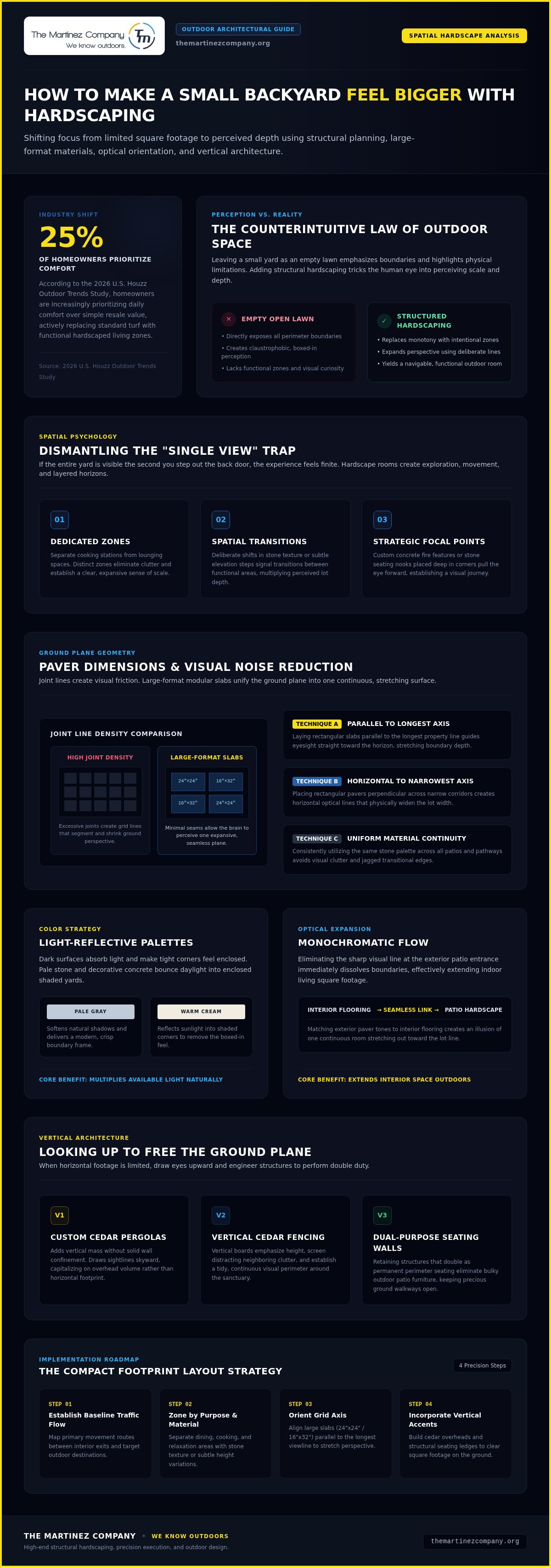
Hardscaping provides the essential bones of your outdoor environment, serving as the permanent architecture that dictates the flow and function of the entire lot. While many homeowners prioritize greenery, plants are often just the aesthetic dressing. The true structural transformation happens through built hardscape elements like patios, paths, and retaining walls. These components define the floor plan of your yard, shifting the focus from limited square footage to perceived depth. When you understand how to make a small backyard feel bigger with hardscaping, you stop seeing a cramped plot of grass and start seeing a series of intentional, high-end experiences.
Defining clear functional zones prevents a yard from looking like a cluttered storage area or a neglected patch of dirt. By separating a cooking station from a lounging area with a change in material or level, you create a sense of scale that didn't exist before. A spatial transition is a deliberate design shift, such as a change in stone texture or a subtle elevation change, that signals the move from one area to another and creates the illusion of a more expansive property.
Breaking the 'Single View' Trap
If you can see the entire yard the moment you step out the back door, the experience feels finite and small. This is the "single view" trap. It makes the boundaries feel close and the space feel predictable. By using hardscape rooms, you encourage movement and exploration. You want to give guests a reason to walk to the back corner. A well-placed focal point, such as a custom concrete fire feature or a small stone seating nook, draws the eye through the space. This creates a journey. It makes the yard feel like an expansive sanctuary rather than a boxed-in enclosure.
The Power of Clean Lines
Visual noise is the enemy of a small yard. Clutter and jagged edges make boundaries feel like they're closing in on you. Professional fence installation provides a tidy, intentional border that frames the entire project and hides distracting neighboring views. Using consistent material choices across your patio and walkways ensures the eye isn't distracted by too many competing textures. Geometric shapes and long, straight lines are particularly effective because they lengthen the perspective. To achieve this, consider the following:
Uniform material palettes that reduce visual friction and keep the focus on the layout.
Long, straight lines that lead the eye toward the horizon or the furthest property line.
Precision borders that define the limits of the usable space with surgical accuracy.
When you align pavers parallel to the longest axis of your lot, you stretch the horizon. This is a fundamental technique for anyone researching how to make a small backyard feel bigger with hardscaping. It’s about creating a permanent, structured foundation that maximizes every available inch.
Selecting Materials That Stretch the Horizon: Colors and Textures
Mastering how to make a small backyard feel bigger with hardscaping requires a tactical approach to the ground plane. Large-format pavers, such as 24"x24" or 16"x32" slabs, are essential tools for this transformation. By reducing the density of joint lines, you minimize visual clutter and trick the brain into reading the floor as one unified, expansive surface. Light-colored stone and concrete, including pale grays and warm creams, reflect natural light into shaded corners. This brightness prevents the "boxed-in" feeling common in tight residential lots. Applying the principles of landscape design ensures that horizontal lines and proportions work in your favor rather than against you. When you lay rectangular pavers in a horizontal pattern perpendicular to the narrowest dimension of the yard, you physically stretch the perspective of the space.
Creating a monochromatic color palette is another professional secret for spatial expansion. By matching your exterior hardscape tones to your interior flooring, you establish a seamless indoor-outdoor flow. This eliminates the harsh boundary at the back door, making the yard feel like a natural extension of the living room. It's a high-end design move that adds immediate value and a sense of luxury to any property.
Concrete as a Design Powerhouse
Decorative concrete is a versatile choice for custom-shaped patios where standard pavers might feel restrictive. Smooth finishes create a sleek, modern aesthetic that feels open and airy, while subtle textured aggregates add depth without overwhelming the eye. Durability is the most critical factor here. High-quality concrete work prevents the weathered, cracked appearance that often makes small spaces feel neglected and cramped. A pristine, well-maintained surface keeps the focus on the design rather than the repairs. If you want to transform your lot, our team can help you build high-end outdoor living spaces that defy their physical footprint.
The Role of Texture and Contrast
While uniformity is important, strategic contrast adds necessary tactile depth. Mixing smooth, light stone with the rugged, vertical lines of custom cedar fencing creates a sophisticated balance. Keep your materials low-profile to ensure the ground plane remains unobstructed. Polished surfaces are particularly effective in tight, shaded areas because they bounce light across the yard, increasing visibility and the sense of scale. Avoid heavy, dark bricks that absorb light and make boundaries feel closer than they actually are. Stick to materials that suggest permanence and precision to ensure every square inch serves a clear, aesthetic purpose.
Vertical Hardscaping: Looking Up to Create More Ground
When horizontal square footage is limited, the vertical plane becomes your most valuable asset. Utilizing height draws the eye away from the close boundaries of the lot. This is a fundamental strategy in how to make a small backyard feel bigger with hardscaping. By building upward, you create a sense of volume that compensates for a narrow footprint. It’s about more than just privacy; it’s about defining the upper limits of your outdoor room and creating a feeling of shelter without confinement.
Custom Structures as Spatial Anchors
Custom cedar pergolas are the ultimate spatial anchors. They provide a sense of enclosure and shade without the suffocating effect of solid walls. We use "open" engineering to ensure that airflow and natural light remain unobstructed. This keeps the space feeling airy rather than cramped. Cedar is the ideal choice for its structural integrity and natural warmth. When you position a pergola at the far end of a patio, you create a destination that encourages people to move through the entire yard. This movement is key to making a space feel larger and more purposeful.
The Utility of Seating Walls
Bulky patio furniture is a space killer in small yards. Every chair leg takes up precious floor real estate. Replacing loose furniture with permanent seating walls is a smarter, more durable alternative. These masonry structures serve a "two-for-one" purpose. According to 2026 standards, a seating wall should be capped at 18 to 20 inches high to provide optimal comfort. This allows the wall to double as a planter perimeter or a structural barrier for a grade change. By integrating color and texture in landscape design, these walls become a high-end feature rather than just a utility.
Vertical cedar fencing provides clean, upright lines that stretch the horizon upward. It hides distracting neighboring views while creating a polished backdrop for your sanctuary. To complete the transformation, integrate low-voltage lighting into these vertical structures. Illumination extends the yard's use into the night. It pushes back the darkness that typically shrinks a yard after sunset. This ensures your outdoor room remains functional and expansive 24 hours a day, providing a sense of permanence and security in your investment.
The Step-by-Step Layout Strategy for Small Footprints
Successful execution depends on a methodical layout. You must treat the backyard like an interior room where every square inch is accounted for. This is the definitive guide on how to make a small backyard feel bigger with hardscaping through strategic placement and structural logic. We don't guess; we engineer the flow to maximize utility without sacrificing the sense of openness.
First, identify the primary mission of the space. Decide if the yard is for high-traffic dining or low-impact lounging. Second, map the traffic flow. Ensure the path from your back door to the main seating area remains unobstructed. Third, place your largest hardscape elements, like an outdoor kitchen, against the perimeter. This preserves the central ground plane and prevents the yard from feeling cut in half. Fourth, use bridge materials to connect different zones. Consistent masonry creates a sense of continuity that stretches the horizon. Finally, incorporate lighting to eliminate dark corners. Shadows shrink a yard, but strategic illumination expands the visible boundaries long after sunset.
The Compact Outdoor Kitchen Blueprint
Designing a culinary space in a tight footprint requires surgical precision. We recommend layouts that hug the home or the fence line to maximize the remaining floor area. L-shaped configurations are particularly effective for tight corners because they offer ample counter space without bisecting the yard. Straight runs work best along narrow side lots. Prioritize built-in grills and cabinetry over freestanding units. Permanent masonry structures provide a level of durability and aesthetic finality that loose appliances cannot match. If you're ready to build, schedule a structural design consultation to see how we can anchor your yard with a custom kitchen.
Managing Transitions and Borders
Transitions between zones should be subtle but clear. You can use different concrete finishes, such as a light broom finish for the dining area and a smooth polished surface for the lounge, to signal a change in purpose. This creates the illusion of multiple "rooms" within a single small lot. Professional fence installation is equally critical. It defines the edge of your world with a clean, vertical line that prevents the space from bleeding into the neighbor's property. Avoid dead zones where nothing happens. Every corner must have a purpose, whether it's a small stone planter or a recessed lighting feature. This level of detail ensures the entire project feels intentional and expansive.
Precision Execution: Building for Stability and Perfection
Precision is the difference between a cramped patio and a spacious sanctuary. In a limited footprint, a single misplaced stone or a slightly off-center pillar doesn't just look wrong; it disrupts the entire spatial logic of the design. Learning how to make a small backyard feel bigger with hardscaping is only half the battle. The other half is the physical execution. We take a "Reliable Visionary" approach to every project, moving from abstract small-yard dreams to physical structures with surgical accuracy. This ensures that every line is straight and every joint is tight.
Building for permanence is especially critical in high-use small areas. Because the traffic is concentrated on a smaller surface area, the structural integrity of your concrete and stone must be absolute. We prioritize stability above all else. This focus on durability prevents the shifting and cracking that can make an older yard feel neglected and small. Our commitment is simple: we transition your concept into a completed masterpiece that stands the test of time.
The Importance of Expert Craftsmanship
Every inch counts when you are working in a limited footprint. Professional concrete flatwork offers a level of aesthetic finality that DIY projects simply cannot match. While a hobbyist might overlook the nuances of surface texture, an expert ensures the finish reflects light and enhances the sense of scale. Drainage is the invisible necessity of hardscaping. According to CMHA standards, a professional installation requires a minimum 1.5% to 2% slope to move water away from the foundation. Without this precision, a small yard can quickly suffer from pooling water, which ruins both the utility and the lifespan of the build.
Starting Your Transformation Journey
Evaluating a contractor's ability to handle custom outdoor living projects requires looking beyond the portfolio. You need a partner who understands the intersection of design and engineering. A true expert knows how to anchor a yard with a custom kitchen while maintaining the structural flow of the entire lot. We take pride in our history of community standing and our reputation for perfection. If you are ready to reclaim your outdoor space, Consult with The Martinez Company for your outdoor living sanctuary. We are ready to get to work on your transformation.
Build Your Sanctuary with Structural Precision
A small yard is not a limitation; it's an opportunity for meticulous design. By utilizing large-format pavers to reduce visual noise and custom cedar pergolas to draw the eye upward, you create a sense of scale that defies the lot's boundaries. Strategic layouts and clear functional zones turn a fragmented yard into a cohesive outdoor room. Understanding how to make a small backyard feel bigger with hardscaping allows you to replace claustrophobia with a structured, high-end sanctuary that functions with purpose. It's about moving beyond simple landscaping and investing in the permanent bones of your outdoor environment.
The Martinez Company has specialized in precision concrete and custom outdoor structures since 2014. We bring a relentless commitment to stability and perfection to every project, ensuring your new entertainment area or cedar fencing is built to last for decades. Our team manages the entire journey from your initial vision to the final, physical masterpiece with surgical accuracy. You deserve an outdoor room that feels as expansive as your goals and as durable as your home itself. Start your transformation today and reclaim the potential of your property.
Elevate your outdoor living with The Martinez Company
Frequently Asked Questions
Does adding a patio make a small yard look smaller?
Adding a patio actually makes a small yard feel larger by providing a clear floor plan and functional organization. An open patch of grass often lacks scale, making boundaries feel closer and more restrictive. A structured patio creates a defined zone that tricks the eye into seeing more depth. This is a core part of how to make a small backyard feel bigger with hardscaping. It transitions a chaotic, unusable lot into a polished and purposeful outdoor room.
What is the best hardscape material for a tiny backyard?
Large-format concrete pavers are the superior choice for compact footprints. By using oversized slabs, you reduce the number of grout lines that clutter the ground plane and distract the eye. Light-colored stone or decorative concrete also helps by reflecting natural light into shaded corners. This brightness prevents the space from feeling heavy or enclosed. Smooth textures maintain a modern, clean aesthetic that prioritizes scale and durability over busy, high-contrast patterns that often shrink a yard.
How can I add privacy to a small yard without making it feel boxed in?
Vertical cedar fencing provides privacy without sacrificing the sense of openness. By using thin, upright boards, you draw the eye toward the sky rather than the property line. You can also integrate custom pergolas that use open engineering to maintain airflow and light. These structures create a protective boundary while allowing the yard to remain airy and inviting. It's a balanced approach that ensures your sanctuary remains private yet spacious, avoiding the claustrophobia of solid walls.
Can I fit an outdoor kitchen in a 10x10 space?
You can absolutely fit a high-end outdoor kitchen in a 10x10 space with strategic perimeter planning. The key is to use an L-shaped layout that hugs a corner or a straight run along a fence line. This preserves the central floor area for movement and traffic flow. Built-in grills and compact storage units offer better utility than freestanding appliances. We focus on precision concrete work to ensure every culinary element is anchored perfectly within the limited footprint.
How do I choose between a deck and a concrete patio for a small space?
A concrete patio is typically the better option for spatial expansion because it allows for a flush threshold. Decks often require steps or railings that physically and visually break up the yard into smaller pieces. A flat concrete surface creates an uninterrupted flow from your interior living room to the outdoors. This seamless transition is vital when learning how to make a small backyard feel bigger with hardscaping. It ensures the ground plane remains unobstructed and expansive.
What hardscaping features add the most value to a home with a small lot?
High-end outdoor kitchens and permanent seating walls offer the highest return on investment for small lots. These features transform a simple yard into a high-utility living space that functions like an extra room. Since 2014, we've seen that structural integrity and aesthetic finality drive property value more than temporary furniture. A well-built stone or concrete seating wall eliminates the need for bulky chairs. This maximizes usable square footage while providing a durable, permanent feature for future owners.
How do you handle drainage in a small yard with lots of hardscaping?
Proper drainage is handled through precision laser-leveling and strategic sloping. In small yards, water runoff must be directed away from the home's foundation with a minimum 1.5% to 2% grade. We often integrate permeable zones or hidden catch basins to manage excess moisture without disrupting the design. This invisible hardscaping necessity ensures your lot stays dry and stable. It prevents the pooling that can damage structural concrete and shrink the usable area of your outdoor sanctuary.
Are pergolas worth it for very small backyards?
Pergolas are highly effective for small yards because they add vertical volume without consuming much floor real estate. A custom cedar pergola acts as a spatial anchor, defining a specific destination for lounging or dining. It provides shade and a sense of enclosure while keeping the view open to the rest of the yard. This architectural layer adds sophisticated depth to your property. It makes the entire outdoor environment feel more intentional, structured, and complete despite the limited footprint.


Comments