
The Master Plan for Patio Illumination: How to Integrate Lighting into a Professional Design
True patio lighting is a permanent structural component, not a decorative accessory that you simply plug in after the work is finished. Most homeowners desire a backyard that feels like a luxury retreat. However, they often treat illumination as an afterthought. You've likely felt the anxiety of visible wires ruining a clean aesthetic or the confusion of choosing between complex electrical systems. It's a common concern that the wrong setup might lead to tripping hazards or a cluttered look that detracts from your investment.
Understanding how to integrate lighting into a patio design from the initial planning phase is the only way to achieve a seamless, built-in result. We'll show you how to structurally embed high-end fixtures for a perfect blend of safety, functionality, and aesthetic brilliance. This guide provides a clear roadmap for everything from conduit placement to system selection. We'll explore the transition from raw materials to a sophisticated nighttime environment where every light serves a structural purpose and every shadow is intentional.
Table of Contents
The Three Layers of Professional Patio Lighting Design
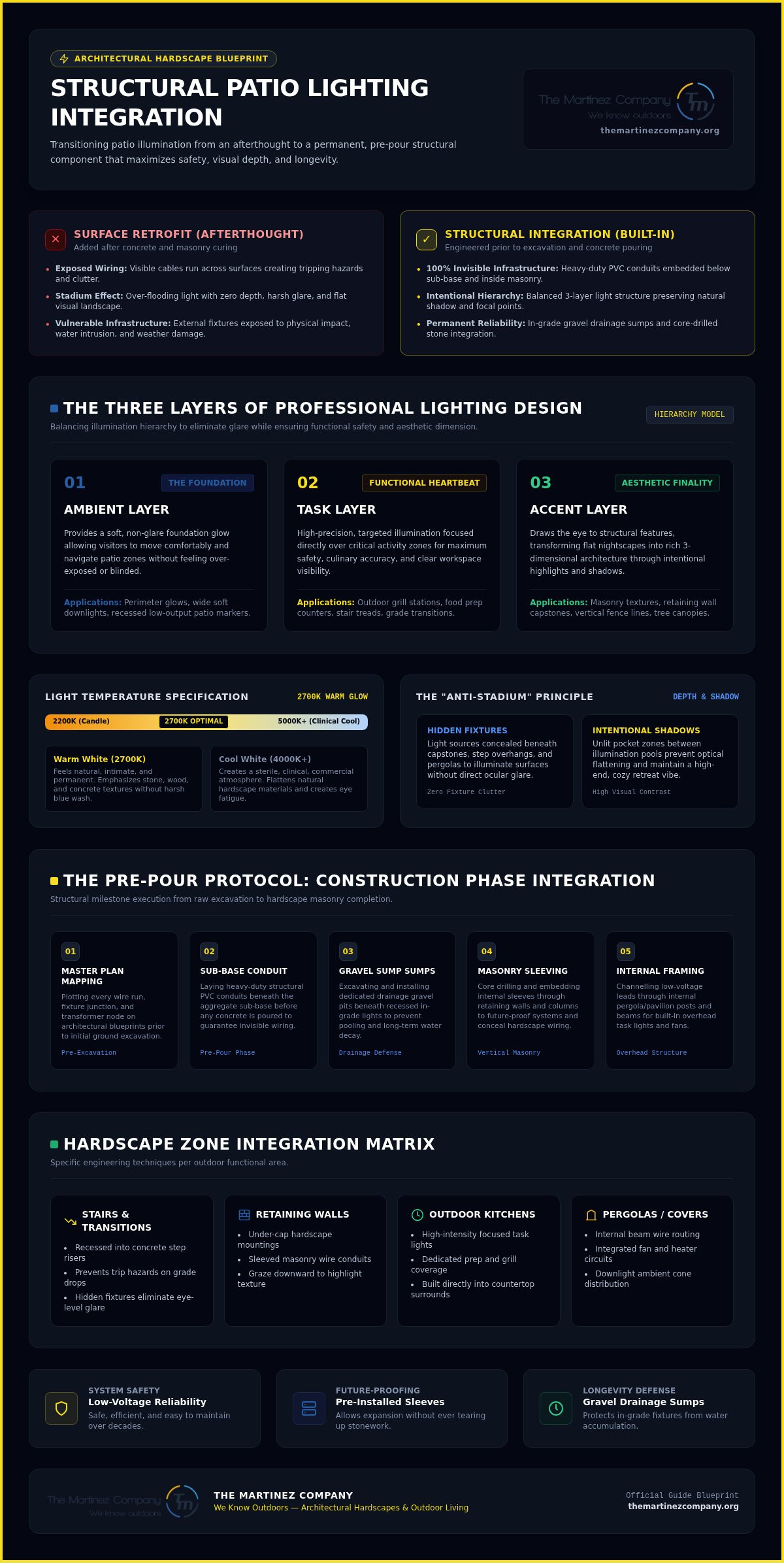
Professional design isn't about flooding a space with light. It's about precision. High-end outdoor environments rely on layered lighting to create depth and dimension. This approach treats illumination as a structural element rather than a surface-level addition. When you learn how to integrate lighting into a patio design, you start by categorizing light into three distinct functions: ambient, task, and accent. This methodology ensures that your backyard remains functional and beautiful long after the sun sets.
Ambient lighting serves as the foundation. It provides a soft, non-glare glow that allows guests to move comfortably through the space without feeling exposed. When considering how to integrate lighting into a patio design, we look at task lighting as the functional heartbeat of the environment. In a custom outdoor kitchen, for example, focused illumination over the grill and prep areas is essential for safety and accuracy. Finally, accent lighting provides the aesthetic finality. It highlights the texture of masonry, the vertical lines of a professional fence, or the canopy of a specimen tree. This layer turns a flat, dark space into a three-dimensional masterpiece of light and shadow.
Why Hierarchy Matters in Outdoor Spaces
Don't settle for the stadium effect. Over-lighting your patio kills the mood and flattens the visual landscape. A professional design uses hierarchy to balance light intensities, allowing some areas to remain in soft shadow. These shadows are vital. They create depth and intrigue. By establishing specific focal points, you guide the visitor's eye across the patio. This strategy highlights the structural integrity of the build while keeping the overall atmosphere intimate and sophisticated. It's the difference between a yard that is simply lit up and one that is expertly designed.
Safety vs. Atmosphere: Striking the Balance
Stability and security are non-negotiable. You must illuminate elevation changes, stairs, and walkways to prevent accidents. However, safety shouldn't look industrial. We prefer to hide light sources within the hardscape, using under-cap lights on retaining walls or recessed lights in concrete steps. This reduces glare while maintaining perfect visibility. The psychological impact of light temperature is equally important. We favor warm light, typically around 2700K. It feels natural and inviting. Cool light often feels clinical or temporary, but warm light emphasizes the permanence and quality of the materials used in your outdoor living space.
Structural Integration: Planning for Lighting During Construction
Lighting is not a plug-and-play accessory. It is a structural requirement. If you wait until the concrete is dry to think about your electrical needs, you've already compromised the design. The secret to how to integrate lighting into a patio design lies in the "Pre-Pour" Protocol. This phase demands that all conduit and wiring paths are established before the first yard of concrete hits the ground. By laying heavy-duty PVC conduit beneath the sub-base, we ensure every wire is protected, permanent, and entirely invisible. This level of foresight separates a professional build from a temporary solution.
Structural integration extends beyond the floor. For vertical elements like retaining walls or custom outdoor kitchens, we utilize core drilling and "sleeving." This technique allows us to run wires through the center of masonry units, positioning hardscape fixtures directly under capstones. When we design outdoor living spaces, we also integrate wiring into the internal framing of pergolas and pavilions. This ensures that overhead task lighting or fans function without a single exposed cable, maintaining the clean lines of the architecture. It's about moving from a conceptual sketch to a physical structure that feels complete and intentional.
The Concrete and Masonry Phase
Mapping is the foundation of accuracy. We plot every wire run on a master plan before excavation begins. This includes embedding sleeves in retaining walls to future-proof the system, allowing for additions without tearing up stonework. For recessed in-grade lighting, drainage is the priority. We install gravel sumps beneath each fixture to prevent water accumulation, ensuring the structural integrity of both the light and the surrounding concrete remains intact for decades. We don't leave these details to chance; we build them into the plan. This is why knowing how to integrate lighting into a patio design during the masonry phase is so vital for long-term reliability.
Concealing the Infrastructure
A professional design hides the "how." Transformers and junction boxes are essential, but they shouldn't be focal points. We mask these components using custom cabinetry in outdoor kitchens or recessed niches behind decorative stone. Professional-grade wire burial is far superior to surface-level runs. It prevents accidental damage from landscaping tools and protects the system from thermal expansion. Our goal is aesthetic finality. The only thing visible should be the light itself, not the machinery that powers it. It's a methodical approach that guarantees a clean, "built-in" look for your entire property.
Zone-Based Strategies: Lighting for Function and Flow
A master plan treats every area of the backyard as a unique room with specific needs. When you understand how to integrate lighting into a patio design, you recognize that a lounge area requires a different intensity than a grill station. Zoning ensures that your patio isn't just a slab of concrete, but a multi-functional environment that adapts to your lifestyle. We divide the space into functional quadrants to ensure that light is always where it's needed and never overwhelming. This methodical approach guarantees that the transition from a bright cooking area to a dim fire pit feels natural and intentional.
Task Lighting for Culinary Spaces
Precision is the priority in the kitchen. When we build custom outdoor kitchens, we integrate under-counter LEDs and high-output grill lights directly into the structure. This eliminates shadows on the prep surface. Pay close attention to the Color Rendering Index (CRI). A CRI of 90 or higher ensures that food looks natural and appetizing under artificial light. Low-quality bulbs often make meat look grey or unappealing. By embedding these fixtures into the masonry during the build, we achieve a level of permanence that temporary clip-on lights can never match.
The lounge and fire pit zones demand a shift in strategy. Here, we prioritize low-intensity, warm light (2700K) to encourage relaxation. We often use recessed hardscape lights tucked under the lip of seating walls to cast a gentle glow on the floor. For dining areas, we focus on creating intimacy. If a pavilion or pergola is part of the design, we can hide wiring for structural pendants within the rafters. This provides a focused pool of light on the table without the visual clutter of exposed cords or bulky fixtures.
Navigation and Perimeter Security
Security and beauty are not mutually exclusive. Step lights are a structural necessity for safety. We typically space them every 3 to 4 feet on wide stairs to provide consistent coverage without creating "hot spots" of glare. Path lights should be staggered rather than lined up like a runway. This guides the eye through the landscape more naturally. It also prevents the "airport landing strip" look that ruins many residential designs.
Perimeter lighting is the final piece of the puzzle. We integrate fixtures directly into fence posts or boundary walls to define the property edge. This extends the visual footprint of your yard at night. For homeowners concerned with security, we use motion sensors that trigger specific zones. This provides safety without ruining the design with constant, harsh floodlights. Learning how to integrate lighting into a patio design at the perimeter ensures that your entire property feels secure, stable, and professionally finished.
Selecting Professional Technology: Voltage, LEDs, and Controls
Choosing the right hardware is an exercise in stability and long-term performance. You've already planned the layout and established the zones. Now, you must select the technology that ensures those plans survive the environment. High-end design requires commercial-grade components that offer both durability and precision. Learning how to integrate lighting into a patio design requires a shift from consumer-grade thinking to professional-grade engineering. We focus on the "how" of the build to ensure the result is permanent.
The Low-Voltage Advantage
Most residential systems rely on low-voltage (12V) technology. It's safer, more efficient, and offers greater flexibility than traditional 120V line-voltage systems. However, professional planning is essential to prevent voltage drop. This phenomenon occurs when the electrical current weakens as it travels further from the power source, resulting in dim fixtures at the end of the line. We solve this by utilizing multi-tap transformers and calculating the exact wattage load for every run. A stable lighting ecosystem depends on a high-quality transformer that acts as the heart of the system, protecting your investment from power surges and weather-related stress.
Automation and Smart Controls
Modern patio illumination should adapt to your life without manual effort. Smart integration allows you to set "scenes" for different moods. You might want a high-visibility "Party" mode for hosting or a soft "Quiet Evening" glow for relaxation. By connecting your outdoor system to home automation, you create a cohesive experience across your entire property. Astronomical timers are a vital component of this setup. These devices automatically adjust your lighting schedule based on seasonal sunset and sunrise times, ensuring your patio is always ready when you are. If you're ready to build a space that works for you, explore our outdoor living services today.
Durability is the final metric of success. We prioritize fixtures with high Ingress Protection (IP) ratings, typically IP65 or higher, to ensure they remain water-tight through heavy rain and irrigation. Materials matter. While plastic or aluminum might look fine on a shelf, they often fail within a few seasons. Solid brass and copper fixtures are the standard for professional builds. These materials develop a natural patina over time and offer superior heat dissipation. This is critical for LED longevity. When heat can't escape the fixture, the LED chip degrades quickly. A professional-grade build focuses on these technical details to ensure aesthetic finality and permanent value.
The Martinez Protocol: Executing Your Patio Lighting Vision
Moving from "Concept to Concrete" is where many projects falter. A master plan is not a suggestion. It is the structural backbone of your backyard. Understanding how to integrate lighting into a patio design requires a commitment to stability and perfection from the first day of excavation. We treat the lighting system as an integral part of the build, not a secondary layer. By collaborating with a general contractor who understands structural integrity, you ensure that every light is protected by the masonry and concrete surrounding it. This level of foresight guarantees that your system lasts as long as the patio itself.
The final inspection is the moment of truth. We don't just flip a switch and leave. We test for glare, coverage, and electrical safety. We look at the space from every angle to ensure that no light source is directly visible to the eye. We check that the coverage is consistent across all zones. Precision is mandatory. We move from raw materials to a finished masterpiece, ensuring that every wire is hidden and every fixture is perfectly aligned. This final step confirms the aesthetic finality of the project and ensures the safety of everyone using the space.
The Value of Professional Execution
Avoiding common DIY pitfalls is the primary benefit of a professional build. Exposed wires, uneven brightness, and mismatched fixtures can ruin even the most expensive stonework. Structural lighting increases the tangible value of your property because it is permanent. It is built into the concrete and masonry. This creates a level of durability that surface-level solutions cannot match. The Martinez Company commitment to meticulousness ensures a result that is both functional and beautiful. We don't just build patios. We create enduring environments that stand the test of time.
Your Next Steps in Design
Consulting with a Reliable Visionary is the first step toward your backyard transformation. High-quality, permanent lighting solutions require a realistic budget and a clear roadmap. We help you navigate the transition from an abstract idea to a completed physical structure. Knowing how to integrate lighting into a patio design is about more than just bulbs; it's about the integrity of the build itself. If you are ready to elevate your home, Transform your outdoor living space with professional design. Let's move from the planning phase to the concrete reality of a perfectly illuminated retreat.
Elevating Your Vision from Concept to Concrete
A master plan is the bridge between a standard backyard and a high-end retreat. By mastering how to integrate lighting into a patio design through structural planning and layered zones, you ensure your space remains functional long after sunset. True luxury doesn't come from temporary fixtures or exposed wires; it stems from the permanence of integrated conduits and commercial-grade technology embedded directly into the build. This methodical approach ensures that every light serves a purpose while maintaining the clean lines of your architecture.
Since 2014, The Martinez Company has operated as precision concrete and outdoor living specialists. We prioritize stability and perfection in every build, moving from abstract ideas to physical structures with meticulous craftsmanship. We don't just build patios; we create enduring environments designed for safety and aesthetic finality. When you choose professional execution, you're investing in the long-term value and nighttime utility of your property. Your sanctuary is waiting to be realized through expert engineering and reliable design.
Architect your ultimate outdoor sanctuary with The Martinez Company and experience the difference that structural expertise brings to your home. It's time to build something that lasts.
Frequently Asked Questions
Is low-voltage or high-voltage lighting better for a patio?
Low-voltage (12V) lighting is the professional standard for residential outdoor environments. It offers superior safety and flexibility compared to 120V line-voltage systems. High-voltage installations require deep trenching and rigid conduit for every run, making future adjustments nearly impossible. Low-voltage systems allow for precise control over light intensity and are far safer if a cable is accidentally cut during landscaping. It's the ideal choice for achieving a sophisticated, built-in look.
How do I hide the wires for my patio lights?
Hiding wires requires structural foresight during the initial construction phase. We use heavy-duty PVC conduit buried beneath the patio sub-base to create protected pathways for all electrical runs. For vertical elements, we core-drill through masonry or route wiring through hollow structural posts. This prevents the visual clutter of surface-mounted cables. Proper concealment ensures an aesthetic finality where the only thing visible is the light itself, not the infrastructure powering it.
Can I add lighting to an existing concrete patio?
Yes, you can add lighting to an existing structure, though it requires specialized tools like diamond-tipped saw blades or core drills. We create narrow channels in the concrete for wiring and niches for recessed fixtures. While this is more complex than a pre-pour installation, it still yields high-end results. Understanding how to integrate lighting into a patio design that's already finished ensures you don't have to compromise on stability or nighttime utility.
What is the best color temperature for outdoor lighting?
The most aspirational outdoor environments utilize a warm color temperature between 2700K and 3000K. This range mimics the inviting glow of a sunset or a natural fire. It enhances the rich textures of stone and wood without looking clinical. Avoid temperatures above 4000K, as they often feel industrial or harsh. Sticking to warm tones creates a sense of security and relaxation, transforming your backyard into a true sanctuary after the sun sets.
How many lumens do I need for my outdoor kitchen?
Precision task areas like grills and prep counters require 100 to 200 lumens per fixture for safe operation. For ambient zones around the kitchen, 50 to 80 lumens is usually sufficient to provide a comfortable glow. It's important to balance these intensities to avoid glares that disrupt the mood. By using a zoned strategy, you ensure that high-activity areas remain functional while the rest of the patio stays intimate and inviting.
Do I need a separate permit for outdoor patio lighting?
Permit requirements depend on your local building department and the complexity of the electrical work. Most low-voltage systems don't require a separate permit, but high-voltage runs or major structural additions often do. We recommend verifying local codes before any excavation begins. A professional contractor handles these regulatory details to ensure your project meets all safety standards. This protects your investment and ensures that every structural component is built to last.
How do I protect my outdoor lighting from the weather?
Protection begins with selecting fixtures that carry an IP65 or higher rating for water resistance. Solid brass and copper fixtures are superior to plastic or aluminum because they don't corrode over time. Learning how to integrate lighting into a patio design also means using weather-tight connectors and housing transformers in ventilated, protective enclosures. These steps ensure long-term stability and prevent the system from failing due to moisture or thermal expansion.


Comments