
How to Clean and Maintain a Stamped Concrete Patio: The Definitive Owner’s Guide
Your stamped concrete patio is a high-performance architectural asset that requires the same level of precision in its care as it did in its construction. It's natural to feel anxiety when choosing cleaning agents, especially when a single harsh chemical could strip the vibrant color you've worked hard to achieve. You've likely noticed how constant sun exposure and heavy foot traffic test the resilience of your outdoor space. Learning how to clean and maintain a stamped concrete patio is the only way to ensure your investment remains a permanent fixture of beauty rather than a fading memory.
We believe that professional-grade builds deserve professional-grade care. This guide offers a definitive maintenance framework designed to preserve both structural integrity and aesthetic finality. You'll gain a clear cleaning schedule, learn which products won't compromise your sealer, and discover exactly when it's time to call in the experts for a refresh. Let's move from uncertainty to mastery. It's time to protect the craftsmanship that defines your home.
Table of Contents
The Science of Stamped Concrete Longevity
Stamped concrete is more than just a building material. It's a high-performance structural and aesthetic hybrid. This material combines the rugged durability of traditional masonry with the refined beauty of high-end design. Stamped concrete demands a specific approach to care because its beauty is literally skin deep. If you want to master how to clean and maintain a stamped concrete patio, you have to treat it like the precision asset it is.
The sealer is the most critical component of your patio's survival. We call this the "wear layer." It's a sacrificial barrier that takes the brunt of environmental abuse so your concrete doesn't have to. UV rays are a constant threat. They break down decorative pigments and lead to a dull, washed-out appearance. In colder climates, freeze-thaw cycles force water into microscopic pores, which can cause the surface to flake or "spall." Many homeowners fall for the "maintenance-free" myth. The reality is that concrete is a porous, living material. Protection is the only way to avoid the slow decay of neglect.
Understanding the Decorative Surface
Most high-end patios utilize two types of color: integral pigments mixed into the wet concrete and release agents applied to the surface. These layers interact to create the realistic shadows and highlights found in natural stone. The texture that provides this realism also acts as a catchment area for dirt and organic tannins. Standard concrete cleaning methods, like aggressive high-pressure washing or harsh acidic cleaners, can ruin these finishes. They strip the secondary colors and leave the patio looking flat and industrial. You need a method that respects the chemistry of the build.
The Anatomy of a Protected Patio
Choosing the right sealer is a technical decision. Acrylic sealers provide a visible film that enhances color and offers a "wet look," while penetrating sealers work deep within the pores to provide invisible protection. A properly maintained surface acts as a waterproof shield. This barrier is essential for preventing the buildup of unsightly white powder. Efflorescence is the migration of salt to the concrete surface. By sealing the surface, you block the moisture path that allows these salts to travel. Understanding how to clean and maintain a stamped concrete patio ensures this protective chemistry remains active for years to come.
The Professional Cleaning Protocol: Step-by-Step
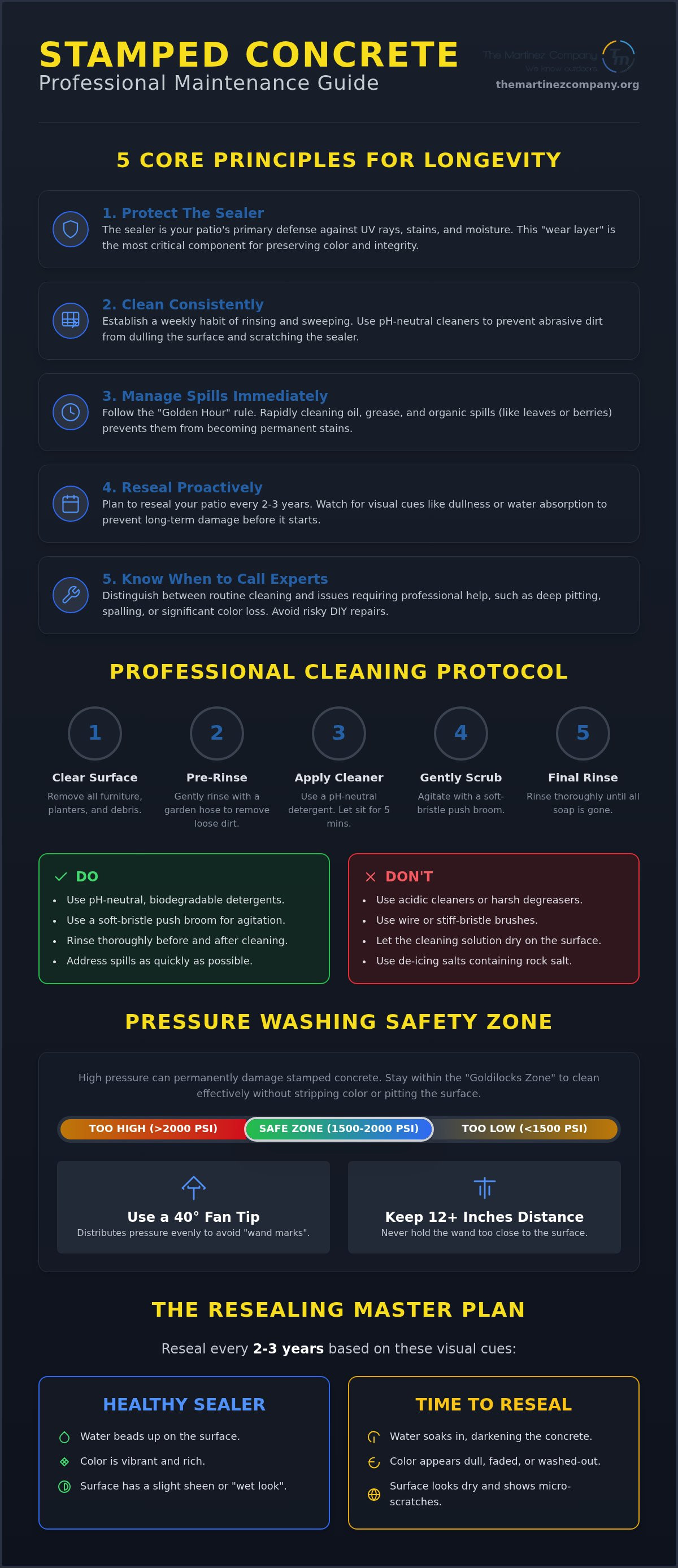
Mastering how to clean and maintain a stamped concrete patio begins with understanding that dirt is an abrasive. Every step you take across a dusty surface acts like sandpaper on your sealer. Establish a weekly habit of removing fine particulates to protect the finish. We recommend a "rinse-first" rule. Always saturate the surface with a low-pressure garden hose before applying any cleaning agents. This prevents dry-scrubbing grit into the acrylic layer, which causes micro-scratches that dull the shine over time.
The chemistry of your cleaner matters. Avoid harsh degreasers or acidic solutions that can eat through the protective barrier. Stick to pH-neutral detergents. These solutions lift organic stains without compromising the structural integrity of the wear layer. Use a soft-bristle push broom for agitation. Never use stiff wire brushes. Metal bristles will gouge the texture and leave rust-prone fragments behind. If you are ever unsure about the specific needs of your high-end surface, reaching out to The Martinez Company is a smart step toward professional-grade preservation.
The Routine Deep Clean
Start by clearing all furniture and debris. Use a leaf blower or a fine-bristle broom to remove dry dust. Apply your mild, biodegradable detergent solution across the entire surface in sections. Let it sit for five minutes, but don't let it dry. Agitate the textured areas gently with your soft brush to lift trapped grime. Rinse thoroughly until the water runs clear. This process ensures your patio maintains its aspirational glow without the risk of chemical damage.
The Pressure Washing Debate
Most homeowners reach for a pressure washer without realizing the risk of permanent pitting. High-pressure streams can strip the decorative release agents and leave your concrete looking raw. The "goldilocks zone" for stamped concrete is 1500 to 2000 PSI. Use a 40-degree wide-fan tip to distribute the force evenly. Never hold the wand closer than 12 inches from the surface. Holding the wand too close causes "wand marks" or deep pitting that cannot be reversed. Proper technique here is essential for longevity, much like following a comprehensive guide to sealing stamped concrete to ensure your patio remains a durable masterpiece. Understanding how to clean and maintain a stamped concrete patio requires this level of technical respect for the material.
Stain Management and Surface Protection
A high-end patio is an investment in your home's architectural narrative. Protecting that investment requires a proactive stance against chemical and mechanical threats. Oil, grease, rust, and organic tannins from fallen leaves are the primary enemies of your finish. Mastering how to clean and maintain a stamped concrete patio involves understanding the "Golden Hour" rule. This is the critical window immediately following a spill. If you remediate a liquid contaminant before it breaches the sealer, you prevent a permanent blemish on your craftsmanship.
Mechanical wear is equally dangerous. Dragging heavy wrought-iron furniture across the surface will eventually compromise the wear layer. Use high-quality furniture pads and breathable outdoor mats under high-traffic zones. These small additions act as a buffer between the daily movement of life and the aesthetic finality of your concrete. It's a simple step that ensures the structural integrity of the surface remains unmarred by avoidable scratches.
Removing Stubborn Contaminants
Oil and grease demand a delicate touch. Don't scrub aggressively; instead, blot the area with a pH-neutral cleaner to lift the residue. Rust is another common issue, often caused by metal furniture or iron-heavy fertilizer overspray. For organic stains like bird droppings or leaf tannins, a gentle agitation with a biodegradable soap usually suffices. If these contaminants sit too long, they can "ghost" into the texture, making professional restoration necessary. Consistency is your best tool for keeping the surface pristine.
Winter Precautions and Salt Hazards
De-icing salts are the single greatest threat to your patio's longevity. When salt dissolves in water, it enters the microscopic pores of the concrete. As the water evaporates, the salt recrystallizes and expands. This internal pressure causes the surface to flake and spall. Avoid rock salt entirely. It's a destructive chemical that will ruin your decorative finish in a single season.
Safe alternatives exist for traction. Use plain sand or kitty litter to prevent slips without the chemical fallout. When removing snow, never use metal shovel blades. A metal edge can catch on the stamped texture and chip the concrete. Stick to plastic shovels or snow blowers with rubber-edged augers. These precautions are vital for anyone learning how to clean and maintain a stamped concrete patio in colder climates. Your goal is to preserve the build through every season.
The Resealing Master Plan: When and How
Resealing is the most influential step in how to clean and maintain a stamped concrete patio. It isn't a task for every season. Some suggest annual applications, but we disagree. Over-sealing creates a thick, brittle film that eventually bubbles, peels, or turns white. The sweet spot for reapplication is typically every two to three years. You're looking for specific indicators of wear like persistent dullness or a white, powdery residue known as chalking. Preparation is 90% of the job. Your patio must be bone-dry for at least 24 hours before you even open a can of sealer. Any trapped moisture will result in a milky, clouded finish that ruins the aesthetic finality of the build.
Choosing between solvent-based and water-based sealers is a technical decision. Solvent-based products typically provide a richer color and that classic "wet look" many homeowners desire. Water-based sealers offer a more natural, matte finish and are easier to apply in areas with strict environmental regulations. Regardless of the chemistry, the goal remains the same: a permanent, protective barrier that defends against the elements. If you want to ensure your high-end outdoor space receives this level of meticulous care, contact the professionals at The Martinez Company to schedule a restoration assessment.
Testing Your Current Sealer
Don't guess when it comes to protection. Use the Water Bead Test. Pour a small amount of water on several areas of the patio and wait 30 seconds. If the water beads up, your wear layer is still functional. If water darkens the concrete, the sealer has failed. You should also check for "blushing." These are white spots caused by moisture trapped beneath the sealer layer. These signs indicate that the structural integrity of the wear layer is compromised and requires immediate attention to prevent deeper damage.
Professional Application Techniques
When you're ready to apply, remember that "Thin is King." Thick coats trap air and lead to unsightly bubbles that are difficult to remove. We recommend two thin applications over one heavy layer. Always include anti-skid additives in the final coat. These microscopic beads maintain safety on wet surfaces without distracting from the design. Timing is everything. Aim for a temperature window between 50 and 90 degrees Fahrenheit. High humidity or direct midday sun will cause the sealer to dry too quickly, preventing it from bonding correctly with the concrete pores. Understanding these nuances is the difference between a DIY attempt and a professional result.
When to Call the Visionaries: Professional Restoration
Consistency is the foundation of longevity. While you've mastered the basics of how to clean and maintain a stamped concrete patio, there's a threshold where homeowner care must yield to professional restoration. You need to identify when a crack is more than just a cosmetic blemish. Hairline fractures are common in cured concrete, but wide gaps or sections that shift vertically signal structural distress. These issues require the rugged confidence of a seasoned contractor to resolve before they compromise the entire installation.
DIY color restoration is a high-risk endeavor. Homeowners often attempt to refresh the color using store-bought tints, only to encounter the ghosting effect. This occurs when the new pigment fails to bond evenly with the old release agents, resulting in a blotchy, unnatural appearance. Our approach at The Martinez Company treats maintenance as a structural priority. We focus on the transition from a worn surface back to a state of aesthetic finality. We ensure that every restoration project is built to last, emphasizing stability as a core value of our craft.
The Limitations of DIY
Know when to stop. If you see heavy delamination where the concrete surface is physically peeling away, or if the decorative pigments have faded significantly, it's time for expert intervention. Stripping old, failing acrylic layers is a chemically complex process. It requires professional-grade equipment and specialized solvents that aren't available at local hardware stores. Without the right tools, you risk leaving a sticky residue that prevents new sealers from ever bonding correctly. We provide the accuracy and meticulousness required to clear the slate and start fresh.
Partnering for Permanence
Partnering for permanence means looking beyond the immediate needs of how to clean and maintain a stamped concrete patio. The Martinez Company evaluates the health of your concrete from the inside out. We don't just look at the surface; we analyze the structural integrity and the environment surrounding your outdoor space. We create customized maintenance plans for high-end outdoor living spaces that go beyond simple cleaning. This visionary approach ensures your patio remains a permanent fixture of beauty and reliability in your home. It's about preserving the "how" of the build just as much as the "what."
If your patio shows signs of advanced wear or structural shifts, don't leave the result to chance. Professional insight is the only way to guarantee a transformation that lasts. Schedule a professional concrete evaluation with The Martinez Company to protect your investment and realize the full potential of your outdoor living space.
Securing the Future of Your Outdoor Living Space
Your stamped concrete patio is a testament to high-level craftsmanship. It deserves a maintenance routine that reflects that same standard of excellence. By prioritizing the protective wear layer and adhering to a strict schedule of pH-neutral cleaning, you ensure your investment remains a permanent fixture of beauty. Remember that prevention is the most effective tool in your arsenal. Swiftly remediating spills and avoiding destructive de-icing salts will preserve the structural integrity and vibrant pigments of your surface for decades.
Mastering how to clean and maintain a stamped concrete patio is a journey from initial concept to long-term permanence. While routine care is within your control, complex restoration and precision resealing often require the eye of an expert. The Martinez Company brings over a decade of concrete mastery to every project. We are specialists in durable, high-end outdoor living spaces with a legacy rooted in stability and perfection. We understand the chemistry of the build and the importance of aesthetic finality.
Protect your investment with a professional concrete consultation from The Martinez Company. Your patio is the heart of your outdoor experience. Keep it flawless and enjoy the transformation for years to come.
Frequently Asked Questions
How often should I clean my stamped concrete patio?
You should perform a basic cleaning weekly and a deep wash seasonally. Remove loose debris frequently to prevent grit from scratching the sealer. For a seasonal deep clean, use a garden hose and a soft-bristle broom to lift trapped particulates. This routine is the cornerstone of how to clean and maintain a stamped concrete patio. Regular attention prevents the buildup of organic tannins and abrasive dust that can dull your finish over time.
Can I use a regular pressure washer on stamped concrete?
You can use a pressure washer, but you must limit the pressure to 1500 to 2000 PSI. Using higher settings risks stripping the decorative release agents or causing permanent pitting in the concrete. Always use a 40-degree wide-fan tip and maintain a distance of at least 12 inches from the surface. This technical precision ensures you remove grime without compromising the structural integrity or the aesthetic finality of your patio's wear layer.
What is the best soap for cleaning decorative concrete?
The best choice for decorative surfaces is a pH-neutral biodegradable detergent. Avoid harsh degreasers, ammonia, or acidic cleaners, as these chemicals can eat through the acrylic sealer. These mild solutions effectively lift oil and dirt without damaging the delicate chemistry of the concrete pigments. Using the correct soap is vital for long-term preservation, ensuring your high-end outdoor space maintains its aspirational glow without the risk of chemical scarring or discoloration.
Why is my stamped concrete turning white in some spots?
White spots are typically caused by efflorescence or moisture trapped beneath the sealer, known as "blushing." Efflorescence occurs when salts migrate to the surface through water evaporation. Blushing happens if the sealer was applied to a damp surface or if water has breached the wear layer. Both issues indicate that the protective barrier requires professional attention. Identifying these signs early prevents minor cosmetic wear from escalating into significant structural damage or delamination.
Can I use rock salt on my patio during the winter?
You should never use rock salt or chemical de-icers on a stamped concrete patio. These substances cause a chemical reaction that forces water into the concrete pores, leading to internal pressure and surface spalling during freeze-thaw cycles. Use plain sand or kitty litter for traction instead. These alternatives provide safety without the destructive fallout of traditional salts. Protecting your patio from chemical hazards is a critical part of maintaining its permanence and beauty through every season.
Is it possible to change the colour of my stamped concrete if it fades?
It is possible to restore or alter the color of faded concrete through professional restoration techniques. Specialists use tinted sealers or antiquing agents to reintroduce depth and highlights to the texture. However, DIY attempts often lead to "ghosting" or uneven blotches. For a result that achieves perfection and stability, consult a professional who understands the specific interaction between integral colors and secondary release agents. This ensures a transformation that looks intentional and high-end.
How long does it take for the sealer to dry after application?
Sealer typically dries to the touch in four hours, but you must wait longer for full use. Allow at least 24 hours of drying time before walking on the surface in soft shoes. For heavy furniture or pets, wait 48 to 72 hours to ensure the acrylic layer has fully cured. High humidity or low temperatures will extend this window. Patience during the curing phase is essential for achieving a durable, long-lasting finish that resists scuffing.
Do I need to reseal my patio every year?
No, you don't need to reseal your patio every year. Most high-end installations only require reapplication every two to three years. Annual sealing is actually detrimental, as it leads to a thick buildup that can bubble, peel, or turn white. Use the "Water Bead Test" mentioned earlier to check the health of your wear layer. This methodical approach to how to clean and maintain a stamped concrete patio prevents the risks associated with over-maintenance.


Comments