
Benefits of a Concrete Patio vs Pavers: The 2026 Comparison Guide
The most expensive option for your backyard isn't the one with the highest price tag; it's the one that requires a total overhaul in five years. Many homeowners assume that high-end modular pavers are the only path to a luxury aesthetic, yet the hidden reality of shifting stones and invasive weeds often tells a different story. When you weigh the benefits of a concrete patio vs pavers, you're not just choosing a surface; you're deciding between a temporary fix and a permanent architectural foundation.
You want an outdoor sanctuary that complements your home's modern lines without becoming a secondary full-time job. It's frustrating to invest in a vision only to watch it succumb to the elements or require constant repair. This 2026 comparison guide breaks down the critical differences in structural integrity, long-term maintenance costs, and high-end design possibilities to ensure your investment stands firm. From the engineering behind the pour to the precision of the finish, we'll explore how to achieve a space that increases your property value and provides a seamless backdrop for a lifetime of memories.
Table of Contents
The Foundation of Outdoor Living: Concrete vs. Pavers
Your patio serves as the structural anchor of your entire outdoor sanctuary. It's the stage for your integrated kitchen, the base for your fire feature, and the level ground for your luxury seating. Choosing between materials requires looking past surface-level aesthetics. You must consider the engineering that happens beneath your feet to ensure the stability of the structures built on top. In 2026, high-end design trends favor seamless, large-format surfaces that mirror the clean lines of modern architecture. This shift highlights the core technical differences between a monolithic pour and a modular assembly, as homeowners seek more permanence in their outdoor investments.
When evaluating the benefits of a concrete patio vs pavers, the decision starts with how the surface handles stress. One is a single, unified structure; the other is a collection of thousands of individual parts. While price often dominates the conversation, structural permanence is the metric that actually protects your property value over time. We focus on the "how" of the build to ensure the "what" remains perfect for decades. A patio shouldn't just look good on day one; it must maintain its integrity as the seasons change and the soil moves.
Understanding the Monolithic Concrete Slab
A monolithic slab is a continuous, single-pour surface engineered to act as a unified body. This construction method offers significant structural advantages, particularly for heavy outdoor living installations that require a rigid base. Modern concrete has evolved far beyond the basic gray sidewalks of the past. Today, architectural-grade finishes allow for sophisticated textures and colors that integrate perfectly with high-end residential designs. We view professional concrete work as a permanent structural investment rather than a simple ground covering. It provides a stable, unyielding foundation that won't shift under the weight of an integrated kitchen or a custom stone fireplace, ensuring your vision remains intact for years.
Understanding Modular Paver Systems
Modular systems rely on individual units to create a flexible surface. These Pavers (flooring), which can be made of natural stone, brick, or compressed concrete, are laid over a prepared base of gravel and sand. The system gains its stability from interlocking patterns, specialized jointing sand, and heavy-duty edge restraints. While these components allow the surface to flex with the ground, they also create thousands of tiny seams that require attention. In high-end projects, materials like travertine or porcelain are common choices for their visual appeal. However, the integrity of the system depends entirely on the long-term performance of the joints and the stability of the soil beneath each individual unit.
Structural Integrity and Engineering Performance
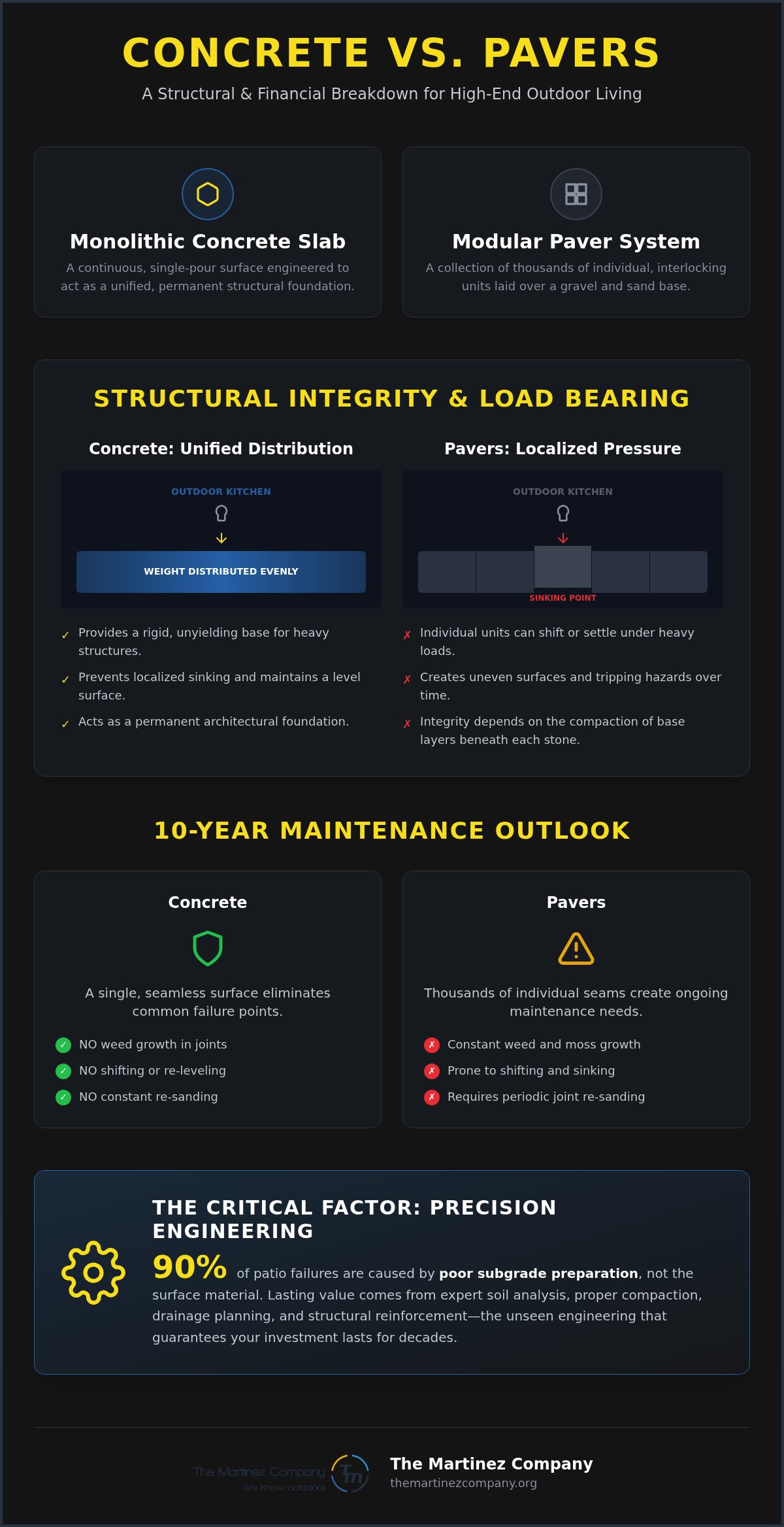
Load-bearing capacity is where the benefits of a concrete patio vs pavers become most apparent to the discerning homeowner. If your vision includes a heavy outdoor kitchen or a stone fireplace, the surface must act as a structural foundation. Modular pavers rely on the compaction of individual base layers; if one stone settles, the entire grid loses its level. In contrast, a monolithic concrete slab distributes weight across its entire surface area. This engineering prevents localized sinking and ensures your high-end furniture remains perfectly balanced on an unyielding plane.
Soil movement is an inevitable reality of any landscape. Modular systems handle this by shifting stone by stone, which often results in uneven "lips" and tripping hazards over time. We take a different approach by treating the patio as a rigid engineering project. The common fear of cracking is often rooted in poor installation rather than the material itself. We use structural reinforcement and calculated joints to maintain a flawless finish regardless of the climate. This meticulous focus on the unseen layers is what defines expert outdoor living construction and ensures your investment doesn't shift with the seasons.
Subgrade Preparation: The Unseen Hero
Success starts in the dirt. We find that 90% of patio failures occur because of poor subgrade preparation rather than the surface material itself. Proper compaction standards are non-negotiable in residential contracting to prevent settling over time. We analyze drainage patterns and soil composition to prevent hydrostatic pressure from lifting the slab or washing away the base. By creating a stable, well-drained environment beneath the surface, we ensure the structural finality of the entire project.
Reinforcement Techniques for Concrete Mastery
We don't just pour; we build a skeleton for your outdoor space. Rebar and wire mesh provide the internal tension needed for high-traffic areas, preventing the slab from pulling apart under stress. For added surface durability, we often utilize fiber-reinforced concrete to minimize micro-cracking and improve impact resistance. Control joints function as intentional, architectural weak points that dictate exactly where the concrete expands to prevent random cracking and maintain a pristine surface finish.
Defining Your Aesthetic: Customization and Visual Impact
Design is the bridge between a functional backyard and a true outdoor sanctuary. While structural integrity provides the foundation, the visual finish dictates the atmosphere of your home's exterior. Modern architecture often demands clean lines and expansive, uninterrupted surfaces that modular systems struggle to provide. When analyzing the aesthetic benefits of a concrete patio vs pavers, the choice often comes down to the desired level of visual continuity. Decorative concrete offers a seamless canvas that can be tailored to mirror the most expensive natural materials, while pavers provide a rhythmic, textured look that defines traditional landscapes.
Color permanence remains a critical factor in your long-term satisfaction. We prioritize integral pigments that are mixed directly into the concrete before the pour, ensuring the hue remains consistent even if the surface experiences minor wear. This contrasts with surface-level stains or some budget paver options that can fade under intense UV exposure. By choosing architectural-grade finishes, you achieve a level of aesthetic finality that complements the permanence of your home's structure. You aren't just choosing a color; you're selecting a visual legacy for your property.
The Art of Stamped and Stained Concrete
Stamped concrete has revolutionized the way we approach outdoor design. It allows us to replicate the intricate textures of natural slate, hand-cut stone, or even weathered wood planks without the maintenance headaches of individual joints. This method provides the realistic appearance of high-end masonry while maintaining the structural unity of a monolithic slab. Custom staining techniques further enhance this effect by adding variegated tones that mimic the natural color shifts found in earth-mined stone. Concrete also allows for organic, curved shapes that flow naturally with your landscape's topography, a feat that requires complex cutting and potential stability loss with modular units.
Design Flexibility with Paver Patterns
Modular systems offer a distinct aesthetic characterized by repetition and pattern. From classic herringbone to modern geometric layouts, pavers create a visual rhythm that can be used to define specific zones within a larger space. Designers often mix sizes and colors to create borders or focal points around fire pits and seating areas. The aesthetic of the "joint" also plays a role; the choice of sand color can either highlight the individual stones or create a more blended appearance. While these systems integrate well with other outdoor structures, they inherently lack the "seamless" look that defines contemporary minimalist design. Understanding these visual differences is a core part of weighing the aesthetic benefits of a concrete patio vs pavers for your specific architectural style.
Calculating the Total Cost of Ownership and Maintenance
Success in outdoor construction is measured in years, not days. Many homeowners fall into the trap of comparing initial quotes without considering the financial reality of the next decade. Understanding the benefits of a concrete patio vs pavers requires looking at the checkbook long after the crew has left the site. While both surfaces require an upfront investment, their divergent maintenance paths create a significant gap in long-term value. A precision-engineered concrete slab offers a "set and stay" solution, whereas modular systems often become a recurring line item in your home maintenance budget.
Weeds and insects are the primary antagonists of a modular landscape. Every seam between pavers is an invitation for organic growth and ant colonies, which can undermine the sand base and lead to shifting. You might spend your weekends applying herbicides or pressure washing joints only to realize the structural integrity is slowly degrading. When you evaluate the benefits of a concrete patio vs pavers, the monolithic nature of concrete wins on simplicity. It eliminates the thousands of tiny failure points inherent in modular designs, providing a surface that remains as clean and level in year ten as it was on day one.
Maintenance Requirements for Lifelong Beauty
Every high-end surface requires some level of care to preserve its aesthetic finality. For paver systems, this involves a multi-year cycle of refreshing polymeric sand to keep the units locked and weed-free. Concrete maintenance is more streamlined, typically requiring a professional resealing every few years to protect against UV fading and freeze-thaw cycles. Total Cost of Ownership is the sum of installation plus a decade of projected maintenance. By choosing a material that resists organic intrusion, you protect both your time and your capital.
Resale Value and Property ROI
In the 2026 real estate market, buyers prioritize "stability and perfection" over temporary fixes. A professionally engineered concrete patio acts as a permanent architectural extension of the home, which positively impacts appraisals. It signals to a potential buyer that the property was built to last with meticulous attention to detail. Curb appeal is about more than just a first impression; it's about the confidence that the outdoor sanctuary won't require immediate repairs. Secure your investment with a partner who values permanence; explore our outdoor living solutions to start your transformation.
Precision Execution: The Martinez Company Advantage
The material you choose is only as good as the hands that install it. While we have detailed the technical benefits of a concrete patio vs pavers, the most critical variable in your project's success is the contractor's engineering proficiency. A high-end paver can settle if the base isn't compacted to industrial standards. A decorative concrete slab can fail if the reinforcement isn't placed with mathematical precision. We don't just provide labor; we provide the technical expertise that transforms a simple backyard into a permanent architectural landmark. Since 2014, our commitment to stability and structural integrity has been the cornerstone of every residential project we touch.
We approach every build with a focus on structural finality. There is no room for hesitation when pouring a foundation for your home's exterior life. By understanding the engineering behind the surface, we eliminate the common pains of shifting stones or random cracking. We value the "how" of the build as much as the "what," ensuring that the transition from a concept to a completed physical result is seamless. When you weigh the benefits of a concrete patio vs pavers, remember that a Martinez build is designed to outlast trends and withstand the elements for decades.
Integrated Design: Beyond the Surface
Modern outdoor living requires more than just a flat surface. It's a complex ecosystem of structures that must work in harmony. We specialize in creating integrated outdoor living sanctuaries where the patio serves as the structural anchor for custom kitchens, stone fireplaces, and heavy pergolas. By acting as a single-source contractor, we ensure that the drainage for your kitchen and the footings for your cedar fence are perfectly synchronized with the patio pour. This holistic approach prevents the logistical headaches and structural mismatches that occur when juggling multiple subcontractors. We manage the journey from abstract concept to physical finality with a methodical construction rhythm that respects your time.
Your Project, Our Perfection
Every project begins with a unique vision, but it ends with our standard of perfection. We position ourselves as the "Reliable Visionary" in the community, blending a creative spark with the rugged confidence of seasoned builders. We understand that your outdoor space is an extension of your home's identity and a significant financial investment. Our team ensures that every joint is clean, every slope is accurate, and every finish is flawless. We take the anxiety out of the build by providing a clear roadmap from the first point of contact to the final walkthrough. You deserve an outdoor space that reflects your standards and stands as a testament to high-level craftsmanship. Transform your backyard with a precision-built patio from The Martinez Company and experience the difference that structural mastery makes.
Securing Your Architectural Legacy
Your backyard isn't just an extension of your home; it's a permanent stage for your life's most meaningful moments. Choosing the right surface requires balancing immediate visual appeal with the unyielding reality of structural engineering. We've explored how the benefits of a concrete patio vs pavers extend beyond simple aesthetics to include long-term stability and a lower total cost of ownership. While pavers offer a modular charm, the monolithic strength of precision-engineered concrete provides a seamless foundation that resists the weeds and shifting common to traditional stones.
The Martinez Company has specialized in high-end outdoor living environments since 2014, bringing a commitment to stability and perfection to every pour. We don't just install surfaces; we build enduring sanctuaries that increase property value and withstand the test of time. It's time to transition from abstract ideas to a physical structure you can trust. Start your outdoor transformation with a custom patio consultation and secure the architectural finality your home deserves. Your vision is ready for a foundation that never wavers.
Frequently Asked Questions
Does a concrete patio always crack eventually?
Concrete is designed to expand and contract; however, professional engineering prevents random, unsightly cracks. We install strategic control joints that act as intentional weak points to dictate exactly where movement occurs. When combined with a properly compacted subgrade and steel reinforcement, the surface maintains its structural integrity and aesthetic finality for decades. It's about controlling the material's natural properties through precision execution.
Which is more expensive: a concrete patio or pavers?
Paver systems typically require a higher initial investment due to the intensive labor required for individual stone placement and base preparation. While concrete is often more cost-effective at the start, you should consider the long-term benefits of a concrete patio vs pavers regarding maintenance savings. A monolithic slab eliminates the need for periodic sand replacement and weed mitigation, providing superior financial value over time.
Can I install an outdoor kitchen on top of a paver patio?
You can install heavy structures on pavers, but the base requires significant extra reinforcement to prevent localized settling. Without a thickened sub-base, the weight of stone ovens or granite counters can cause individual units to sink over time. We often recommend a reinforced concrete slab for these integrated sanctuaries because it distributes the load evenly across the entire surface to ensure lasting stability.
How long does a professionally installed concrete patio last?
A professionally engineered concrete patio can easily last 30 to 50 years with basic care. Its longevity depends on the quality of the initial pour and the precision of the subgrade compaction. Because it's a monolithic structure, it doesn't suffer from the shifting or individual stone failure that can plague modular systems. It's a permanent architectural addition that remains stable as your landscape matures and evolves.
Do pavers require a concrete base for stability?
Most paver installations rely on a flexible base of compacted gravel and sand rather than a rigid concrete slab. While a concrete base can be used to prevent sinking, it significantly increases the project's complexity and cost. If your goal is the absolute stability of a rigid foundation, a decorative concrete pour often provides a more efficient and structurally sound result for modern outdoor living environments.
Which surface is safer for pool areas in terms of slip resistance?
Both surfaces can be engineered for safety, but decorative concrete offers superior customization for slip resistance. We integrate specialized anti-skid additives into the final sealer to create a high-traction surface that remains comfortable for bare feet. While some pavers have natural texture, concrete allows us to precisely control the grit level to meet the specific safety requirements of your high-end pool sanctuary.
How often do I need to seal my stamped concrete patio?
We recommend resealing your decorative concrete every two to three years to preserve the color depth and protect against moisture intrusion. This simple maintenance task prevents UV fading and ensures the surface remains resistant to oils or food spills from your outdoor kitchen. Regular sealing is a small investment that maintains the aesthetic finality and structural perfection of the Martinez standard for years to come.
Can weeds really grow through pavers if they are installed correctly?
Weeds don't usually grow from beneath the pavers; instead, seeds land in the joints and take root in the settling dust. Even with high-quality polymeric sand, the seams eventually become vulnerable to organic growth as the material weathers. One of the primary benefits of a concrete patio vs pavers is the total elimination of these joints, ensuring a clean, weed-free environment that requires zero herbicides.


Comments