
Wood Fence Rotting at the Bottom? Solutions That Last
A fresh board won’t solve a fence base that stays wet. If you’re looking for a wood fence rotting at the bottom solution, start by finding what is holding moisture against the wood, not simply covering the damage. Rot can be superficial, but soft, crumbling boards or a loose post may signal a deeper problem.
Whether a repair will hold depends on how far the rot has spread and whether the fence remains structurally sound. A localized problem may call for a focused repair; widespread decay can make replacement the more reliable path.
This guide will help you identify common sources of moisture, assess the extent of the damage, and choose between repair and replacement. You’ll also learn how drainage, soil contact, and installation details can contribute to recurring rot. When damage is widespread or structural, carefully planned fence installation can provide a fresh start.
Table of Contents
Why Is My Wood Fence Rotting at the Bottom? Find the Cause First
Bottom-edge rot is wood deterioration linked to repeated or prolonged dampness. It often develops near the ground, where water has fewer chances to dry. Moisture can support wood-decay fungus, which breaks down wood fibers over time. A dark patch alone doesn’t confirm rot, though. Staining, dirt, and weathering can change the wood’s appearance without making it structurally weak.
Inspect before choosing a wood fence rotting at the bottom solution. Look at both the visible damage and anything keeping the area wet. A patch that hides the symptoms but leaves the moisture source in place can leave the fence vulnerable to further deterioration.
How can I tell whether the fence bottom is actually rotting?
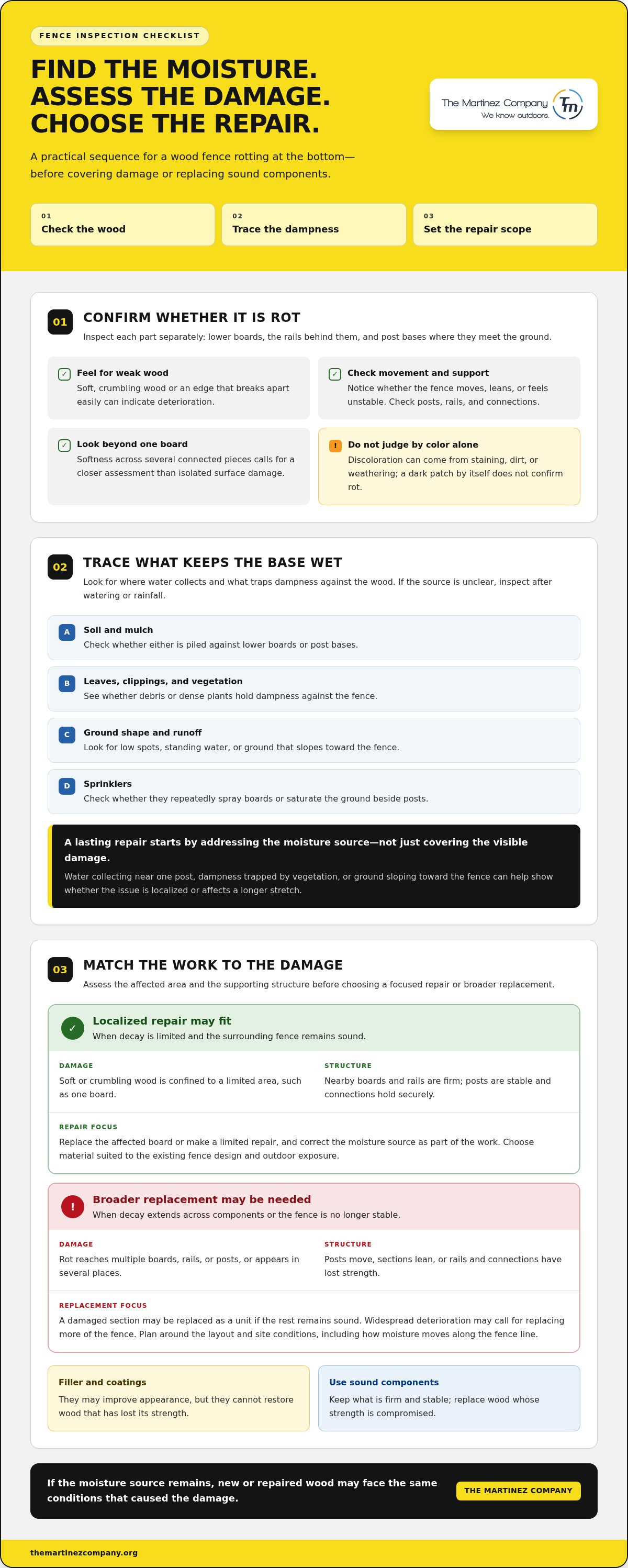
Look for wood that feels soft, crumbles at the edge, or breaks apart easily. Discoloration may appear alongside these clues, but it isn’t proof by itself. Check each part separately: lower boards, the rails behind them, and post bases where they meet the ground. Surface damage on one board may be localized; softness across several connected pieces calls for a closer assessment.
Notice whether the fence moves, leans, or feels unstable. Widespread softness or movement can point to damage beyond a single surface board, including compromised rails or posts. Don’t rely on color alone, and avoid leaning on a section that seems unstable.
What keeps a wood fence base wet?
Trace where water collects and where it lingers. Check for:
Soil or mulch piled against the lower boards or post bases.
Leaves, clippings, or dense vegetation trapping dampness against the wood.
Low spots, runoff, or standing water along the fence line.
Sprinklers that repeatedly spray boards or saturate the ground beside posts.
If the source isn’t obvious, inspect the fence after watering or rainfall. Does water collect near one post? Does vegetation hold moisture against a board? Does the ground slope toward the fence? These patterns can help show whether the problem is limited to one spot or affects a longer stretch.
Prolonged dampness can deteriorate wood, so a lasting repair starts by addressing the moisture source. Identify what is keeping the fence wet before deciding what to replace. Otherwise, new or repaired wood may face the same conditions that caused the damage.
Wood Fence Rotting at the Bottom: Repair Options That Address the Damage
The right repair depends on more than how much wood looks damaged. Check whether rot is limited to one board or has reached the rails, posts, or connections that keep the fence upright. A lasting wood fence rotting at the bottom solution addresses both the unsound material and the conditions that contributed to its deterioration.
When can replacing a damaged board be enough?
A targeted board replacement may be suitable when decay is confined to one area, nearby boards and rails remain firm, and the supporting posts are stable. Choose replacement material that fits the existing fence design and is appropriate for outdoor exposure. Filler or a fresh coating may improve appearance, but neither restores wood that has lost its strength.
Correct the moisture source as part of the repair. If soil or debris continues to hold dampness against the replacement board, the new wood can face the same problem. Treat water management as part of the repair, not a cosmetic extra.
When should a section or the whole fence be replaced?
Broader work may be needed if rot extends across multiple boards, rails, or posts. A damaged section can sometimes be replaced as a unit if the rest of the fence remains sound. If deterioration is widespread, replacing more of the fence may provide a more coherent and stable result than repeatedly patching individual pieces.
Pay close attention to posts and connections. A loose post or a rail that no longer holds securely points to a structural concern, not a surface defect. Adding filler or fastening a new board over the area won’t correct a compromised support. Assess the whole affected area before settling on the scope of work.
Keep the components that are sound; replace the wood whose strength is compromised. This protects usable material without asking weakened boards or supports to carry the fence. The right scope depends on the extent of decay and the stability of the surrounding structure.
When damage reaches multiple sections or undermines stability, carefully planned fence installation can move the project beyond recurring patches. A sound plan accounts for the fence’s layout and site conditions, including how moisture behaves along the fence line.
Repair or Replace a Rotting Wood Fence? Compare the Options
Choose the scope by looking beyond the most visible damaged board. A patch may conceal decay without restoring strength, especially if rot has reached a rail, post, or connection. Compare the affected area with the condition of the supporting structure and the moisture source before deciding whether a focused repair is appropriate.
Which signs point toward a limited repair?
A smaller repair may make sense if the damage is confined, surrounding boards remain firm, and the posts and rails are stable. The plan should also address any correctable moisture source, such as a sprinkler repeatedly wetting one spot. No repair can promise a particular lifespan; the result depends on the damaged wood, the supporting structure, and the conditions around the fence.
Which signs point toward replacement?
Extensive softness, recurring rot, multiple affected components, or an unstable section are reasons to consider a broader scope. Replacing only the visible boards can miss deterioration in the rail or post behind them. If damage appears in several places, inspect the full fence line to understand whether it is isolated or part of a wider pattern.
Let the condition of the wood and its supporting structure set the repair scope. Keep sound components where they can remain secure; don’t rely on a surface patch to compensate for weakened material beneath it. That assessment is central to choosing a wood fence rotting at the bottom solution that responds to the actual extent of damage, not just its appearance.
How to Fix a Wood Fence Rotting at the Bottom and Prevent Repeat Damage
A durable repair follows a clear sequence: assess the fence, understand the site conditions, then choose the right scope of work. Replacing wood before checking the nearby structure or water flow can leave the underlying problem untouched. Treat the repair as both a materials decision and a moisture-management task.
What is the right order for a durable fence repair?
Inspect the affected area and its surroundings. Check nearby boards, rails, posts, connections, and ground conditions. Look for additional softness or movement that could change the repair scope.
Identify what needs attention. Note where water collects or repeatedly reaches the fence, and consider how soil, debris, or vegetation may affect drying.
Set the repair scope. Decide whether the damage is limited to a board or extends to the rails, posts, or a wider section. The condition of the supporting structure matters as much as the visible surface.
Remove or replace unsound wood. Don’t cover compromised material with filler or a coating. Those treatments can’t restore strength that the wood has lost.
Address moisture and protect sound wood. Improve water flow where practical, clear trapped debris, and use an appropriate protective finish on suitable wood according to its condition and the product directions.
Choose tools and methods for the repair in front of you, not from a one-size-fits-all checklist. A limited board replacement differs from work involving a loose post or unstable section. Use suitable safety equipment, and don’t proceed with a method that could compromise the fence’s stability or your safety.
How can I help stop fence rot from returning?
Keep the fence base clear enough to dry. Move accumulated leaves and clippings, avoid letting mulch or soil remain piled against the wood, and trim dense vegetation that traps dampness. If a sprinkler repeatedly wets the fence, adjust its direction where practical. Where runoff or pooling is the issue, look for a way to improve water flow rather than simply replacing the affected board.
Make periodic checks, especially after wet seasons or a visible change in drainage. Look for debris buildup, persistent damp spots, and new softness at the base. A timely inspection can reveal a recurring moisture pattern before it affects a larger area.
The right wood fence rotting at the bottom solution protects sound materials while correcting the conditions that threaten them. If damage is extensive or the fence’s stability is in question, explore fence installation with The Martinez Company for a carefully planned project shaped around the site and the structure.
When a Wood Fence Rotting at the Bottom Needs Professional Installation
Repeated rot can be a sign that replacing a few boards won’t address the larger problem. Consider a broader installation project if damage keeps returning after moisture issues have been addressed, several sections are affected, or posts and connections no longer keep the fence stable. When the existing structure has widespread deterioration, the right wood fence rotting at the bottom solution may be a planned replacement rather than another patch.
What should a replacement plan account for?
A sound plan begins with the full fence line, not just the most visibly damaged spot. Consider which sections need replacement, how much privacy you want, and how water moves across the site. Runoff or low areas near the fence may affect how the project should be planned, especially if the same conditions contributed to recurring damage.
Material selection and construction details should suit the fence’s exposure and your goals for the finished project. The right choices depend on the site and the design you want. Planning these elements together helps create a cohesive result instead of a new fence that repeats the layout or moisture challenges of the old one.
How does professional fence installation support a lasting result?
A coordinated installation takes the project from assessing the existing fence to completing a new structure with its layout, stability, and site conditions in view. That broader perspective matters when several sections are affected, since a repair limited to individual spots may leave weakened supports or recurring moisture problems unaddressed.
The Martinez Company provides fence installation with a focus on craftsmanship, precise execution, and structural stability. The company has worked on construction projects since 2014, bringing experience to projects that require a carefully considered plan from the existing fence through to the completed installation. The goal is a fence designed around the property’s needs, with attention to conditions that could affect it over time.
If repeated damage or unstable posts point to a larger project, take the next step with a complete plan. Plan your fence installation with The Martinez Company.
Build a Fence That’s Ready for What’s Next
A lasting wood fence rotting at the bottom solution starts with understanding why the wood stayed damp, then matching the repair to the damage. Keep sound components when the structure is stable, but don’t let a cosmetic patch stand in for weakened boards, rails, or posts. Address water flow and recurring moisture as part of the plan.
If rot keeps returning or instability affects multiple sections, a carefully planned replacement may be the stronger path forward. The Martinez Company has focused on construction projects since 2014, with fence installation grounded in craftsmanship, precise execution, and structural stability.
Move from recurring damage to a fence plan shaped around your property and goals. Plan your fence installation with The Martinez Company, and take the next step toward a stable, considered outdoor space.
Frequently Asked Questions
Can a wood fence rotting at the bottom be repaired?
Yes, if the damage is limited and the surrounding boards, rails, and posts remain sound. A practical wood fence rotting at the bottom solution replaces weakened wood and addresses the moisture source, rather than covering decay with a coating. If rot reaches supporting posts, several sections, or important connections, assess the structure to determine whether repair or replacement is appropriate.
Why does a wood fence rot at the bottom?
Persistent moisture is the main cause of bottom-edge rot. Soil or mulch against the wood, poor drainage, standing water, runoff, sprinkler spray, dense vegetation, and trapped leaves can keep fence boards and post bases damp. This moisture can allow wood-decay fungi to break down the wood over time. Dark marks alone don’t confirm rot, so check for softness, crumbling fibers, or deterioration as well.
Should I replace the fence boards or the whole fence?
Replace individual boards when the damage is isolated and nearby rails and posts remain stable. Consider a larger section or full replacement if rot affects several components, damage keeps returning, or posts and connections are loose or compromised. Inspect the broader fence line when you find rot in multiple locations. The right scope depends on the condition of the wood and the structure supporting it.
Can I put a new board over rotting fence wood?
Usually, no. Covering rotten wood can hide the visible damage without restoring the strength beneath it, and it leaves the moisture source unaddressed. A new board fastened to weakened material may not be securely supported. Remove or replace unsound wood, inspect the nearby rails and posts, and correct the conditions keeping the base damp before finishing the repair.
How do I stop a wood fence from rotting at the bottom?
Reduce the time moisture stays against the fence. Keep soil, mulch, leaves, and dense vegetation from building up at the base, and improve water flow where runoff or pooling occurs. Adjust sprinklers that repeatedly spray the wood. Check the fence periodically, especially after wet seasons or changes in drainage, and protect sound wood with a suitable outdoor finish applied according to its directions.
Is wood rot at the bottom of a fence a structural problem?
It can be, especially if rot has reached posts, rails, or the connections that keep sections stable. A soft board may be a localized issue, but widespread softness, leaning, loose posts, or movement can indicate compromised support. Don’t assume the fence is structurally sound based on appearance alone. If a section seems unstable, avoid leaning on it and assess the affected structure.
Does wood filler fix a rotting fence?
No. Wood filler can cover a small gap or surface flaw in otherwise sound wood, but it can’t restore strength to fibers that have softened or crumbled from rot. Filling damaged areas may conceal the problem while moisture continues to affect the wood. Replace material that has lost its integrity, then address the damp conditions and protect the remaining sound components.
Comments