
Pergola vs awning for patio shade: compare shelter options
Choosing a pergola vs awning for patio shade comes down to the kind of shelter you want: a pergola creates a more permanent outdoor feature, while an awning offers adjustable shade and can retract when you want more sun. Awnings attach to a wall; pergolas can stand alone or connect to the home. Each suits a different way of using your patio.
Both options can make an outdoor space more comfortable, but shade is only part of the decision. Consider how much weather protection you need, whether you want flexibility, and how the structure will complement your home.
This guide compares pergolas and awnings for shade, shelter, flexibility, customization, and appearance, helping you identify which option fits your priorities. You’ll also see how pergolas with adjustable or fixed roofs change the comparison, followed by a practical guide to planning a more useful outdoor living space.
Table of Contents
What is the difference between a pergola and an awning?
A pergola is a freestanding or attached structure with overhead beams or slats. An awning extends from a wall to shade a patio, door, or window. Compare the usable footprint, desired coverage, local weather, and how often you want to adjust the shade.
Pergolas for Patio Size and Use
A pergola suits a patio where you want a defined area for dining, seating, or gathering. Its posts create a lasting architectural feature, so plan their placement around walkways, doors, and furniture. Roof slats provide partial shade, and their spacing affects how much light reaches the patio.
For a broad seating area, map the footprint first, then consider whether an attached or freestanding layout works best. A lattice roof leaves gaps overhead, unlike a solid cover, balancing shade with an open view of the sky.
Awnings for Patio Size and Use
An awning works well when you need shade beside an exterior wall, such as over a narrow patio or a set of doors. Retractable models extend over the area and fold away when you want more sunlight. Their support arms leave the patio free of vertical posts.
Measure the area you want shaded and consider where the awning will attach. A wall-mounted design depends on a suitable attachment point, while a freestanding Y-style awning doesn’t require wall mounting. This layout can be more adaptable when wall placement limits coverage.
Climate, Durability, and Maintenance
For a retractable awning, quality solution-dyed acrylic fabric and a powder-coated aluminum frame typically last 10 to 15 years or more with proper care. Fabric can fade or tear over time. Retract the awning during storms, and store it correctly during the off-season to help extend its lifespan.
A pergola’s weather performance depends on its roof design: open slats provide partial shade, while solid coverage blocks direct sun and protects from rain. Installation cost depends on dimensions, materials, attachment conditions, and site work. Request a quote to understand the cost for your project.
Wind Safety, Permits, and Installation
Awnings can be difficult to use in high wind or snow, so retractable models can be folded away during storms. Pergolas have a fixed structure, but their wind performance depends on the design and installation. Neither option is storm-proof simply because of its category.
Awnings generally don’t require permits, while pergolas more commonly do; rules vary by town and county. HOA approval depends on community rules. Pergola installation may require professional installation and permitting; whether a project suits DIY depends on the structure, attachment, and site.
Choose a pergola to define a larger outdoor area, or an awning for adjustable shade along the home.
Motorized louvered and fixed-panel pergolas
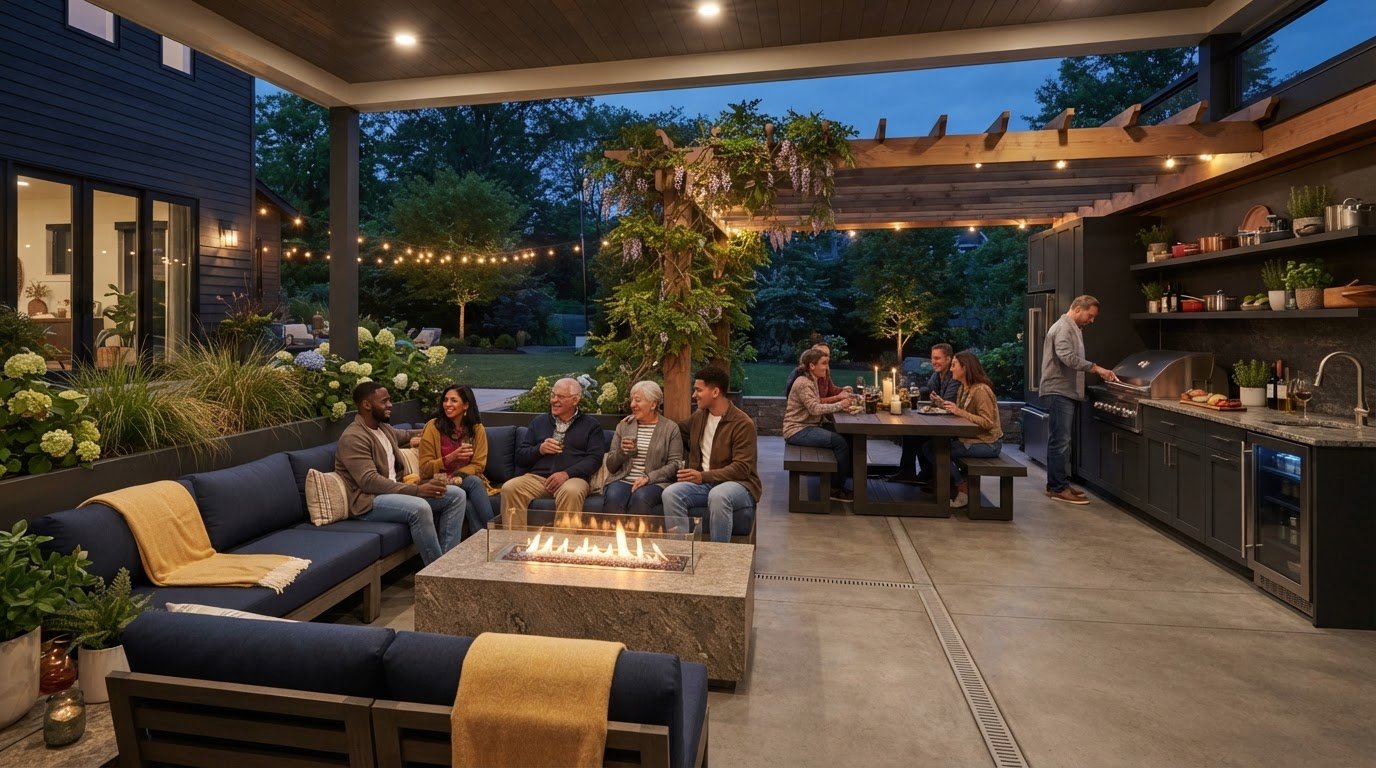
A pergola roof determines how much sun and weather protection reaches the space below. Traditional beams create partial shade through open gaps, while motorized louvers let you adjust overhead coverage. Fixed insulated panels provide a solid roof rather than adjustable slats, making the choice one of adaptability versus consistent overhead shelter.
How Adjustable Louvers Work
Motorized louvers rotate to change the roof opening. On a commercial pergola, they can open to admit sun, tilt for partial shade, and close for rain protection. This makes the structure more responsive as conditions shift through the day, without folding the roof away like a retractable awning.
Consider a typical afternoon: open louvers admit sunlight, a tilted position moderates direct exposure, and closed louvers provide a more protective roof. The system changes the coverage, but the pergola’s posts and footprint remain in place. Plan seating and walkways around that fixed structure.
Traditional Versus Louvered Pergolas
A traditional pergola has stationary slats or beams overhead. Their spacing determines how much light passes through, so the shade pattern stays consistent rather than adjusting on demand. This suits a patio where filtered light is welcome, such as a garden seating area with an open-air feel.
A louvered roof shifts between open, angled, and closed positions. Choose one when changing sun or rain conditions make adjustable coverage useful. Compare the roof itself, not just the pergola’s appearance: stationary beams create a fixed pattern, while moving louvers give you more control over the opening.
Fixed-Panel Pergolas
Fixed insulated panels provide continuous overhead coverage instead of the gaps found in traditional slats. They suit homeowners who prefer a consistent roof over adjustable shade. Because the panels don’t rotate, the overhead opening stays the same, unlike motorized louvers that can tilt or close.
Before choosing panels, consider the patio’s main use and how much daylight you want. A dining area used at set times may benefit from consistent cover; a space used from morning through evening may call for adjustable louvers. Match the roof to how the outdoor area functions, not just how it looks.
Start with three decisions: whether you want open slats or a continuous roof, whether shade should change during the day, and whether rain protection matters. Then fit the pergola’s layout to the patio and its use. If the project also needs a durable base, concrete work for outdoor structures can be part of planning the finished space.
Comparing shade, shelter, and flexibility
Pergolas create a lasting overhead feature, while retractable awnings can fold away. A pergola’s open roof may provide partial shade, while an awning’s fabric offers more continuous coverage beneath it. The better fit depends on whether you value a defined outdoor structure or adjustable coverage beside the house.
To compare shade, consider how the roof changes sunlight across your patio. A pergola with spaced beams lets some light through, with the amount shaped by beam spacing. A fixed awning provides a consistent shaded footprint; a retractable model can move aside when you want more sun. For example, choose adjustable coverage if you alternate between a shaded lunch spot and a sunny sitting area.
Shelter depends on the roof, not just the structure’s name. A pergola with open slats leaves gaps overhead, while a solid patio cover blocks direct sunlight and protects from rain. An awning shades a patio from its wall attachment, but fabric coverings can be difficult to use in high wind or snow. Retracting an awning during storms helps protect it.
Flexibility is a retractable awning’s clearest advantage. A manual hand crank or remote-controlled motor can extend the fabric for shade, then fold it away. A traditional pergola stays in place, though its roof can have fixed panels or adjustable louvers. Some retractable awnings use aluminum frames, with fabric as the shade surface.
Choose a pergola to define a patio zone, such as a dining area, with a permanent overhead framework.
Choose a retractable awning when you want shade near the house and the option to expose the patio to sunlight.
Choose solid coverage when blocking direct sun and rain matters more than an open roof.
For a practical comparison, mark the patio area you want shaded and note when sunlight becomes a problem. Then decide whether the roof should stay overhead, adjust, or retract. A pergola can anchor furniture and organize a larger outdoor area; an awning keeps posts off the patio and leaves the space open when folded. That’s the core trade-off: pergolas provide a more permanent feature, while awnings offer greater flexibility but need protection during harsh weather.
Pergola weather protection and customization
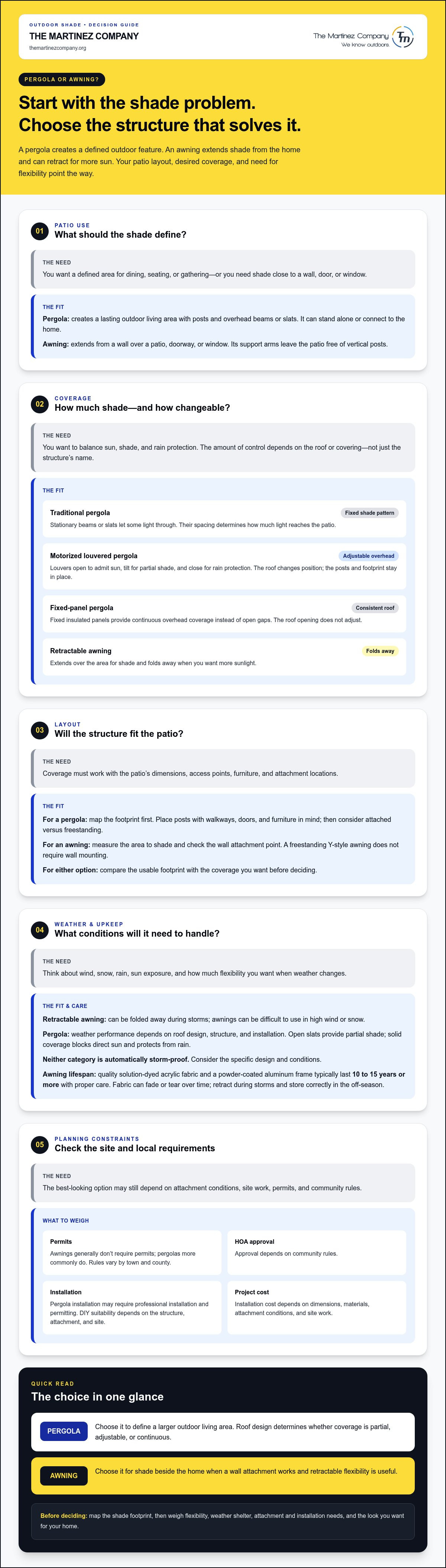
A pergola can become a more comfortable, permanent living space when its roof and accessories suit how you use the patio. Start with the conditions you want to manage: direct sun, light rain, insects, or cooler evenings. Screens, heaters, fans, and lighting can be fitted to pergolas, bringing shade, airflow, and evening use into one plan.
For adjustable overhead shade, Roman shade pergolas use retractable fabric running along parallel wires between aluminum posts and pergola rafters. The fabric can be screen or acrylic. Draw it across the roof when direct sun reaches the seating area, then retract it to let daylight back in.
Choose accessories for a specific use. Screens can help define an open dining area, while a fan can support airflow above a lounge zone. Heaters and lighting can extend the space’s usefulness into cooler or darker periods. Place each feature where it serves the furniture layout rather than adding equipment without a clear purpose.
Roof and side treatments solve different problems. A retractable Roman shade changes overhead coverage, while a screen adds a boundary around part of the pergola. Together, they can create a more sheltered-feeling outdoor room, but the design should preserve comfortable circulation between the house, patio furniture, and yard.
For daytime sun: plan shade over the seats or table that receive direct exposure.
For insects or privacy: consider screens along the sides that need a boundary.
For evening use: position lighting over dining or gathering areas, and consider a heater where people sit.
Before finalizing a design, sketch the pergola footprint and mark the table, chairs, doors, and paths. Then identify where sunlight, airflow, or rain affects those areas. This helps you decide whether retractable fabric, screens, fans, heaters, or lighting will be useful. The result is a tailored outdoor living space, shaped into a place for dining, relaxing, or gathering with guests.
Customization and appearance
Pergolas and patio awnings create different visual effects in a backyard. A pergola adds a visible frame above the seating area, while an awning extends from the house and can retract. Awning coverings commonly include fabric or metal; Roman shade pergolas can use screen or acrylic fabric. Match the structure’s lines and materials to your home’s exterior.
Start with the roofline, exterior finishes, and patio layout. A pergola can echo the strong lines of a covered porch, while a retracted awning leaves the view above an open patio less defined. For example, a dining table beneath a pergola becomes a distinct outdoor zone; a wall-mounted awning can shade the same table without adding posts around it.
Color and texture also shape the result. Fabric on a Roman shade pergola softens the look of its aluminum posts and rafters, while a metal awning presents a firmer surface. Choose tones that work with nearby siding, trim, and outdoor furniture. Neutral fabric can blend with light-colored walls, while a contrasting shade makes the coverage more prominent.
Consider how the structure will look from inside the house as well as from the yard. A fixed pergola roof remains part of the view year-round, while a retractable awning can fold away to reveal more sky. If the patio has a narrow path beside it, an awning may preserve an open route; pergola posts need to fit around movement and seating.
For a defined gathering area: align pergola posts with the edges of a dining or lounge zone.
For a cleaner open view: choose an awning that retracts when shade isn’t needed.
For a coordinated finish: compare fabric or metal against the home’s siding, trim, and patio furniture.
Before choosing, sketch the backyard from two angles: standing on the patio and looking out from indoors. Mark the seating, doorways, paths, and the shade footprint. Then compare how each structure affects those sightlines and the home’s exterior. If you’re shaping the patio into a cohesive gathering place, plan an outdoor living space around its layout, finishes, and everyday use.
The Martinez Company: Commercial Contracting
The Martinez Company turns outdoor project plans into practical spaces through Commercial Contracting, Residential Contracting, and Outdoor Living Spaces. If you’re weighing a pergola’s permanent structure against an awning’s adjustable coverage, consider how the choice fits your patio, home, and intended use. A clear project plan can connect the shade structure with the surrounding layout, including paths, seating, and other outdoor features. For residential or commercial projects, The Martinez Company brings a broad construction perspective to shaping a cohesive result. Choose the option that supports how you want the space to function, then take the next step toward a finished plan. Contact The Martinez Company or visit themartinezcompany.org to discuss your project.
Shape the Patio Around What Comes Next
The pergola vs awning choice for patio shade is also an opportunity to plan how your outdoor space should serve you over time. Look beyond the shaded footprint: consider how the structure connects with the house, where people will gather, and whether the patio could become part of a larger project. A well-planned outdoor area brings practical use together with a cohesive design.
The Martinez Company supports that next step through Outdoor Living Spaces, Residential Contracting, and Commercial Contracting. Bring your preferred layout and priorities to the conversation, whether you’re planning a residential patio or a commercial space. The goal is to move from an idea to a clear plan for the structure and its place in the project.
Contact The Martinez Company to discuss the direction you want to take. A considered plan can help turn your patio into a space that feels purposeful, comfortable, and ready to enjoy.
Frequently Asked Questions
What Is a Pergola?
A pergola is an outdoor structure with overhead beams, slats, or louvers, built freestanding or attached to a home. Picture a defined frame over a backyard dining set, with open space between the roof elements. That framework creates partial shade and a clear patio zone. The roof design determines how much sky remains visible and how much sunlight reaches the furniture below.
What Is an Awning?
An awning is a fabric or metal covering attached to a wall that extends over a door, window, or patio. It can shade a small seating area beside a back door without adding posts to the yard. Some awnings stay fixed, while retractable versions fold away when shade isn’t needed. The wall attachment and the awning’s reach shape the covered area.
How Are They Similar?
Both options create shade that can make an outdoor area more usable during sunny hours. Either can be planned around a dining table, lounge chairs, or a doorway that receives direct sun. Both also affect how the patio looks from inside the home. Before choosing, mark where people sit and note which areas need shade, then compare how each structure fits the layout.
Which Structure Is Right for You?
Choose based on how you want the patio to function. A pergola suits a homeowner who wants a defined outdoor gathering area; an awning fits someone who wants shade beside the house without posts in the yard. For example, consider a pergola if your patio plan includes a central dining zone, or an awning if keeping the space open for other activities matters more.
What is the difference between a pergola and an awning for patio shade?
A pergola is a framed overhead structure, while an awning projects from a wall to cover a particular area. This affects the layout: pergola posts can define a space in the yard, while an awning leaves the patio floor clear of support posts. In a pergola-versus-awning comparison for patio shade, consider whether you want a freestanding architectural feature or coverage connected directly to the home.
How much shade does a pergola provide compared with an awning?
A pergola with open slats creates partial shade, and the gaps between beams affect how much sunlight passes through. An awning’s fabric generally provides more continuous shade across the area it covers. The actual footprint depends on pergola roof spacing or awning reach, as well as the sun’s angle. Compare the shade at the time you use the patio most.
Which patio shade option provides better rain and weather protection?
Roof design is key: solid patio covers block direct sun and protect from rain, while open pergola slats leave gaps. Motorized louvered roofs can close for rain protection. Awnings can be difficult to use in high wind or snow, so retractable models can be folded away during storms. Choose according to the shelter you need and the weather your patio faces.
How do climate, sun direction, and patio orientation affect the choice?
Sun direction affects which parts of the patio need shade and when. Observe the seating area in the morning and afternoon, then map the shade footprint you want. A wall-mounted awning can target a sunny doorway or adjacent patio; a pergola can shade a more central yard area. In storm-prone conditions, consider retractability and roof design alongside sun exposure.
Comments