
Weatherproofing Your Outdoor Kitchen With Durable Materials
A cover alone won’t weatherproof an outdoor kitchen. Effective weatherproofing your outdoor kitchen combines outdoor-rated appliances, moisture-resistant materials, breathable covers, water-shedding design, and regular care. Match each layer of protection to the exposure, from sun and rain to humidity and cold.
It’s easy to focus on visible surfaces, but cabinets, appliance finishes, joints, and electrical components face the elements too. The right materials and protective details help limit moisture buildup, corrosion, fading, and wear while preserving a clean, finished look.
This guide covers protecting appliances and electrical components, choosing resilient countertops and cabinetry, and reducing exposure with overhead coverage and good drainage. You’ll also find practical maintenance steps for cleaning surfaces, spotting wear early, and preparing for seasonal weather. Build protection into the design, then maintain it with consistent care.
Table of Contents
1. Outdoor-rated appliances and electrical components
Start with equipment designed for outdoor exposure. Choose outdoor-rated grills, refrigerators, and other appliances rather than placing indoor models outside. Outdoor appliances are built to handle weather, while indoor-rated equipment can be damaged by changing temperatures and humidity. An indoor-rated ice maker, for example, can be destroyed within a season. Check that each appliance is suitable for its setting before planning counters and storage around it.
Electrical components need the same care. Use wet-rated outdoor components, GFCI protection on all circuits, and weatherproof covers on outlets. Keep outlet covers closed when outlets aren’t in use, and position electrical components away from places where water collects. These choices help shield connections from rain and moisture. Plan the layout so outlets and appliance connections remain accessible without being exposed.
Material matters around salt air, too. For most residential coastal applications, 304-grade stainless steel is a suitable choice; properties with the most direct salt-air exposure call for 316-grade stainless steel. These grades help guide selection for outdoor appliance surfaces and components. In any climate, clean stainless steel according to the appliance’s care instructions, then inspect it for rust, damage, or residue before covering it.
Clean first: Wipe grills and appliance surfaces after use to remove food, grease, and moisture.
Choose breathable covers: Use moisture-repellent covers that allow air circulation, rather than plastic that can trap condensation.
Cover the grill: A fitted appliance cover, tarp, or canvas can help limit dirt and rust buildup when the grill is idle.
Protect the whole kitchen: In areas with harsh winters, use a full cover during the off-season.
Fit matters. A cover should shield an appliance without blocking necessary airflow or trapping dampness against its surface. When practical, remove covers after wet weather, let surfaces dry, and check underneath for accumulated moisture. Covers protect equipment from dirt and direct exposure, but they don’t replace outdoor-rated construction or routine cleaning.
Rain resistance has limits. The U.S. Department of Labor’s Occupational Safety and Health Administration states that rainproof equipment may meet weatherproof requirements only when snow, ice, dust, and temperature extremes aren’t factors. Account for those conditions when selecting appliances for your outdoor space. Choosing suitable grills, electrical components, and covers makes weather protection part of a durable design.
2. UV-resistant finishes and countertop materials
Sun and moisture challenge countertops in different ways. UV rays can fade finishes, while water can penetrate unsealed surfaces and cause stains. Granite, stainless steel, and concrete are durable outdoor countertop options because they resist moisture, heat, and sunlight. Choose based on the kitchen’s exposure, the look you want, and the upkeep each surface requires. Pay attention to how the countertop meets walls, cabinets, and appliances, since those joints can let water in.
For a weatherproof outdoor kitchen, granite, stainless steel, and concrete are strong countertop choices. Marble is less suited to outdoor use because it can crack or stain over time. Prolonged sun exposure tests whether materials and finishes can withstand UV rays, so choose products made for exterior conditions rather than relying on indoor finishes.
Limit UV damage and heat by choosing UV-resistant materials or coatings for wood, metal, and stone. Shade structures such as pergolas, awnings, or umbrellas reduce direct sun exposure in summer. Use heat-resistant materials behind grills to protect nearby surfaces. These choices help prevent fading, cracking, and heat damage. Position shade to cover the work surface when it receives the strongest direct sun.
Sealing adds another layer of protection. Outdoor kitchen countertops can be sealed annually to help prevent moisture penetration and staining. Clean the surface and let it dry before applying sealant. Follow the product’s directions for preparation and drying time so the protective layer bonds properly. Reapply when the finish shows wear or water no longer beads on the surface.
Protect cabinet doors and windows as well as countertops. Weatherstripping around cabinet doors can reduce water intrusion into storage areas, while caulk around windows helps close gaps where rain can enter. Inspect these joints during seasonal maintenance. If caulk has cracked or pulled away, remove the loose material, prepare the joint, and apply fresh exterior caulk suited to the surface.
How much does it cost to weatherproof an outdoor kitchen? The cost depends on the countertop area, material, existing surface condition, and whether the project needs sealing, coating, or replacement. Pricing is provided after a quote request.
Match the finish to the material. Stainless steel needs a compatible protective approach, while concrete and stone benefit from sealants made for those surfaces. For wood exposed to summer sun, use a UV-resistant coating. Inspect finishes after heavy sun or rain, and repair worn coatings before moisture reaches the underlying material. Choose products for exterior use and follow the manufacturer’s instructions for surface preparation.
When planning a new kitchen, coordinate countertop materials, heat protection, and shade as one design. Explore outdoor living spaces for a cohesive outdoor kitchen plan.
3. Weather-resistant outdoor kitchen cabinetry
Cabinetry faces rain splash, ground moisture, and cooking residue, so material choice matters. Choose cabinets built for outdoor exposure rather than adapting indoor units. Outdoor-rated construction helps limit rust, corrosion, warping, and moisture damage while keeping storage functional. Consider the kitchen’s exposure to humidity, salt deposits, and winter weather before choosing the cabinet body and finish.
Marine-grade polymer, stainless steel, and powder-coated aluminum are durable choices for outdoor kitchen cabinetry. These materials resist rust, corrosion, or warping, making them useful in exposed spaces. High-quality stainless steel, specially coated aluminum, and HDPE can also resist moisture-related deterioration. Compare both the cabinet body and its finish: durable materials still need a suitable protective surface.
HDPE cabinets resist moisture, mold, and mildew without constant maintenance. Marine-grade polymer is non-porous and resists cracking, warping, and moisture absorption in freezing rain or heavy snow. Powder-coated finishes help protect stainless steel cabinets from rust and corrosion. Match materials to the conditions your kitchen faces, such as humidity, airborne salt, or repeated freeze-thaw exposure.
Wood can work outdoors when it is properly treated and maintained, but untreated wood cabinetry is prone to swelling and rotting. Repeated wetting can make wood absorb moisture, expand, and eventually break down. Indoor cabinetry can also fail outdoors, with the timing depending on exposure and conditions. Don’t use indoor cabinets as a shortcut, even if their color and finish suit your design.
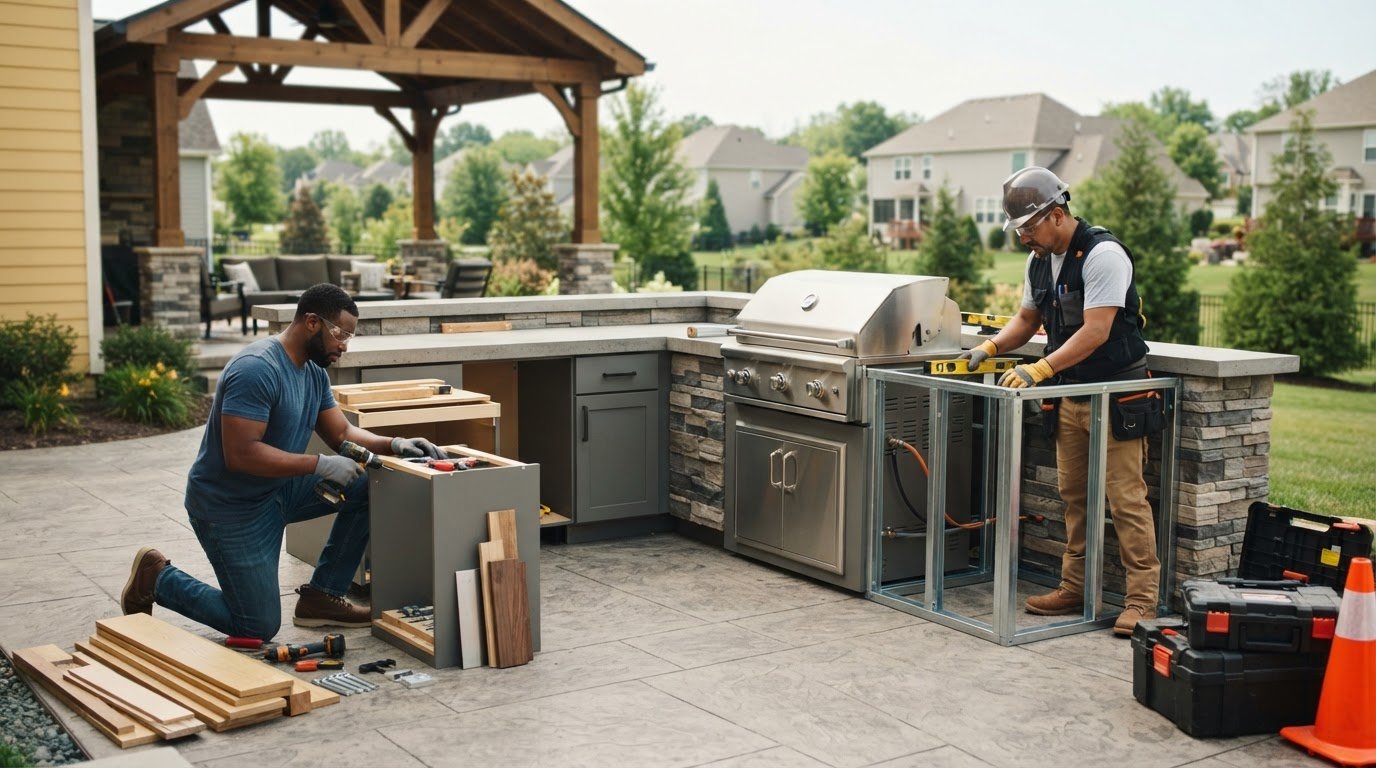
Natural stone or masonry cabinetry can resist the elements when properly sealed and maintained. Concrete or masonry can create a solid base for a built-in kitchen, but joints and surfaces still need protection from water. Seal cabinetry as appropriate for its material, and inspect seams where water could enter. Choose coatings and finishes suited to each cabinet surface rather than applying one product to every material.
Install cabinets slightly above ground to help prevent water from pooling at the base. This also keeps cabinet edges away from wet soil and standing water. Slope the surrounding surface to drain away from the cabinets, and seal gaps around doors and frames. After heavy rain, open the doors and check for dampness, swelling, or corrosion before storing utensils or supplies inside.
Use a simple inspection routine. Look for peeling powder coating, loose seals, rust spots, and swollen wood. Address wear promptly, before moisture reaches the cabinet interior. For a coordinated outdoor kitchen, match cabinet materials and finish colors to the surrounding structure, the space’s exposure, and its maintenance needs.
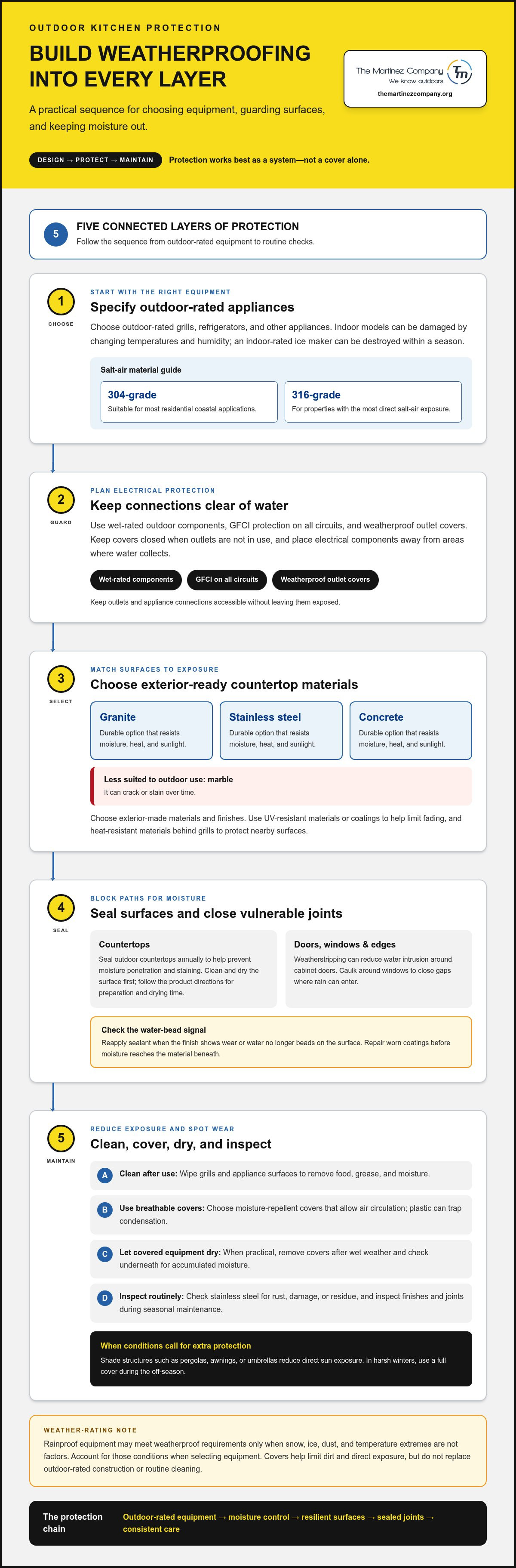
4. Overhead protection from snow, ice, and rain
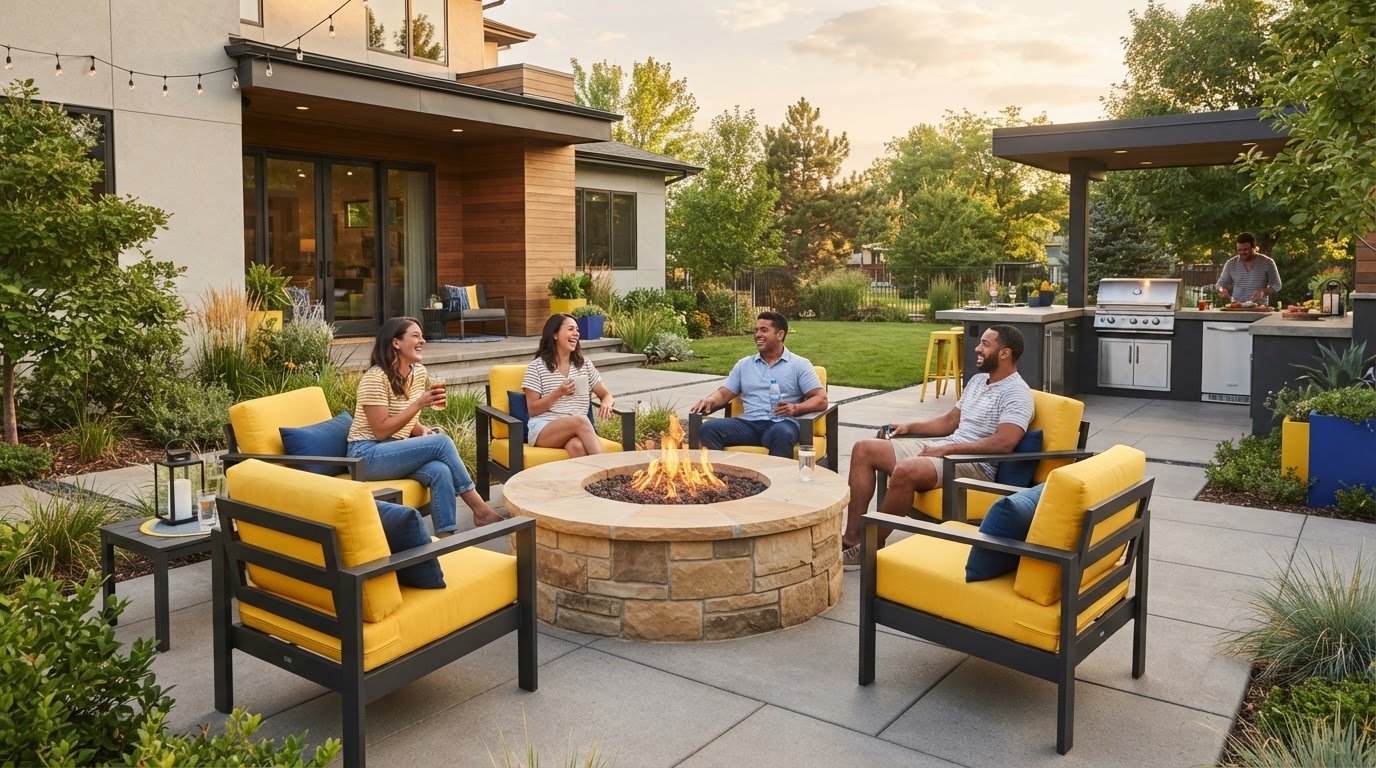
Overhead protection limits direct exposure, but works best alongside good drainage and winter preparation. Pergolas, pavilions, and gazebos can shield outdoor kitchens from rain, snow, and ice. Canopies and awnings provide cover above grills, refrigerators, counters, and cabinets. Choose a structure that directs water away from the cooking area instead of letting runoff collect beside appliances or cabinet bases.
Yes, weatherproofing choices vary with climate and applicable local building codes. Snow, ice, and temperature extremes require different protection from rain alone, so account for local conditions when planning the structure and drainage.
A canopy or awning can reduce rain exposure, while a grill cover protects the appliance when it’s idle. In harsh winters, use a full kitchen cover during the off-season. Keep covers secure and clear of cooking surfaces, and remove debris that could hold moisture against the structure. A cover helps protect your investment, but it doesn’t replace a roof, sound drainage, or equipment designed for outdoor conditions.
Protection from snow and freeze-thaw starts below the kitchen. Where the ground freezes, frost-protected footings and drainage solutions are useful design measures. Slightly sloped surfaces help direct rain and melting snow away. Keep drainage routes clear of leaves and other debris so water doesn’t pool around the base. The protection needed depends on local freeze conditions, soil, and how exposed the kitchen is.
Prepare water lines before winter. Drain lines serving outdoor sinks and ice makers to help prevent freezing and bursting. Insulated pipes or heating cables can provide year-round protection for outdoor kitchen water lines. Include accessible shutoffs and drain points in the layout so winterizing doesn’t require moving appliances or dismantling cabinets. Store removable accessories, such as cutting boards and pizza stones, in a dry, temperature-controlled space during winter.
Rainproof equipment alone may not be enough for winter exposure. The Office of the Federal Register, National Archives and Records Administration, states that rainproof or watertight equipment is not sufficient when snow, ice, or temperature extremes are factors. Choose outdoor equipment for the conditions it will face rather than relying on rain resistance to protect it in every season.
Before winter, check the roof or canopy for loose sections, clear drainage paths, and cover exposed appliances. After storms, safely remove snow buildup and check for standing water, damaged covers, and debris around the kitchen. These steps limit exposure and help identify drainage problems before the next freeze. Plan overhead coverage, frost protection, and water-line preparation together for more complete protection.
5. Cleaning and regular maintenance
Wipe outdoor kitchen surfaces after each use to remove food residue and moisture. Clean the grill, and clear leaves or debris from counters, floor edges, and around a pergola. These quick steps help prevent grime buildup and keep damp material from sitting against cabinets or metal. Follow each appliance’s care instructions, especially for stainless steel, to avoid damaging its finish.
Inspect the kitchen regularly for rust, cracks, worn coatings, and loose joints. Check stainless steel for corrosion, then look for chips or surface wear on concrete and stone. Porous surfaces can absorb moisture through small gaps, so pay close attention to seams and edges. Address visible damage promptly, before water reaches underlying materials or spreads through a finish.
Inspect outdoor kitchen countertop caulk joints quarterly. If caulk is cracking or separating, remove the damaged material, prepare the joint, and reapply suitable caulk. This helps catch openings where rain can enter storage or appliance areas. Also check weatherstripping around doors and caulk around windows, especially after storms or periods of heavy use.
How often should outdoor kitchen sealants and protective finishes be reapplied? Reapply sealants and finishes annually to maintain their protective properties. Outdoor stone countertops may need a high-quality sealant every few months, so follow the product’s schedule and check the surface for wear between applications.
Before sealing concrete, stone, or another porous surface, clean it and let it dry. Apply a sealant intended for that material, following its label for preparation and curing. Don’t seal over grime, loose finish, or dampness. For stainless steel, follow the appliance’s recommended care method and dry the surface after cleaning to limit lingering moisture.
Build seasonal inspections into your routine. Check cabinet bases for pooling, examine finishes for peeling, and look for rust around fasteners or appliance edges. After wind or rain, clear debris from the pergola and drainage paths. Before winter, clean grills and store accessories in a dry, temperature-controlled space. A well-maintained outdoor kitchen takes twenty minutes a month and an hour a season.
For a new outdoor kitchen designed around durable materials and practical upkeep, plan your outdoor kitchen project.
Keep upkeep simple by making regular grill cleaning and debris removal part of outdoor-space care. Wiping surfaces after each use helps prevent grime and moisture buildup. Addressing rust, cracks, or wear promptly keeps problems from lingering.
As freezing temperatures and winter weather approach, complete your outdoor kitchen winter maintenance to protect surfaces and appliances from seasonal damage.
The Martinez Company: Commercial Contracting
The Martinez Company builds Outdoor Living Spaces, including outdoor kitchens. If you’re planning a new kitchen or want weather protection considered alongside its layout, materials, and surrounding structure, the company can bring those pieces together through its construction work. The company also provides Residential Contracting and Commercial Contracting for projects designed for their intended setting.
Bring together your priorities for shelter, durable surfaces, cabinetry, and drainage. A coordinated plan can connect these practical details to a finished outdoor space instead of treating each protection as an isolated fix.
Contact The Martinez Company to discuss your outdoor kitchen project.
Shape the outdoor kitchen you’ll use for years
Make weather protection part of the vision from the start. A well-planned outdoor kitchen should fit the way you cook, gather, and move through your outdoor space, not feel like a collection of add-ons. Decide how the space should function, then carry that intent into the design and construction. Thoughtful weatherproofing your outdoor kitchen means creating a space that suits your home and everyday routines.
The Martinez Company builds Outdoor Living Spaces and provides Residential Contracting and Commercial Contracting. When you’re ready to move from weatherproofing ideas to a considered outdoor kitchen project, these services bring design priorities into the construction process.
Contact The Martinez Company to discuss your plans. Start with the setting you want to create, and turn that vision into a practical outdoor space.
Frequently Asked Questions
How do you protect outdoor kitchen cabinets from rain and humidity?
Choose cabinetry made for outdoor exposure, then protect vulnerable seams and the base. For example, seal joints around cabinet frames and keep lower edges above areas where runoff collects. After a storm, open the doors and check corners, shelf edges, and stored items for dampness. If humidity stays high, avoid packing cabinets tightly so air can circulate around stored cookware.
What countertop materials withstand sun, rain, and freezing temperatures?
Granite, stainless steel, and concrete are durable countertop options that resist moisture, heat, and UV exposure. Their performance in freezing weather also depends on proper installation, sealed joints, and drainage that prevents water from sitting on the surface. In colder climates, include those details in the material plan and inspect seams for cracks or water entry after winter weather.
What covers or enclosures work best for outdoor kitchen appliances?
Use appliance covers that repel moisture while allowing airflow. A close-fitting grill cover can protect against dust and rain between uses, while a full enclosure offers broader off-season coverage. Before covering equipment, remove grease and food residue, then let surfaces dry. Check beneath the cover periodically, especially after wet weather, so dampness doesn’t linger against metal or appliance controls.
How should outdoor kitchen plumbing be winterized to prevent frozen pipes?
Before winter, shut off and drain water lines serving outdoor sinks and ice makers, following the equipment’s instructions. Open faucets after draining so remaining water can escape, and store removable accessories indoors. If the design uses insulated pipes or heating cables, maintain those protections as directed. A winterization plan should account for every water-fed appliance, not just the sink.
What electrical and gas safety requirements apply to outdoor kitchens?
Use wet-rated outdoor electrical components, GFCI protection on all circuits, and weatherproof outlet covers. Choose gas appliances designed for outdoor use and follow the manufacturer’s installation and clearance instructions. Keep connections accessible for inspection, and don’t improvise changes to gas lines or electrical wiring. Local requirements can vary, so account for applicable rules in the project design before installing equipment and utilities.
What drainage and ventilation are needed to prevent water damage and mold?
Use gently sloped surfaces to direct rainwater away from cabinets and appliances, and keep nearby drains clear of leaves and debris. After a storm, for example, check where water flows from a roof edge or pergola. Allow air to circulate around cabinets and stored items, and avoid sealing damp spaces behind solid covers. These details help limit standing water and persistent moisture.

Comments