
Vinyl vs Wood Fence: Compare Costs, Care and Durability
The pros and cons of vinyl versus wood fencing come down to upfront cost, maintenance, and the look you want. Wood generally costs less to install, while vinyl needs less routine upkeep. Vinyl resists rot and insects, but extreme temperature changes can make it brittle over time.
The initial investment matters, but so do ongoing maintenance and how well each material suits your property. Compare how the options perform, what care they need, and which trade-offs fit your outdoor space. This gives you a clearer basis for choosing a fence that balances budget, durability, and appearance.
Table of Contents
What are the Pros and Cons of Wood Fences?
Wood fencing generally costs less upfront than comparable vinyl fencing. Basic wood designs can cost 20-40% less upfront, while the final amount depends on yard length, fence height, style, and material thickness. Compare like with like: a 4-foot picket design and a 6-foot privacy fence use different amounts of material.
Wood offers a wide choice of appearances and materials. A standard dog-ear cedar privacy fence is a cost-effective option, while cedar and redwood contain natural oils that help resist decay without chemical treatments. Boards can also be stained or painted, making wood flexible if you want to change the finish later.
Vinyl fencing typically has a higher upfront cost, but style still affects the comparison. A standard white privacy fence is described as a cost-effective vinyl option. For a fair estimate, compare matching designs and dimensions, such as a 4-foot picket fence against another 4-foot picket fence, rather than comparing it with a taller privacy fence.
Yard size changes the total: a 150-foot yard requires more fencing than a shorter run, even when the style stays the same. Material thickness also affects the amount of material used. Ask for estimates based on the same length, height, style, and thickness before you decide.
Local restrictions can affect a residential fence project. Building codes or HOA rules may limit your options, so account for applicable requirements before choosing wood or vinyl.
For a fair comparison, match fence height, style, material thickness, and yard length, then weigh upfront cost against the finish you want.
Maintenance requirements
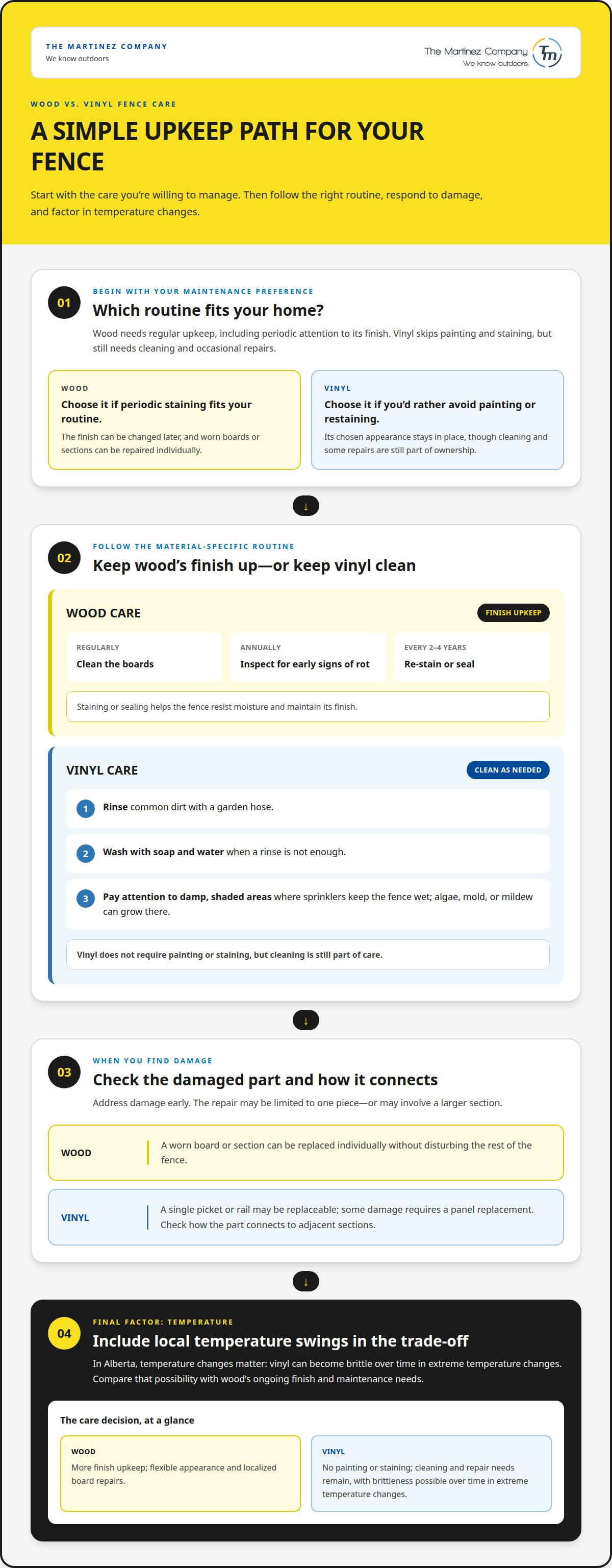
Wood asks homeowners for regular upkeep. Clean the boards, then re-stain or seal them every 2-4 years to help the fence resist moisture and maintain its finish. An annual examination can help identify early signs of rot before damaged boards spread the problem. This natural material also allows localized repairs, so one worn section doesn’t automatically mean replacing the entire fence.
Vinyl fencing needs less finish-related maintenance. It doesn’t require painting or staining, and soap and water can remove common dirt. Start with a rinse from a garden hose. Algae, mold, or mildew can grow where sprinklers keep the fence damp, so pay attention to shaded, regularly watered areas when cleaning.
Repair options depend on the damage. Wood boards or sections can be replaced individually without disturbing the rest of the fence. Vinyl may allow a single picket or rail to be replaced, though some damage requires replacing a panel. Check how the damaged part connects to adjacent sections to determine the repair’s scope and find a suitable match.
Wood: Clean regularly, inspect annually, and plan for fresh stain or sealant every 2-4 years.
Vinyl: Rinse or wash with soap and water; clean damp areas where mildew or algae may develop.
Either material: Address damage early and consider whether a board, rail, picket, or panel needs replacement.
Choose based on the maintenance you’ll consistently manage. If periodic staining fits your routine, wood offers repair flexibility. If you’d rather avoid painting or restaining, vinyl eliminates that particular chore, though cleaning and occasional repairs are still part of ownership.
For a project where maintenance needs shape the material choice, fence installation planning can help translate those priorities into a practical design.
Wood vs Vinyl Fence: Which is the Best for Your Outdoor Space?
Wood offers a changeable finish, while vinyl keeps its original appearance. Wood offers more flexibility for changing a fence’s appearance, while vinyl is a less adjustable option.
Wood Fence Appearance and Customization
Wood lets you change the fence’s finish after installation. Staining can highlight the boards’ natural appearance, while painting changes their colour to complement a home or garden. For example, you can paint a wood picket fence to coordinate with exterior trim and update it later without replacing the panels.
That flexibility also means choosing a finish and maintaining it over time. A natural cedar privacy fence and a painted picket design create different effects, even when both are wood. Wood suits spaces where the finish may change along with landscaping or exterior updates.
Vinyl Fence Appearance and Customization
Vinyl offers a consistent finished look without staining or painting. A standard white privacy fence is one option, while vinyl picket designs create a more open boundary. Choose the style, colour, and panel arrangement during the initial design, since vinyl can’t be refinished later.
The trade-off is clear: vinyl keeps its chosen appearance without routine repainting, but offers less flexibility for future changes. If the colour or design no longer suits your space, replacing the fence is the way to change its look. Plan around your home’s exterior and garden layout first.
Use these criteria to decide:
Choose wood if staining or painting later matters more than keeping the original finish unchanged.
Choose vinyl if you prefer a set appearance, such as white privacy panels, without repainting.
Compare both against the home’s exterior, garden features, and desired level of privacy before selecting a picket or panel design.
In short, wood’s advantage is its adaptability through staining or painting; its drawback is the ongoing care its finish needs. Vinyl’s advantage is a consistent finish without painting, while its drawback is limited flexibility after installation. Match the material to how firmly you want to set the look of your outdoor space.
Durability in U.S. Weather
Vinyl resists rot and insects, while wood can decay without regular care. Assess both materials against the weather exposure at your property, including moisture and temperature changes.
Vinyl Fence Weather Durability
Vinyl fencing doesn’t rot or splinter like wood can, and it resists insects. Extreme temperature changes can cause it to expand and contract, potentially making it brittle over time. Severe weather can also crack vinyl or create holes. After a storm or a season with large temperature swings, inspect panels for visible damage. Rot resistance is valuable, but it doesn’t make vinyl immune to weather-related wear.
Wood Fence Weather Durability
Wood’s durability depends on regular care and the material you choose. Moisture can contribute to decay, and insects such as termites can damage boards. Cedar and redwood contain natural oils that help resist decay without chemical treatments. These properties don’t eliminate the need for upkeep: maintain the finish and inspect boards for wear or rot. You can replace a damaged board individually.
Fence Lifespan Comparison
Wood fences typically last 15-20 years with proper maintenance, while quality vinyl fences can last more than 30 years. These figures offer a useful comparison, not a guarantee for every installation. Construction quality, exposure, and maintenance influence a fence’s service life. Vinyl’s longer potential lifespan comes with sensitivity to extreme temperature changes; wood’s lifespan depends more heavily on consistent care.
For a practical decision, consider the conditions your fence will face and the upkeep you can maintain. Wood may suit homeowners prepared to care for its finish and monitor boards for rot. Vinyl may suit those who prioritize resistance to rot and insects, while accepting the potential for cracking or brittleness in temperature extremes. Inspect either material regularly, especially after severe weather, and address damage before it affects nearby sections.
The Martinez Company: Fence Installation
The Martinez Company installs fences for residential and commercial projects. When you’ve weighed wood’s adaptable finish against vinyl’s resistance to rot, the team can help take your material choice through to a finished boundary.
Whether a fence defines a yard or supports a larger outdoor living space, its material, layout, and appearance need to work together. Consider maintenance, weather exposure, and customization when planning the design. The Martinez Company brings fence installation together with residential and commercial contracting and outdoor living spaces, helping the finished structure suit its intended use.
Have a material or design in mind? Contact The Martinez Company to discuss your fence project.
Turn Your Fence Choice Into a Clear Plan
Choose a fence that suits how you use your property. Think about the boundaries you want to define, the privacy you need, and how the fence should connect with the rest of your outdoor space. The pros and cons of vinyl versus wood fencing are most useful when these priorities shape the design, not just the material choice.
The Martinez Company can carry that decision into a practical project, whether the fence is for a residential or commercial property or forms part of a larger outdoor living space. Clear priorities for appearance, upkeep, and intended use give the project a strong starting point. From there, the material and layout can become part of a finished space designed around your goals.
Bring your ideas and priorities to the next conversation. Contact The Martinez Company to discuss your fence project and take the next step with confidence.
Frequently Asked Questions
Cost: Which Is Cheaper?
Wood generally costs less upfront, while vinyl usually requires a larger initial investment. The difference depends on comparing similar designs and dimensions, since privacy and picket fences use different layouts. For a fair comparison, match fence height, style, and yard length. Installation pricing depends on the project choices and is provided after a quote request.
So, Which Should You Choose?
Choose based on the trade-offs you’re willing to live with. The vinyl vs wood fence pros and cons comparison starts with your priorities: wood offers a finish you can change, while vinyl keeps a consistent appearance without staining or painting. Consider how much maintenance you’re willing to take on and whether you want to update the fence’s look later. Let those practical needs guide your choice.
Which Fence Is Right for You?
The right fence serves your property’s main purpose and fits your preferences. For example, a homeowner who wants a changeable painted finish may lean toward wood, while someone seeking a fixed, uniform look may prefer vinyl. Reviewing the vinyl vs wood fence pros and cons alongside your privacy needs and outdoor layout can help turn a general preference into a design decision.
How Much Does Vinyl Fencing Cost per Linear Foot Compared with Wood Fencing?
Wood generally costs less per linear foot upfront, while vinyl fencing typically costs more. The exact per-foot cost depends on the style, height, material, and total fence length. Compare equivalent designs rather than a short picket fence with a taller privacy fence. Installation pricing is project-specific and is provided after a quote request based on the project choices.
What Are Typical Installation Costs for Vinyl and Wood Fences?
There isn’t one installation total that applies to every fence. Wood usually costs less upfront, while vinyl costs more initially. The total depends on the amount of fencing, its height, and whether you choose a picket or privacy design. For a useful comparison, base both estimates on the same yard length and design. Project-specific pricing is provided after a quote request.
How Long Do Vinyl and Wood Fences Last?
In East Tennessee, wood fences typically last 15-20 years when well-built and maintained, while vinyl fences commonly last 25-30 years or more. These lifespans offer a regional comparison, not a guarantee for every installation. Wood can rot, while vinyl may become brittle with extreme temperature changes. Construction quality, exposure, and ongoing care also influence how each fence holds up over time.
Comments