
Soundproof Fencing Options for Busy Roads and Streets
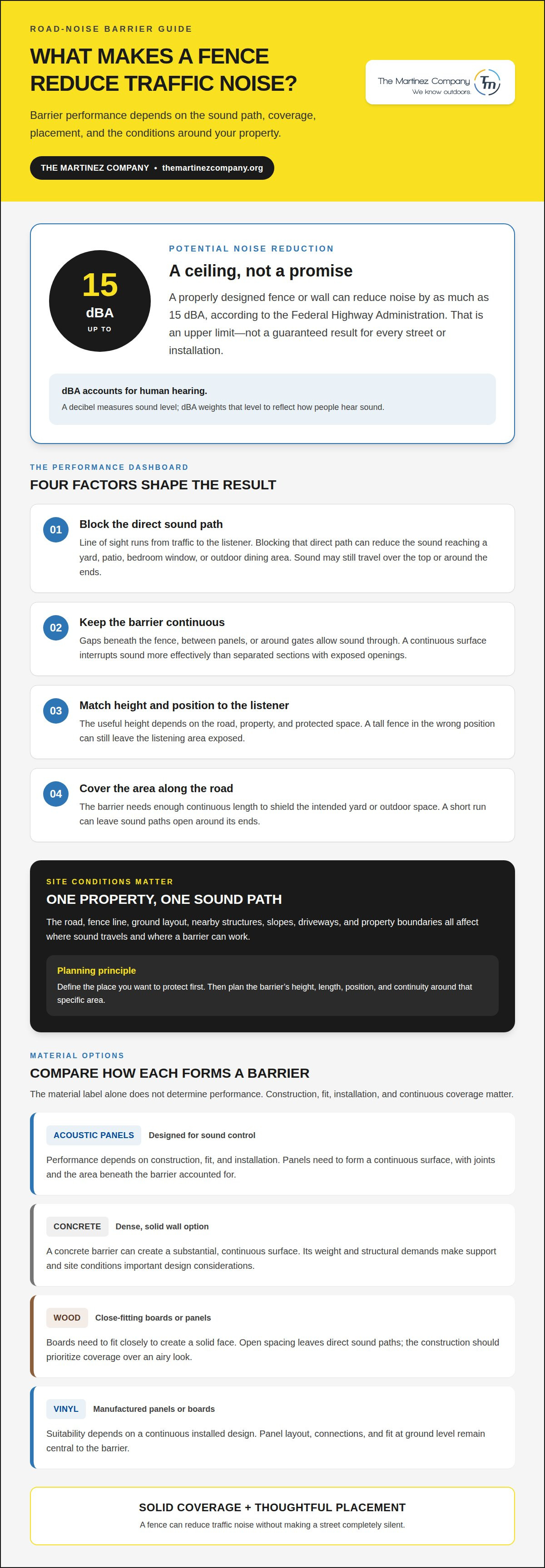
A well-designed fence or wall can reduce traffic noise by as much as 15 dBA, according to the Federal Highway Administration. The right soundproof fencing options for busy roads depend on how the barrier interrupts sound and how it fits the property. Here, “busy” means a street with steady traffic that creates persistent noise near homes or outdoor spaces.
It’s reasonable to expect a taller, solid barrier to solve the problem, but the result also depends on placement, continuity, materials, and the relationship between the road and the area you want to protect. A fence can reduce noise without making a street completely silent.
This guide explains what makes a road busy in this context and how to assess sound-reducing fence choices. A busy-street example shows how barrier design, site conditions, and installation work together, helping you understand the options before planning a project.
Table of Contents
How effective are soundproof fences at reducing traffic noise in decibels?
A decibel measures sound level, while dBA weights sound to reflect human hearing. A sound barrier is a solid structure between traffic and a protected area. These terms help explain what a fence can change, but they don’t mean every installation produces the same result.
A properly designed fence or wall can reduce noise by as much as 15 dBA, according to the Federal Highway Administration. That figure is an upper limit, not a guaranteed outcome for every street. The result depends on the barrier’s design and its position between the road and the listener. A low, interrupted fence won’t work like a continuous barrier.
Line of sight is a key design factor. When a barrier blocks the direct path between vehicles and a yard, less sound reaches that space directly. Sound can still travel over the top or around the ends. A design assessment considers the road, the fence line, and the specific area that needs protection.
Gaps matter. Openings beneath a fence, between panels, or around gates allow sound through. A continuous surface can interrupt sound more effectively than separate sections with exposed openings. For example, a driveway gate needs to be considered as part of the overall barrier, not as an isolated feature.
Placement also affects what a barrier can achieve. A fence beside a busy street may shield one yard while leaving another seating area exposed. The noise source, ground layout, and nearby structures all shape the path sound takes. A well-planned design accounts for these conditions before installation.
For a useful comparison, consider a home beside a traffic-heavy street. The goal isn’t simply to choose the tallest-looking fence. The barrier must block the sound path and provide consistent coverage across the area being protected. These practical principles explain soundproof fencing options for busy roads and why a decibel figure alone can’t predict the result at every site.
What fence height and length are needed to block noise from a busy road?
Effective height is the vertical reach that interrupts sound traveling toward a protected space. The right height depends on the road, the property, and where people want quieter conditions. A fence that blocks the view between traffic and a patio can interrupt direct sound, while a lower barrier may leave that path open. There is no single height that suits every street.
Barrier length is the continuous span that shields an area from road noise. The fence needs to extend far enough along the road to protect the intended yard or outdoor space. A short section can leave sound paths open around its ends. For example, a fence shielding a backyard seating area should cover the stretch beside the area, rather than stop before the seating begins.
Line of sight is the direct path between a sound source and a listener. A professional considers this path from the road to key places, such as a bedroom window, garden, or outdoor dining spot. Placement and height must work together. A tall section in the wrong position may leave the actual listening area exposed.
Gaps are openings that let sound pass through a barrier. A gate, uneven ground, or separated panels can weaken an otherwise continuous fence line. During planning, account for these openings and how they align with the road and protected area. A gate across a driveway, for instance, needs to fit into the overall barrier plan.
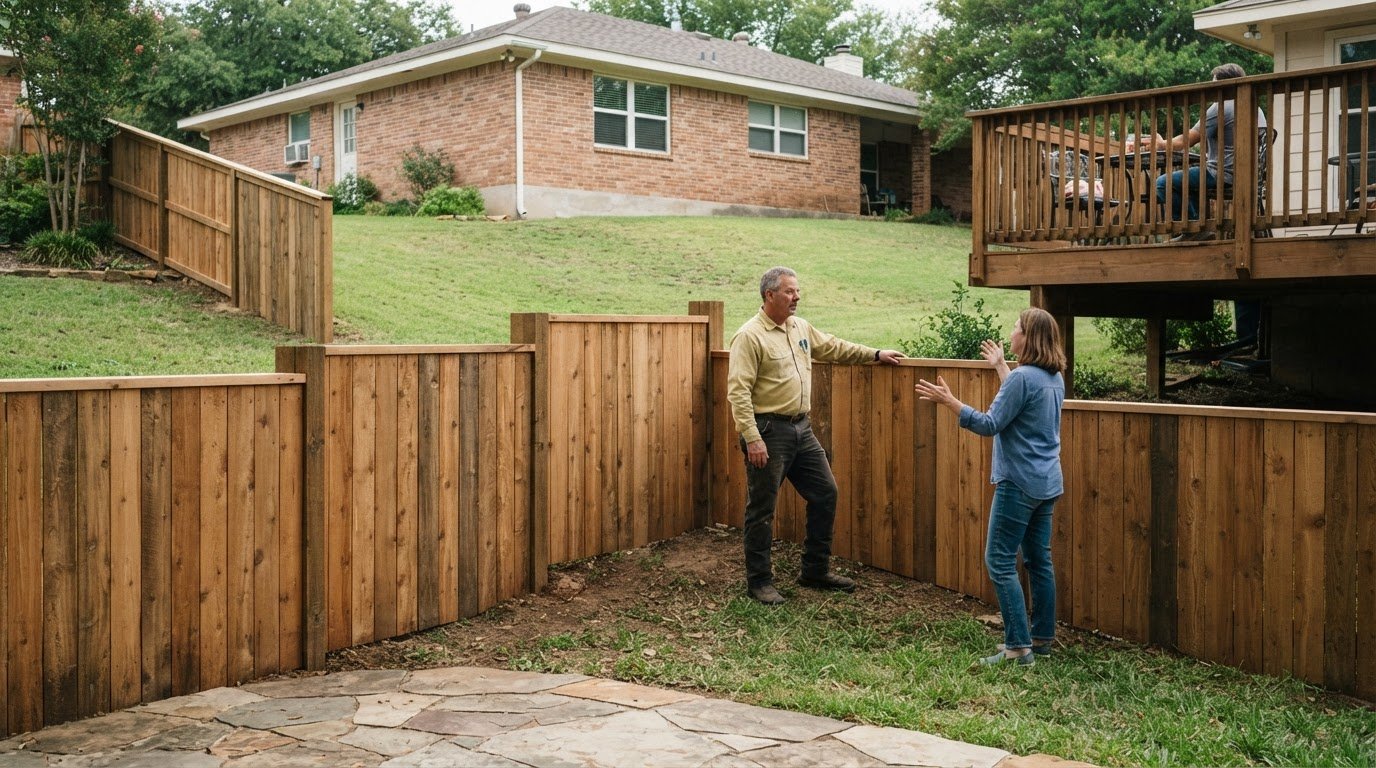
Property boundaries and site layout also shape the design. A narrow yard may need a different fence line than a deep lot with several outdoor areas. Nearby buildings, slopes, and driveways can affect where the barrier belongs. These conditions matter more than choosing a height based on appearance alone.
For a busy-road property, define the area to protect first, then plan the barrier’s height, length, and continuity around it. A site-specific fence layout can translate those conditions into a buildable design.
What materials work best for road noise barriers: acoustic panels, concrete, wood, or vinyl?
An acoustic panel is a solid barrier panel designed to limit sound transmission. Its performance depends on its construction, fit, and installation, not its label alone. For a roadside property, panels need to form a continuous surface. Gaps at joints or beneath the barrier can let sound through. A professional design considers the panel system alongside the fence line and the area needing protection.
Concrete is a dense construction material used to create solid walls. A concrete barrier can provide a substantial, continuous surface between traffic and a yard. Its weight and structural demands make support and site conditions important design considerations. For example, a sloped property may need a different wall layout from level ground. Concrete also creates a firm, finished appearance that suits some residential and commercial settings.
Wood is a natural building material commonly assembled into fence boards or panels. For noise control, the boards must fit closely together to create a solid face. A decorative fence with open spacing leaves direct sound paths. Wood can suit a property when its appearance fits the landscape, but the construction should prioritize coverage over an open, airy look.
Vinyl is a manufactured fencing material formed into panels or boards. Its suitability depends on whether the installed design creates a continuous barrier. A panel fence with open gaps won’t block sound like a solid surface. Vinyl can provide a uniform appearance, but the panel layout, connections, and fit at ground level remain central to the noise-barrier design.
Compare materials by how well they form a complete barrier, their structural requirements, and how they fit the property. Acoustic panels may be designed for sound control; concrete offers a solid wall; and wood and vinyl depend on close-fitting construction. A busy street beside a narrow yard may call for a different layout than a broad commercial frontage. The right material suits the site and supports a continuous, well-positioned barrier.
Soundproof Fence Cost per Linear Foot in United States
A linear foot is one foot measured along a fence line. Installed cost per linear foot combines the barrier and construction work across that measured span. In the United States, the total depends on the project, so a single figure cannot describe every roadside property. A short, level boundary and a long, sloped frontage require different scopes.
Material is the fence component selected for the barrier. Concrete, wood, vinyl, and acoustic panels differ in their construction and installation needs. For example, a concrete wall requires a different build approach from assembled fence panels. The selected material affects project scope, as do the planned height and full length of the barrier.
Site preparation is the work needed before installation begins. Uneven ground, slope changes, obstacles, and access constraints can shape that work. A property with a clear, level fence line presents a different scope from one that needs adjustments around a driveway or existing structures. Gates and transitions also add design and installation considerations.
Structural requirements are the support and construction details needed for the planned barrier. A substantial wall may need different support work from lighter panels. The layout, ground conditions, and material all influence the design. These factors affect the entire project, not just the amount of fencing measured along the property.
To understand a per-foot estimate, review what the scope includes. The quote should account for selected materials, planned height and length, site preparation, support needs, gates, and installation. Comparing two estimates is useful only when both describe similar materials and work. A lower figure may reflect a different project scope.
The project price depends on its materials, dimensions, site conditions, and installation requirements, and is provided after a quote request. Share the property layout and the areas you want protected to support a precise project scope. Request a project quote to move from cost factors to a defined fence plan.
The Martinez Company
The Martinez Company can help turn a roadside noise concern into a practical construction plan. For residential or commercial properties, its contracting work can address how a fence project fits the site, the intended outdoor space, and the surrounding construction. Bring the property layout and your priorities, such as which areas need shielding and how the barrier should fit the setting. The team can shape those considerations into a fence installation plan, from early project decisions through construction. This is a natural next step when you’re ready to move beyond comparing materials and plan a build suited to your property.
Contact The Martinez Company to discuss your project.
Plan a Quieter Outdoor Space
A roadside fence project is an opportunity to shape how your property works, not just how its boundary looks. Consider the outdoor areas you want to enjoy, how the fence will fit the setting, and how you want the finished space to feel. Those priorities can turn soundproof fencing options for busy roads into a practical plan for your property.
The Martinez Company brings commercial and residential contracting together with outdoor living spaces, helping connect construction choices to how you use the site. A clear brief about your goals gives the project a strong starting point.
Discuss your project with The Martinez Company and take the next step toward an outdoor space designed around your needs.
Frequently Asked Questions
What are the best-rated residential noise barrier fence products?
There isn’t one best-rated product for every home; ratings alone don’t show how well a fence suits a particular site. Prioritize reviews that describe the installed barrier, its fit and finish, and its performance in similar conditions. For example, a review of a roadside installation is more relevant than one focused only on appearance. Compare those details with your property’s layout and goals.
How do I install a sound barrier fence, and when should I hire a contractor?
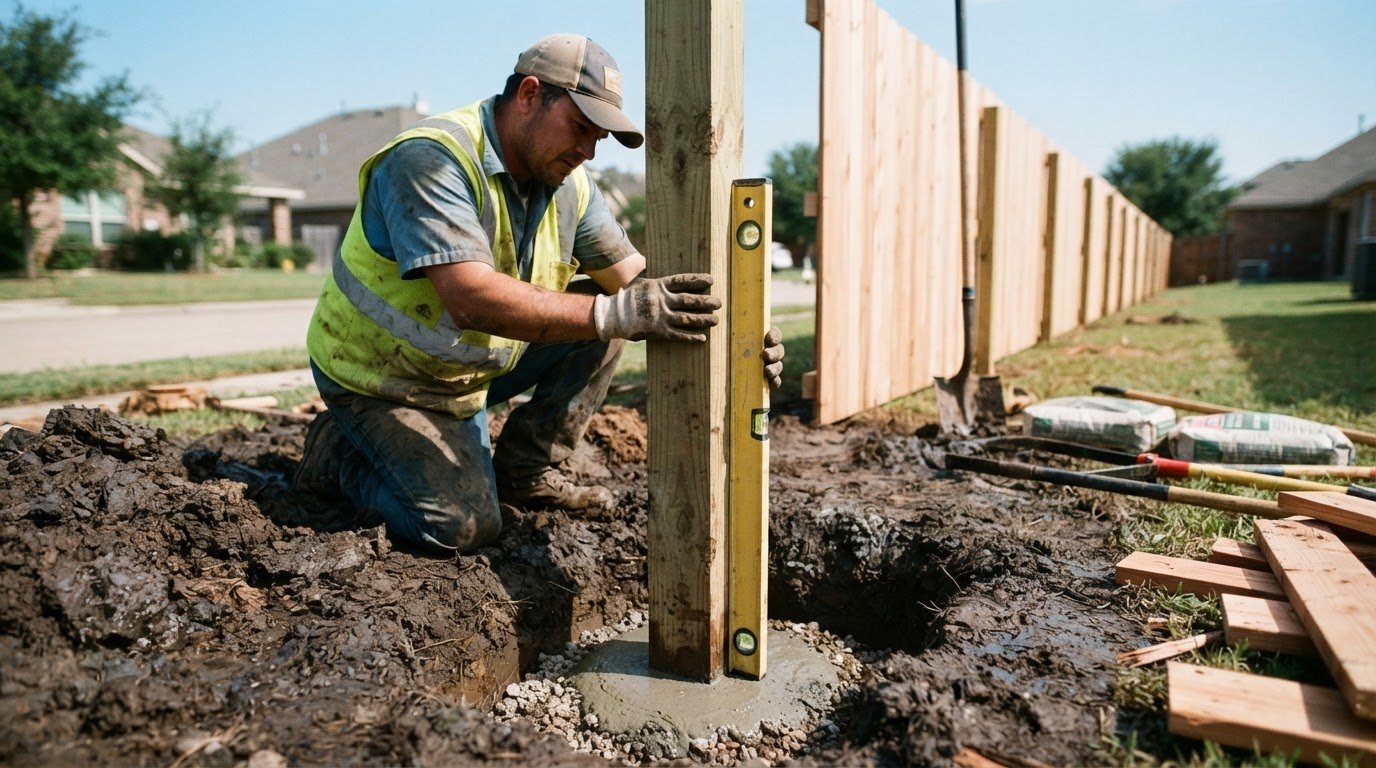
First define the area to protect, then plan the fence’s height, length, placement, and continuity to block the sound path and account for gaps, gates, and site conditions. Have a professional assess the design before installation, especially where slopes, driveways, or nearby structures affect the layout.
Comments