
Modern Fence Ideas for a Front Yard That Work With Landscaping
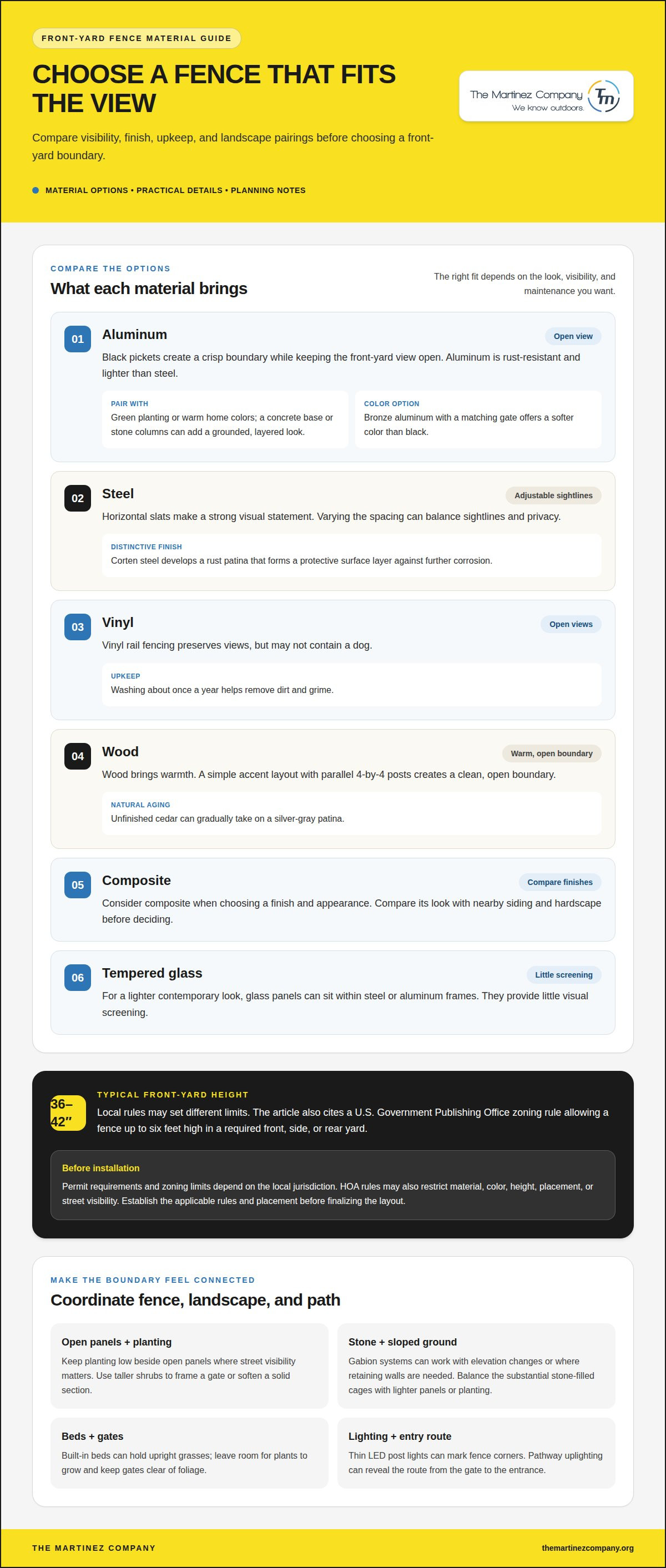
A front-yard fence should define the space without shutting the landscape out. Modern fence ideas for a front yard work best when the material, visibility, and planting plan support the same goal. A typical front-yard fence is 36 to 42 inches tall, though local rules may set height limits.
It’s natural to want a fence that adds curb appeal while helping with containment, security, or privacy. Start by deciding which goal matters most, then choose materials and landscaping that make the boundary feel like part of the yard, not an afterthought.
Explore options ranging from clean-lined metal and warm wood to layered planting, stone, and lighting. Each pairing can shape the view, guide movement, and bring a modern front yard together, helping you turn an appealing idea into a fence suited to your property and priorities.
Table of Contents
1. Aluminum, steel, vinyl, wood, and composite materials
Black aluminum picket fencing creates a crisp outline while keeping the front-yard view open. Its rust-resistant construction is lighter than steel, making it a practical option when you want a visible boundary without a solid visual barrier. Pair black rails with green planting or warm colors on the home for a modern palette. A concrete base or stone columns can give the fence a grounded, layered appearance.
Steel makes a stronger visual statement, especially in horizontal-slat designs. Varying the spacing between slats can balance sightlines and privacy. Corten steel panels develop a rust patina that forms a protective surface layer against further corrosion, giving the fence a distinctive finish. For a lighter contemporary look, tempered glass panels can sit within steel or aluminum frames, though they provide little visual screening.
Vinyl rail fencing preserves open views, but it may not contain a dog. Washing vinyl about once a year helps remove dirt and grime. Wood brings warmth and suits a simple accent layout: parallel 4-by-4 posts create a clean, open boundary. Unfinished cedar can gradually take on a silver-gray patina. Composite is another material to consider when selecting a finish and appearance; compare its look with nearby siding and hardscape before choosing.
Bronze aluminum fencing with a matching gate can introduce a softer color than black while keeping the design cohesive. Choose a gate style that echoes the fence’s picket or horizontal lines, then plan the opening around the path people use. A typical front-yard fence is 36 to 42 inches tall, though local rules may set limits. According to the U.S. Government Publishing Office, a cited zoning rule allows a fence up to six feet high in a required front, side, or rear yard. Set the height and layout before you install, so materials, gates, and concrete elements form one functional design.
2. Fence integration with landscaping and hardscaping
Plan the fence and landscaping as one composition. A black metal boundary, gravel bed, and clipped boxwood hedge create contrasting textures without crowding the front walk. Keep planting low beside open panels when street visibility matters, then use taller shrubs to frame a gate or soften a solid section. Repeating a finish, such as dark metal on fence hardware and path edging, ties the elements together.
On a sloped property, gabion fence systems can work with elevation changes or areas where retaining walls are needed. Their stone-filled cages create a substantial boundary, so balance them with lighter horizontal panels or nearby planting. A narrow bed of grasses can soften the hard edges, while a path can follow the grade beside the structure. Align the fence, retaining feature, and walkway before installation for clean transitions.
Planters can connect a fence to the garden without adding a separate visual layer. Built-in beds along a solid panel, for example, can hold upright grasses, while a living wall adds greenery to a small entry area. Leave room for plants to grow and keep gates clear of foliage. Matching the planter finish to nearby concrete, stone, or timber creates a consistent look from the sidewalk to the front door.
Lighting makes the boundary legible after dark. Thin LED post lights can mark fence corners, while pathway uplighting can reveal the route from the gate to the entrance. Place fixtures to highlight a planting bed or textured wall, not to compete with the home’s main entry. For a coordinated project, plan fence installation with outdoor living elements as part of the same design.
3. Front yard fence goals: curb appeal, containment, security, and privacy
Start with the boundary’s purpose. A low, open picket fence can frame a garden and preserve views, while a solid panel provides more screening. Match the fence’s lines and colors to the home’s architectural style. That way, curb appeal is part of the plan rather than a finishing touch.
A typical front-yard fence is 36 to 42 inches tall, though local rules may set height limits. The U.S. Government Publishing Office cites a zoning rule allowing up to six feet in a required front, side, or rear yard. Permit requirements and zoning limits depend on the local jurisdiction, so the rules that apply to a property determine the permitted height and approval process.
HOA covenants may restrict fence materials, colors, height, placement, or visibility from the street. The association’s design standards determine which choices are allowed. Setbacks also depend on local rules and the property boundary: a fence may need to sit inside the property line or away from a sidewalk. Use a survey and applicable local requirements to establish its placement.
For a small home, choose a visually light design, such as black metal pickets, slim horizontal slats, or a short fence that defines the entry without enclosing the whole yard. A matching gate can make the approach feel intentional. Keep plants near the path low enough to preserve visibility, and add a hedge behind open fencing for a softer garden edge.
Containment and privacy call for different choices. A rail fence may have gaps a small dog can pass through, while solid panels and screen blocks offer more visual separation. Hedges can add living privacy as they grow, but they don’t replace a secure barrier when containment matters. Along a busy road, a front-yard fence can help define a space for children.
Common installation problems include poor alignment, inadequate structural support, and conflicts with local building codes. These can affect a fence’s stability or safe use. Accurate layout, sound support, and code compliance are key considerations, especially around gates and changes in grade.
4. Landscaping pairings for modern fences
Landscaping connects a fence’s lines to the home and front garden. When considering modern fence ideas for a front yard, build the planting scheme around a clear focal point, such as the entry path or a small ornamental tree. Repeat a few plant shapes along the boundary rather than mixing unrelated varieties. This creates a deliberate rhythm while keeping the fence visible.
Use plant height to manage sightlines. Low groundcover beside an open fence keeps the yard visually connected to the street, while taller shrubs can frame a gate or soften a blank wall. Keep the latch and gate approach clear as plants mature. A narrow gravel strip can separate foliage from fence panels and create a neat transition between planting and paving.
Match textures to the home’s exterior. Fine grasses can soften straight metal lines, while broad-leaved plants add contrast beside smooth panels. A stone path can draw the eye toward the entrance, with a restrained planting bed along its edge. For modern fence ideas for a front yard, repeat a hardscape finish near the entry and boundary, then use greenery to keep the composition from feeling rigid.
Consider the site before selecting plants. Sun exposure, soil, drainage, and available bed space all influence which choices will thrive. Position irrigation to limit repeated splashing on fence materials, and avoid letting dense foliage rest against wood. At corners, a taller plant can act as a visual anchor without hiding the fence’s outline. These choices help the landscaping remain functional as it fills in.
Keep the overall composition simple: choose a focal feature, repeat a few plant forms, and preserve clear routes through gates and paths. Plan a fence and concrete layout that brings those landscape elements together.
The Martinez Company: Fence Installation
The Martinez Company installs fences for homeowners ready to turn a front-yard plan into a finished boundary. Bring together your priorities for curb appeal, containment, privacy, and landscaping, then shape the design around them. Fence materials, layout, gates, and nearby concrete or outdoor living elements can form one coordinated project.
Turn to The Martinez Company when you’re ready to move from comparing ideas to planning residential fence work. A clear direction for the fence’s purpose and its relationship to the yard gives the project a practical starting point. Contact The Martinez Company to discuss your fence installation plans.
Shape the Front Yard You Want to Come Home To
The strongest modern fence ideas for a front yard start with a clear sense of how you want the space to look and function. Think beyond the boundary: consider how the entrance welcomes guests, how the yard connects to the home, and which details will make the property feel intentional. A well-planned fence can frame that larger vision.
The Martinez Company brings that vision to life through residential and commercial contracting, including outdoor living spaces. Whether you’re planning a front-yard update or coordinating the fence with a broader exterior project, a clear design direction helps bring the separate elements together.
Take the next step and put your ideas into motion. Contact The Martinez Company today to discuss your project and begin shaping a front yard that feels distinctly yours.
Frequently Asked Questions
What are popular modern front yard fence styles and materials?
Open metal pickets, horizontal slats, and clean-lined wood accents are popular contemporary options. A home with broad front windows, for example, can pair open fencing with a simple gate, while a more enclosed frontage may suit solid or semi-private panels. Tempered glass in a metal frame offers another crisp look. Choose a style that suits the home’s architecture and the boundary’s purpose.
Which fence materials are best for durability and low maintenance?
Aluminum is rust resistant and lighter than steel, making it a useful option for a metal fence that needs less upkeep. Vinyl needs washing about once a year, while steel systems may need periodic cleaning and occasional touch-up painting. Wood can fade, splinter, or rot with exposure to the elements. For composite fencing, compare the specific product’s care instructions rather than assuming all options require the same maintenance.
What are modern front yard fence ideas that preserve curb appeal and visibility?
Use open pickets or spaced metal slats to define the property without creating a solid visual wall. A black finish can keep the fence visually unobtrusive, while a gate that repeats its lines creates a composed entry. To preserve street-facing views, place planting selectively rather than forming a continuous screen. This approach frames the home and keeps the front garden connected to the street.
How do modern wood, metal, vinyl, and composite fences compare?
Wood offers a natural look that can suit a warm, traditional exterior, but it needs more attention as it weathers. Aluminum provides an open metal profile and resists rust; steel supports strong horizontal designs but may need finish touch-ups. Vinyl rail fencing preserves open sightlines, though it may not contain a dog. Composite options vary, so compare each product’s appearance and care requirements before deciding.
Comments