
How to Talk to a Neighbor About Replacing a Shared Fence
Replacing a fence can affect more than the boards between two yards. Contact every neighbor whose property or access may be affected. Knowing how to talk to a neighbor about replacing a shared fence starts with explaining why the fence needs attention and what you’re willing to contribute.
It’s reasonable to want a sturdy, attractive fence without turning a practical project into a strained conversation. Start by clarifying ownership and the fence’s condition, then discuss costs before anyone commits to work. Next, compare materials, style, height, color, installation timing, and future maintenance so expectations are clear on both sides. This guide covers those conversations, including what to do if a neighbor doesn’t want to share the expense. A thoughtful plan can turn an awkward first discussion into a clear agreement about the fence and the work ahead.
Table of Contents
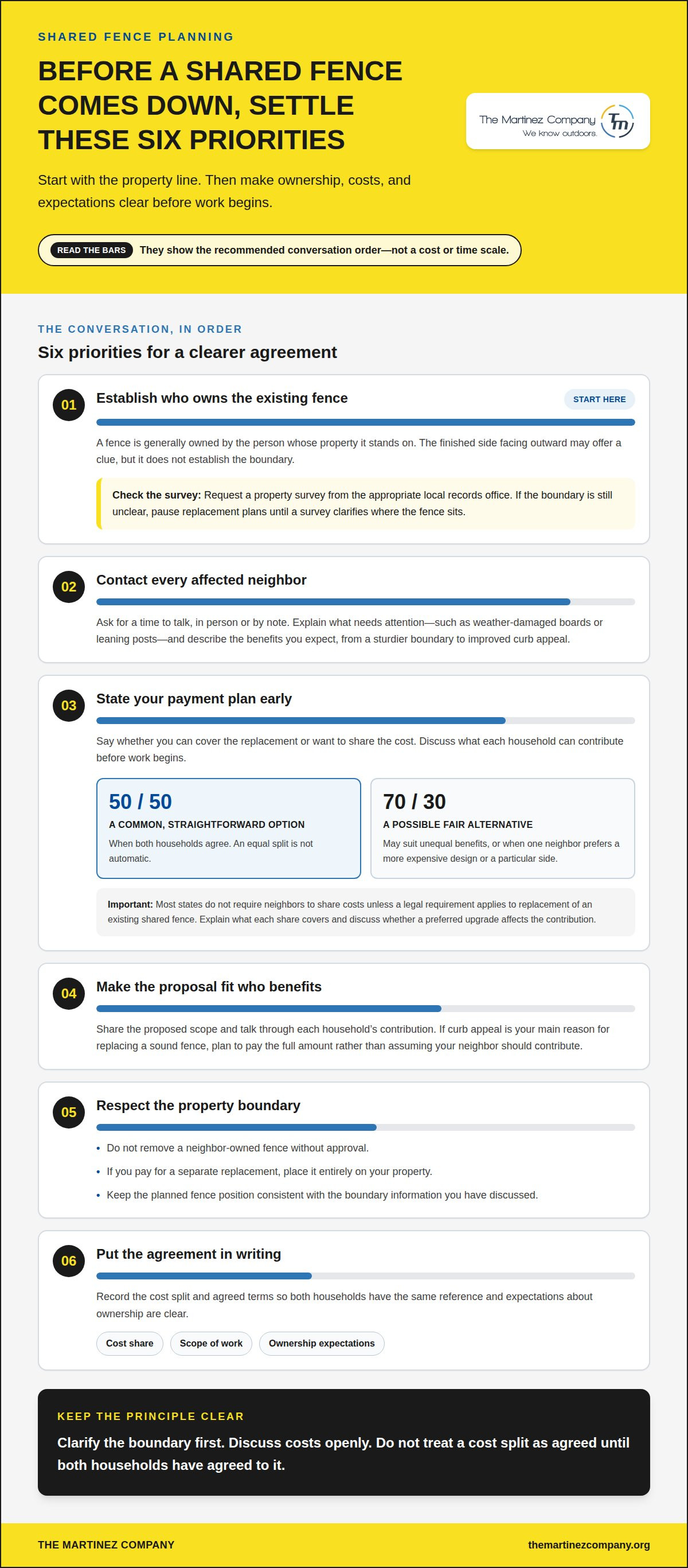
Who Owns the Existing Fence?
Request a copy of the property survey from the appropriate local records office to help locate the property line. If the boundary remains unclear, pause replacement plans until a survey clarifies where the fence sits.
Establish ownership before proposing removal. A fence is generally owned by the person whose property it stands on. The finished side facing outward can offer a clue, but it doesn’t establish the boundary. Compare the fence’s position with the survey information before treating it as shared or planning to remove it.
Contact every affected neighbor. Ask for a time to discuss the fence, either in person or with a note. Explain what needs replacing, such as weather-damaged boards or leaning posts, and describe the benefits you expect, from a sturdier boundary to improved curb appeal.
State your payment plan early. Tell your neighbor whether you can cover the replacement or want to share its cost. A 50/50 split is a common, straightforward option when both households agree. Don’t present an equal split as automatic; most states don’t require neighbors to share costs unless a legal requirement applies to replacement of an existing shared fence.
Offer a fair alternative if benefits differ. A 70/30 split may suit neighbors who benefit unequally or when one prefers a more expensive design or a particular side. Explain what each share covers, then discuss whether the preferred upgrade should affect that neighbor’s contribution.
Address cost concerns with clear choices. Share the proposed scope and discuss what each household can contribute before work begins. If curb appeal is your main reason for replacing a sound fence, plan to pay the full amount rather than assuming your neighbor should contribute.
Respect the property boundary in the final plan. Don’t remove a neighbor-owned fence without approval. If you’re paying for a separate replacement, place it entirely on your property. A written agreement can record the cost split and prevent different expectations about ownership.
Choosing fence materials, style, color, and height together
Check local limits first. Review city zoning requirements and HOA rules before settling on height, placement, or design. Backyard fences are usually 6 feet high, but local restrictions may differ. Discuss those limits together before either household becomes attached to a plan that cannot be installed.
Compare materials against upkeep. Wood and cedar need more maintenance than vinyl, composite, or chain link. Talk through the trade-off between a natural wood appearance and the ongoing care it requires. Match the material to both households’ preferences and willingness to maintain the finished fence.
Choose a style both sides can live with. Horizontal, lattice, and shadowbox designs can look similar from either yard. These options may help when both neighbors want an attractive finish without one side feeling like the “back.” Discuss the style and which direction the fence will face.
Settle color before installation. If your neighbor contributes to the cost, discuss the stain color together. For example, agree on a shared wood tone rather than leaving one side unfinished or choosing colors separately. Include the selected color in your project notes so the final appearance matches the agreement.
Agree on position, timing, and costs. Put the proposed fence line and installation schedule into the discussion, alongside the material and style. Ask what timing works for both households, then record the choices and each person’s expected contribution. A clear written plan reduces confusion as the project moves forward.
Make the contractor conversation specific. Share the agreed design and project requirements when discussing the work. Gather estimates from several fence companies to understand how scope and material choices affect the budget. If you need help turning the design into a clear installation plan, review fence installation details.
Agree on fence maintenance responsibilities
Set maintenance expectations before installation, while the cost and design agreement are still fresh. Decide who will handle future upkeep and record the plan alongside the fence’s orientation.
Set Maintenance Responsibilities and PaymentAgree whether maintenance will be shared or handled by one household. Neighbors who share the fence’s initial cost can also agree jointly on dividing future upkeep. If one homeowner pays for the entire fence, it may still be helpful to clarify maintenance responsibilities with the neighbor. If one neighbor requests more expensive materials, a 60/40 cost split may reflect that choice. Discuss who will address repairs and routine care, and avoid assuming the original payment arrangement answers every future question.
Put the Agreement in WritingRecord the cost split, fence style, and timeline in a written document or email. Include the maintenance arrangement and any agreed orientation so both households have the same reference after installation. Keep project receipts with the agreement. Clear records help neighbors follow through on commitments and resolve later questions about what they decided.
Agree on which side of the fence faces each yard before work begins. Wood fences are typically installed with posts inside the yard and pickets facing outward. Discuss the orientation in relation to the property line and agreed design instead of leaving the installer to interpret conflicting preferences. A shared understanding helps preserve the intended appearance from both properties.
Review the completed plan together before installation starts. Confirm that the written terms match everyone’s understanding of payment, orientation, and future maintenance. If the property line affects where the fence can sit, keep the planned placement consistent with the boundary information you have discussed. Resolving any mismatch before work begins helps both households respect the plan and each other’s property.
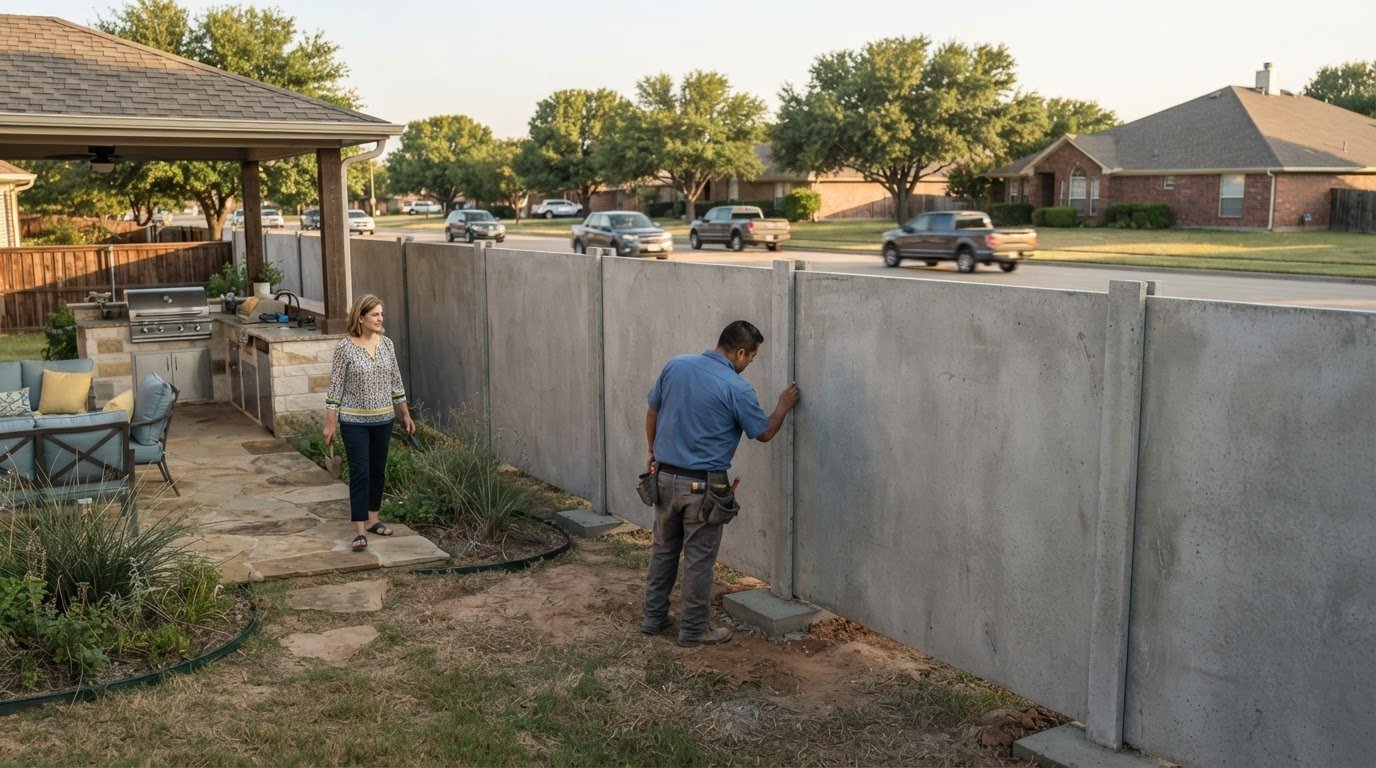
Reasons to replace a shared fence
Point to visible damage. Weather can weaken a fence, loosen posts, or leave boards broken. Knowing how to talk to a neighbor about replacing a shared fence starts with showing the specific areas that need attention. Explain why a repair may not address the condition of the entire fence, rather than framing replacement as a purely visual preference.
Explain when a repair won’t match. If matching material for a small section can’t be found, the replacement may look noticeably different. Describe the mismatch and discuss whether replacing more fencing would create a consistent boundary. Contact every neighbor affected by the expanded work, not only the household beside the damaged section.
Separate necessary work from an upgrade. Be clear whether the reason is weather damage, an unmatched repair, or improved curb appeal. A neighbor may view those reasons differently. If appearance is your main motivation, plan to pay the full replacement cost instead of assuming your neighbor should contribute.
Connect the problem to the proposed solution. Identify which sections need work and why. If the fence is wood, explain that leaving the neighbor’s side unstained leaves that surface unprotected. Discuss the finish and upkeep before agreeing on a solution, so the proposed work addresses both sides of the boundary.
Give neighbors time to prepare. Provide a few weeks’ notice before installation and share the expected schedule. If workers may need brief access to a neighbor’s side, explain that beforehand. Mention activity that could affect dogs, too. These practical details help the conversation stay focused on planning rather than unexpected disruption.
Turn the reason into a next step. If you’re unsure how to talk to a neighbor about replacing a shared fence, keep the discussion centered on the visible problem, proposed scope, and payment plan. Once you’re ready to move forward, request help planning the fence work.
The Martinez Company: Fence Installation
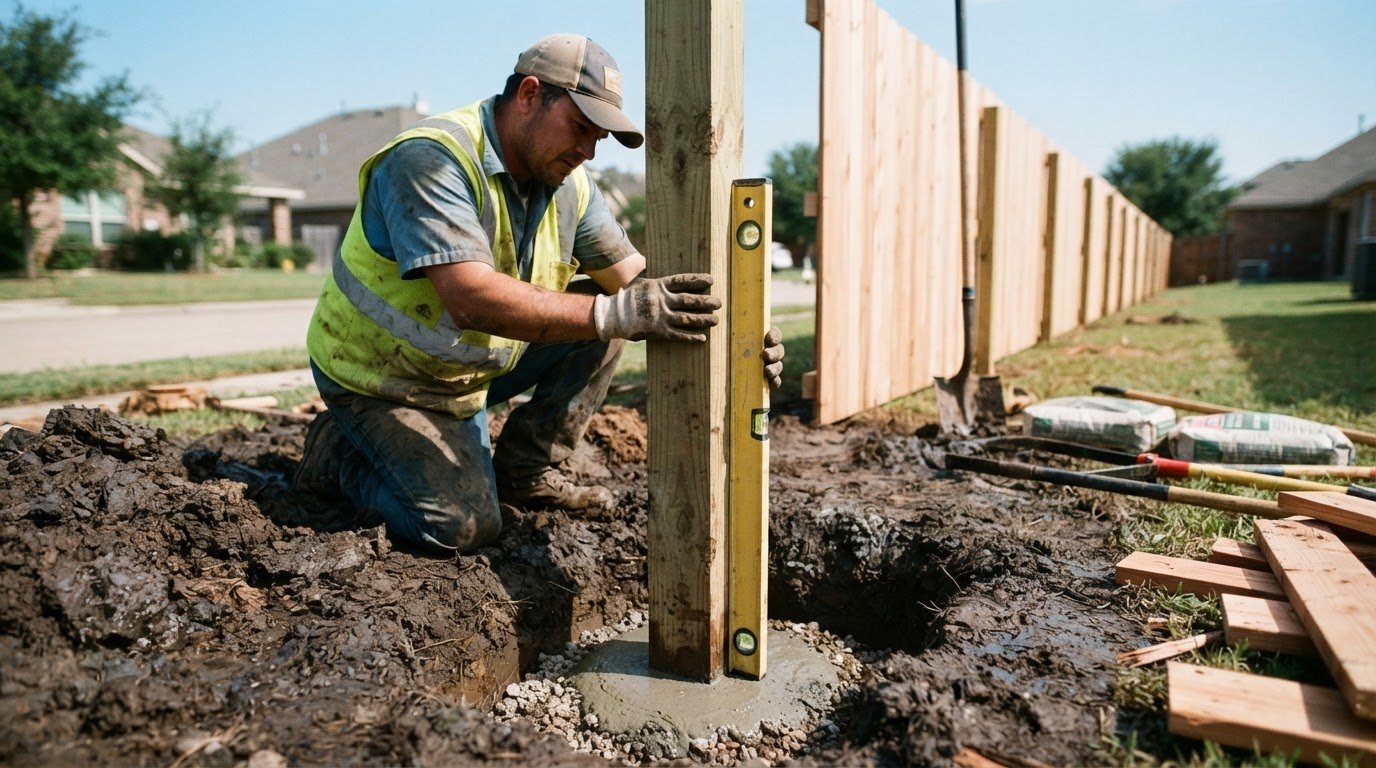
The Martinez Company installs fences for residential and commercial projects. Consider professional installation once you and your neighbor have discussed the scope, chosen a direction for materials and style, and are ready to move from agreement to construction.
Bring your decisions into the project discussion: which fence sections need replacing, the preferred design, the agreed position, and any timing or access considerations. A clear outline connects your shared expectations to the finished work and keeps the plan grounded in both properties’ needs. If the fence is part of a broader backyard improvement, outdoor living spaces may also be relevant to your plans.
For a next step, contact The Martinez Company to discuss fence installation for your project.
Move from agreement to a lasting result
How you approach the conversation about replacing a shared fence can shape the project long after the first discussion. Keep the focus on a shared outcome: a boundary that works for both households and looks considered from each side. Once you have a clear plan, the next step is turning those decisions into a finished structure with careful installation.
The Martinez Company installs fences and also handles commercial contracting, residential contracting, and outdoor living spaces. That broader construction experience can be useful when a fence is part of a larger property project. Share the agreed direction for the work and take the next step toward a well-built result.
Contact The Martinez Company to discuss your fence project. A clear plan can make the path from neighbor conversation to completed fence feel straightforward.
Frequently Asked Questions
How Many Neighbors Will You Have to Contact?
Contact every neighbor whose property or access could be affected by the planned fence work. If the fence runs along a rear boundary shared by multiple lots, you may need to speak with more than the household next door. Walk the proposed fence line and identify affected properties before scheduling work. This helps prevent anyone from learning about construction only after materials or workers arrive.
Step 9: What If They Say No?
If a neighbor declines to share the cost or approve replacement, don’t remove a fence they own. You could consider building a separate fence entirely on your property, potentially behind the existing one, while respecting the property boundary. Before proceeding, account for applicable local rules and any access needs. Keep the conversation civil and explain your independent plan without treating the neighbor’s refusal as consent.
What are the City & HOA Requirements?
Local zoning rules and HOA requirements can affect a fence’s height, placement, and design. Check both before settling on a plan, and determine whether construction requires a permit. For example, an HOA may set design standards that influence color or materials, while local rules may limit height. Confirm the requirements that apply to the property before authorizing installation.
How do I start a conversation with my neighbor about replacing a shared fence?
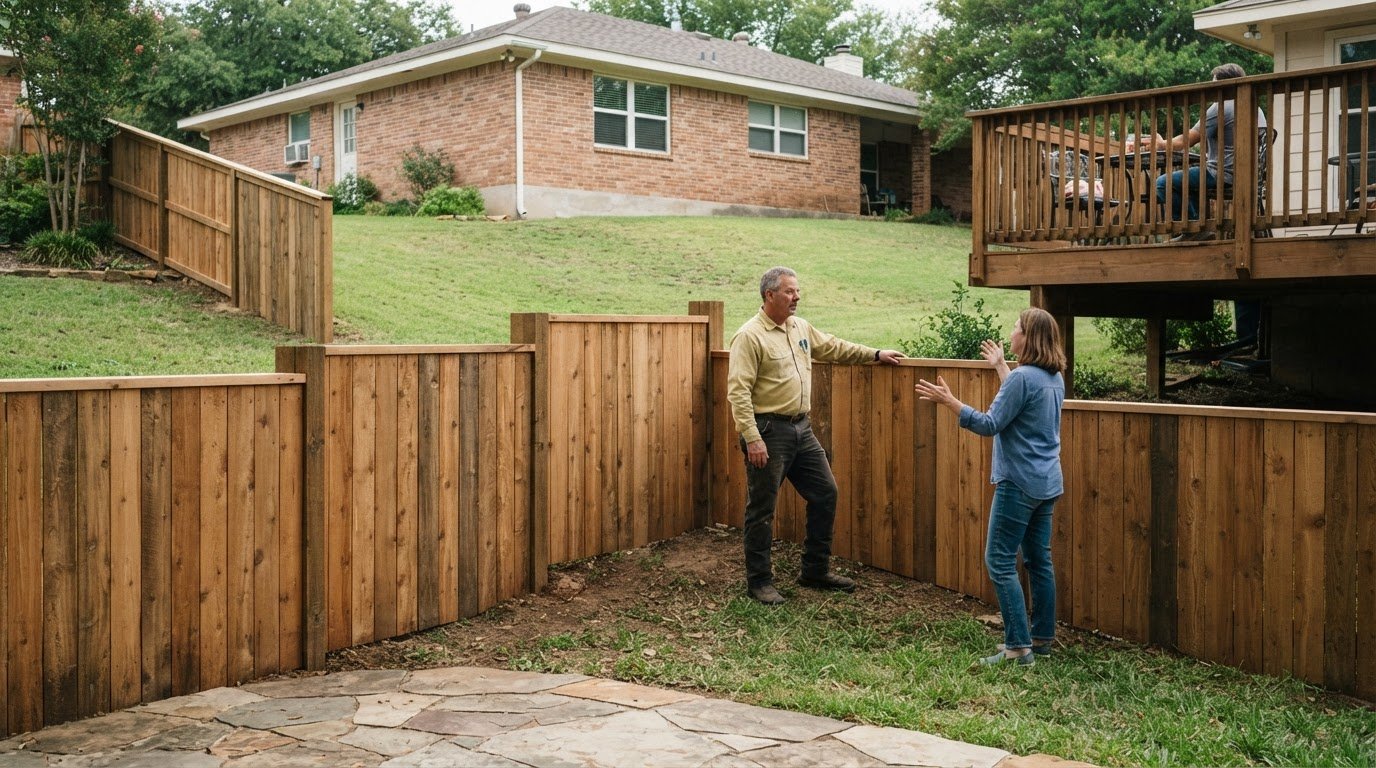
Ask for a convenient time to talk, either at the door or by leaving a brief note. Start with a specific observation, such as, “I noticed several boards are damaged, and I’d like to discuss possible next steps.” Explain the work you’re considering, then invite your neighbor’s concerns. A focused, respectful conversation keeps the discussion on the project rather than personal preferences.
Who is legally responsible for a shared fence between neighboring properties?
Ownership generally depends on which property the fence stands on, while a fence on a boundary may involve shared arrangements. The finished side facing outward can offer a clue, but it doesn’t establish ownership on its own. Local rules also affect responsibility for boundary fences. If the location is disputed, use property records or survey information to clarify where the fence sits before making decisions.
Do I need my neighbor's written agreement before replacing a shared fence?
A written agreement provides a useful record of shared decisions, but whether it is legally required depends on fence ownership and applicable local rules. Don’t treat silence or an informal conversation as permission to remove a neighbor-owned fence. If your neighbor is contributing, document the agreed scope and payment arrangement so both households have a clear record of what they accepted.
Comments