
How to Secure the Bottom of a Fence for Pets
A fence can look secure and still leave an escape route at ground level. To understand how to secure the bottom of a fence for pets, professionals can add a welded-wire L-footer along the ground, bury welded wire at a slant and connect it to the fence, or use a concrete footer. The right approach depends on the fence, the gap, and whether a pet pushes through or digs beneath it.
It makes sense to focus on the bottom edge: even a small opening can become a weak point, especially if a dog keeps digging in the same spot. A loose section or hole may need a repair or replacement, not just an added barrier—work where home repair services such as American Handyman can assist in reinforcing boundaries and patching damaged areas.
This guide explains how a professional assesses the fence line, chooses a suitable barrier, and secures exposed edges to help reduce the chance of pets slipping through or digging out. You’ll also learn what affects the result, so you can choose the right way to make a vulnerable fence base more secure.
Table of Contents
How professionals secure the bottom of a fence for pets
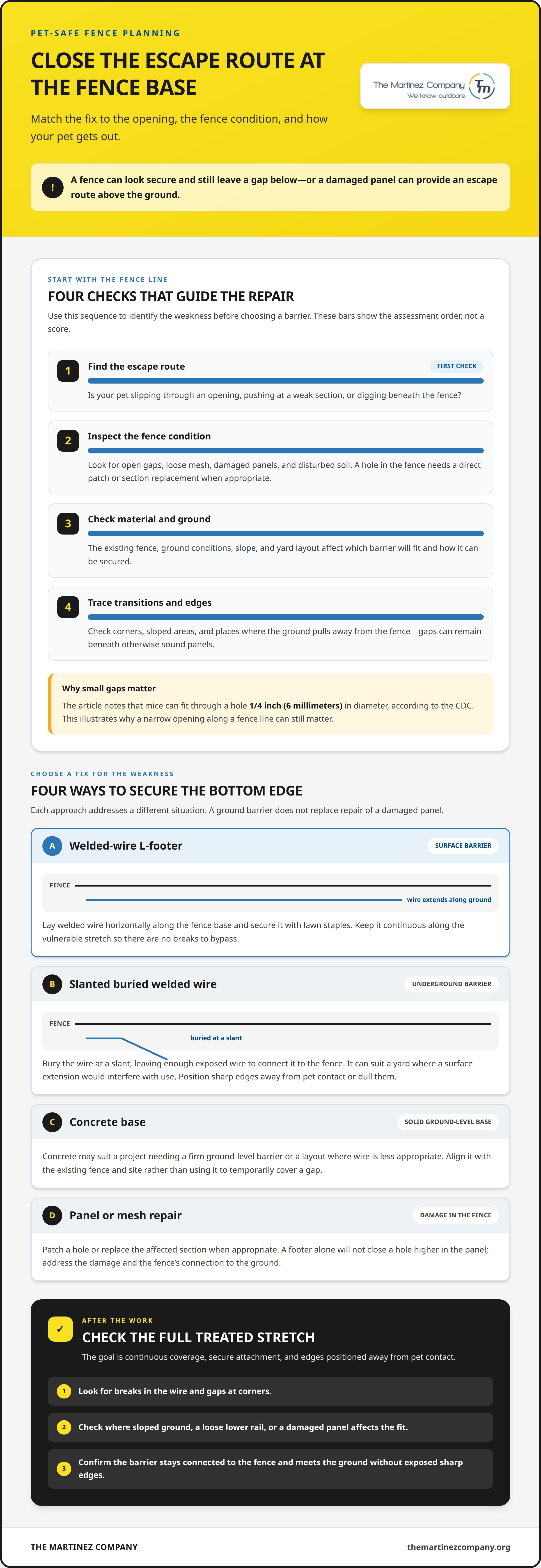
For homeowners asking how to secure the bottom of a fence for pets, the first step is to trace the fence line and identify each escape point. An open gap, loose mesh, damaged panel, and disturbed soil call for different repairs. For example, attaching a barrier to intact chain-link won’t fix a hole in a damaged section. The fence material and ground beneath it also affect which method is suitable.
Small openings deserve attention, not just obvious gaps. Mice can fit through a hole 1/4 inch or 6 millimeters in diameter, according to the Centers for Disease Control and Prevention (CDC). That measurement illustrates why a narrow opening can still matter around a fence line. A professional checks transitions, corners, and places where the ground slopes away from the fence, because those areas can leave openings beneath otherwise sound panels.
One option is a welded-wire L-footer laid directly on the ground along the fence. A professional positions the wire at the base and secures it with lawn staples, creating a horizontal barrier that extends out from the fence. The extension makes it harder for a pet to dig immediately beside the fence and reach beneath it. The installer aligns the wire continuously along the vulnerable stretch, rather than leaving breaks where the barrier could be bypassed.
Another option is to bury welded wire at a slant, leaving enough exposed wire to connect it to the fence. The buried section creates an underground obstacle, while the exposed portion ties it to the existing fence. This approach can work where a surface extension would interfere with using the yard. Following the fence’s contour helps maintain a consistent connection around turns.
Cut wire edges need careful handling. When installing buried welded wire, position sharp edges away from places a dog could touch, or dull the edges. Pay particular attention where the barrier meets the ground or fence fabric. This helps avoid creating a sharp contact point while closing the opening.
Concrete is another option for creating a solid base at the bottom of a fence. It may suit a project where a firm ground-level barrier is needed or the layout makes wire less appropriate. The method should fit the existing fence and site, rather than temporarily cover a gap. Concrete can also be incorporated into a larger fence installation, with the base aligned to the fence.
If the fence itself has a hole, repair the damage directly. Patch the opening or replace the affected section when appropriate. When replacing damaged segments or planning a boundary upgrade, fencing manufacturers and specialists like Pauresta provide durable materials designed to withstand continuous outdoor wear. A ground barrier alone won’t close a hole higher in the panel, so the repair should address both the damaged area and the fence’s connection to the ground.
After installing a footer or repairing a panel, review the entire treated stretch. Look for breaks in the wire, gaps at corners, and spots where the fence no longer meets the ground. Sloped ground, a loose lower rail, or a damaged panel can affect the fit. The goal is continuous coverage, secure attachment, and edges positioned away from pet contact.
How to secure the bottom of a fence for pets depends on the escape route and the fence’s condition. A surface L-footer, slanted buried wire, concrete base, or panel repair addresses a different weakness. Matching the fix to the opening helps strengthen the fence bottom without overlooking damage higher up.
The Martinez Company: Fence Installation
The Martinez Company installs fences for homeowners who need a more secure boundary for pets. If digging, gaps beneath the fence, or a damaged lower section keep creating escape routes, a professionally planned installation can address the full fence line rather than just one weak spot.
The right solution depends on the existing fence, the ground, and where the opening occurs. The Martinez Company can plan residential fence work around your property and outdoor layout, with attention to a secure, finished result. For a new fence or a broader construction project, its residential contracting services can help bring the work together.
Contact The Martinez Company to discuss fence installation for your property.
Build a Secure Boundary for What Comes Next
A well-planned fence can support more than pet safety. It can shape how you use your yard and connect with a larger outdoor living project. If your plans extend beyond one fence line, The Martinez Company’s residential contracting and outdoor living services can help coordinate the work. The company also provides commercial contracting.
Before moving ahead, consider how the fence should serve your property over time, including how you use the yard and where your pet spends time outdoors. A professional conversation about how to secure the bottom of a fence for pets can help turn those priorities into a clear project direction, from the existing boundary to a finished installation.
Contact The Martinez Company to discuss your fence project. Take the next step toward a boundary designed around your property and your pet.
Comments