
Hidden Costs in a Construction Bid: What the Price Includes
The lowest bid can carry the highest risk. A construction bid covers the work, materials, allowances, and assumptions it states, not every cost the project may later require. Hidden costs in a construction bid often surface when an allowance falls short, the scope changes, or a defect needs correction.
It’s reasonable to focus on the total at the bottom of the page. But that figure shows what each contractor priced, not whether the bids include the same work or account for avoidable rework. An allowance is a placeholder, not a firm selection; an exclusion leaves work outside the priced scope. A clear bid shows which choices are settled and which remain open.
You’ll learn how to review materials and subcontractor details, compare bids on equal terms, and clarify scope and changes before work begins. We’ll also look at how defects and rework can affect cost and schedule, so you can assess the full project commitment, not just the opening number.
Table of Contents
Bid details for materials and subcontractors
Hidden costs in a construction bid often stem from unclear material standards, open pricing, or delivery assumptions. Review named products, quantities, labor, subcontractor scopes, and pricing terms to see what the estimate covers. Material price increases can raise costs if pricing can change before purchase; supply delays can disrupt crew schedules and extend the project timeline.
Material Defects and Shortages
Material defects are flaws that make items unsuitable for the planned work, while shortages leave crews without enough supplies to finish. Both can require replacement materials and extra labor. For example, damaged concrete supplies may delay a scheduled pour while replacements are arranged. Compare quantities and product descriptions with the plans, and look for stated quality standards. Lower-grade materials or rushed work can also lead to premature wear, system failures, and ongoing maintenance.
Material Price Increases
A material price increase is a change in supply cost between estimating and purchase. Its effect depends on the bid’s pricing terms: a fixed price treats changes differently from an allowance or adjustable price. If selected fixtures exceed the allowance, the owner may face added expense. To uncover hidden costs in a construction bid, identify which materials have firm prices and which remain subject to selection or adjustment.
Supply Delays
A supply delay happens when a required material arrives after its planned installation date. Crews may need to be rescheduled, subcontractors may have to return later, and equipment may remain tied up on unfinished work. For example, a late delivery of finish materials can hold up follow-on trades, even when their work area is ready. Review delivery assumptions alongside the construction schedule. Ask which activities depend on each delivery, and note how a delay could affect labor, equipment, and progress.
Comparing bids on an apples-to-apples basis
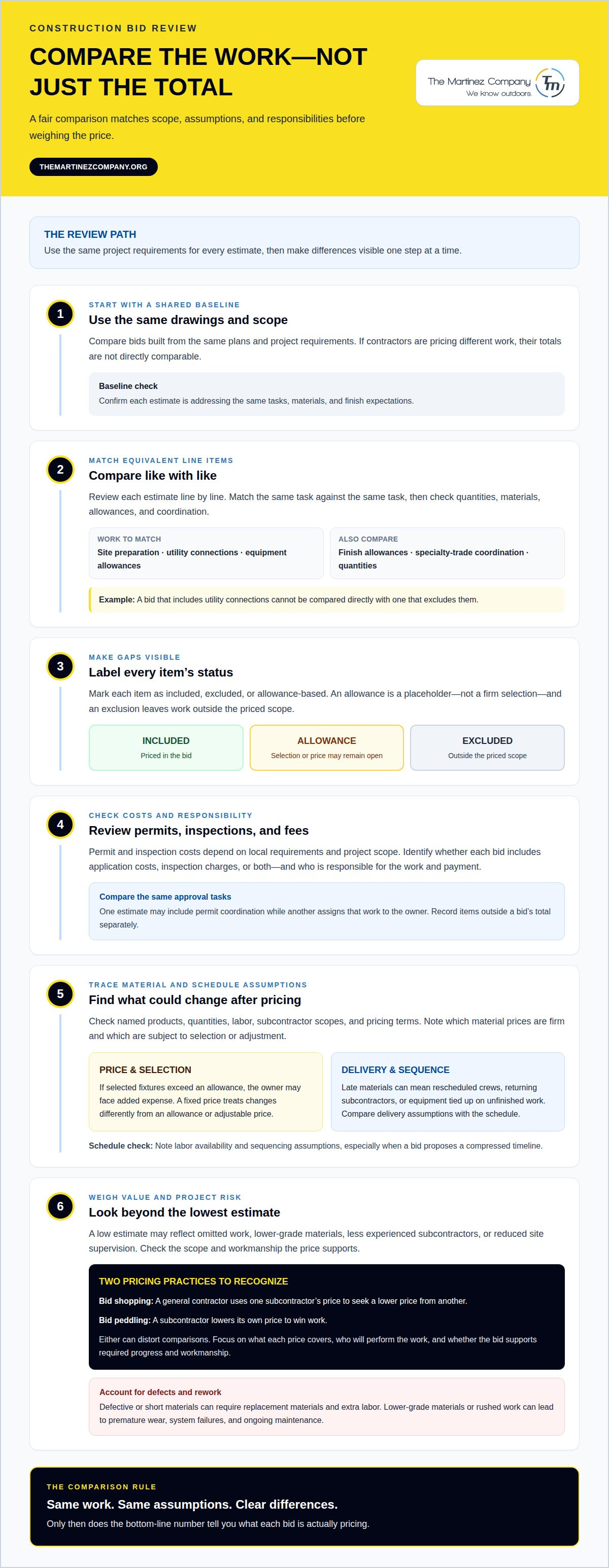
Compare bids using the same drawings and scope, then review exclusions, allowances, schedules, and trade coordination. A low estimate may reflect lower-grade materials, less experienced subcontractors, or reduced site supervision. Permit and inspection costs depend on project scope and local fees, so identify whether each bid includes them, excludes them, or assigns payment to the owner.
Fair Prices and Low Estimates
A fair comparison weighs the work and assumptions behind each total, not just the lowest number. A low estimate may omit site work, utility connections, equipment allowances, or specialty-trade coordination. Check those items against the drawings and project requirements. This helps show whether the apparent saving reflects efficiency or work shifted into later expenses.
Bid shopping occurs when a general contractor uses one subcontractor’s price to seek a lower price from another. Bid peddling describes a subcontractor lowering its own price to win work. Either can distort comparisons. Focus on the scope each price covers, the subcontractors involved, and whether the bid supports the required progress and workmanship.
Line-by-Line Bid Comparisons
A line-by-line review matches equivalent tasks, materials, and assumptions across estimates. Compare site preparation with site preparation, then review quantities, finish allowances, equipment, and coordination. Mark each item as included, excluded, or allowance-based. For example, a bid that includes utility connections cannot be compared directly with one that excludes them. These differences may explain the price gap without indicating a hidden cost.
Also compare schedules and project management. A compressed timeline may depend on labor availability or sequencing assumptions that differ between contractors. Note each difference before judging the total.
Permits and Inspection Fees
Permit and inspection fees are charges for project approvals and required inspections. Their amounts depend on local requirements and project scope, so no single allowance fits every bid. Compare the stated fee assumptions and determine whether the estimate includes application costs, inspection charges, or both. If a bid leaves these items outside its total, record them separately for a fair comparison.
For example, one estimate may include permit coordination while another assigns that work to the owner. The difference affects both expenses and responsibility. Compare the same approval tasks and inspection assumptions across bids before choosing a total.
Clear project scope and change orders
A written scope defines the materials, tasks, and finish standards included in a construction project. For example, naming 3x6 white subway tile is clearer than saying “white tile.” Specific descriptions reduce disagreements about selections and help owners distinguish planned work from later changes.
Change orders document adjustments to the agreed scope, schedule, or price. They may arise when owners select different finishes, uncover conflicts, or revise plans during construction. A low bid may shift risk to these later decisions, so the initial saving can disappear as changes accumulate. Record what changed, why, and how it affects the work.
This example shows why owners should understand allowances before construction begins. Ambiguous wording, open-ended allowances, and decisions made mid-project can leave owners with expenses they didn’t expect when reviewing the original bid.
Inefficient project management can compound scope problems. If drawings contain unresolved conflicts, crews may discover them only after work begins, disrupting sequencing and forcing last-minute decisions. Preconstruction planning addresses budgets, logistics, and potential conflicts before construction. Clear responsibilities and timely decisions help limit avoidable interruptions among contractors and subcontractors.
For owners, delays can increase carrying costs, defer opening dates, and reduce tenant revenue on commercial projects. They can also strain relationships with landlords, investors, and project teams. A schedule that doesn’t account for coordination or labor availability may amplify these effects. Review how the bid connects its scope, schedule, and project management plan.
Once construction is underway, owners have less leverage when negotiating changes. Set a written process before work starts: describe the proposed revision, its effect on schedule and cost, then approve it before the changed work proceeds. That record gives everyone a shared reference and helps keep project expectations aligned.
Rework costs from construction defects
Defect-related rework can consume up to 30% of project costs, turning a low initial estimate into a costly result. The figure reflects more than replacement materials: crews may need to remove finished work, correct the underlying fault, and rebuild affected areas. The lowest bid deserves closer scrutiny if it leaves quality controls or coordination unclear.
Miscommunication between contractors, subcontractors, and owners can lead to mistakes, rework, and delays. For example, an unclear finish detail may be installed incorrectly and then require removal and replacement. Regular inspections and reviews help identify problems earlier, before later work covers the affected area. Look for defined review points in the project plan, not just a final walkthrough.
Before accepting a bid, compare its allowances for permit applications, inspections, code-related work, and local impact fees. These items depend on project scope and location, so check what’s included and who handles each one. A bid that excludes an approval-related expense can appear lower while shifting that obligation to the owner.
Site preparation can include clearing, grading, access work, and utility connections. According to the U.S. Environmental Protection Agency, site work costs are typically estimated at 5 to 15 percent of direct capital costs, depending on project size and scope. Identify which site tasks the estimate covers, especially where existing conditions could affect excavation or access.
Construction bids and feasibility estimates commonly include a 10% to 15% contingency for unforeseen conditions. This reserve addresses unexpected project conditions; it doesn’t replace accurate plans, defined scope, or quality oversight. Compare how each estimate treats contingency, then distinguish the reserve from known tasks that should already appear in the bid.
To assess defect risk, connect each quality check to the work it protects. Confirm that inspections occur before critical work is concealed, that responsibility for correcting defects is clear, and that the schedule allows time to address findings. These details help owners judge whether a bid can deliver the planned work, rather than simply compare its opening total.
The Martinez Company: Commercial Contracting
The Martinez Company provides Commercial Contracting for businesses moving from project plans toward a completed space. A clear scope, defined selections, and thoughtful coordination give owners a stronger foundation for discussing expectations and avoiding surprises during construction. When your commercial project is ready to move from planning into construction, The Martinez Company can help bring the work to life. Its Residential Contracting, Outdoor Living Spaces, and Fence Installation offerings also serve other project needs. Contact The Martinez Company to discuss your construction project and next steps.
Move From Bid Review to a Confident Build
A bid can do more than set expectations for the work ahead. Use it as a shared reference for decisions, responsibilities, and project priorities, keeping the plan connected to the finished space you want. Hidden costs in a construction bid matter because they can distract from the larger goal: building with clarity from the first commitment through completion.
As you prepare for the next step, keep your project goals and preferred outcomes at the center of the conversation. The Martinez Company works on commercial and residential projects, including outdoor living spaces. A clear discussion about your plans can help establish a practical direction for the work ahead. Contact The Martinez Company to discuss your construction project. Move forward with a plan that reflects what you want to build.
Frequently Asked Questions
What's Really in a Construction Bid?
A construction bid is a proposal that prices defined work and states the assumptions behind that price. It may identify the project scope, materials, labor, subcontractor work, schedule, and exclusions. For example, a bid for a business renovation should make clear which rooms or work areas it covers. Read the proposal alongside its drawings and specifications to understand what the stated total represents.
Why Is It So Important?
A clear bid gives owners a practical basis for deciding whether the proposed work matches their goals. It also creates a written reference for project discussions, helping distinguish an agreed task from a new request. For example, if a planned finish changes after selection, the original scope helps show what the change affects. That clarity supports informed decisions as the project moves forward.
What Costs Are Commonly Excluded from Construction Bids?
Site work assumptions, utility connections, specialty-trade coordination, finish allowances, and equipment allowances may fall outside a bid’s stated total. Existing conditions can also affect the work: if roofing containing asbestos must be removed and replaced, the budget should account for remediation. Review exclusions against the site and project plans, since omitted work may still be necessary to achieve the intended result.
How Do Change Orders and Allowances Create Extra Construction Costs?
Allowances leave a selection or cost open, while a change order records a revision to agreed work. A selection above the allowance can increase the amount due. Understand the basis for each allowance and how the contract records credits, added work, and schedule effects.
Are Taxes, Insurance, Bonding, and Contractor Overhead Included in a Construction Bid?
These items may appear as separate lines or be included in broader totals, so the bid’s wording matters. Look for labeled entries covering taxes, insurance, bonding, overhead, and markup, then note which are included or excluded. If overhead is part of a markup, compare the definition and calculation basis rather than assuming proposals treat them the same way. This makes the price structure easier to interpret.
What Contract Terms Protect Against Hidden Construction Costs and Unexpected Charges?
Use contract language that defines the scope, identifies exclusions, explains allowances, and sets out how changes are documented and approved. Include a process for recording the reason for each change, its price effect, and any schedule adjustment before revised work proceeds. A payment schedule tied to project progress can also clarify when amounts are due. Together, these terms create a shared written record for owners and contractors.


Comments