
Explore chain link fence privacy slat colors and styles
Privacy slats can add substantial visual screening to chain-link fencing without replacing the fence itself. Woven through the mesh, these typically plastic inserts provide about 75 to 80 percent visual blockage. For homeowners comparing a chain link fence with privacy slats against alternatives, the right fit depends on the privacy, appearance, and airflow they want from the fence.
Want more seclusion without giving up chain link’s practical structure? Privacy slats can change the look and screening of an existing fence, while alternatives such as mesh screens and different fence materials create another balance of privacy and style.
This guide explains how privacy slats work, compares colors and design choices, and outlines installation considerations such as fence compatibility and wind exposure. You’ll have a clearer basis for choosing an option that suits your property and project goals.
Table of Contents
1. What Are Chain Link Fence Privacy Slats?
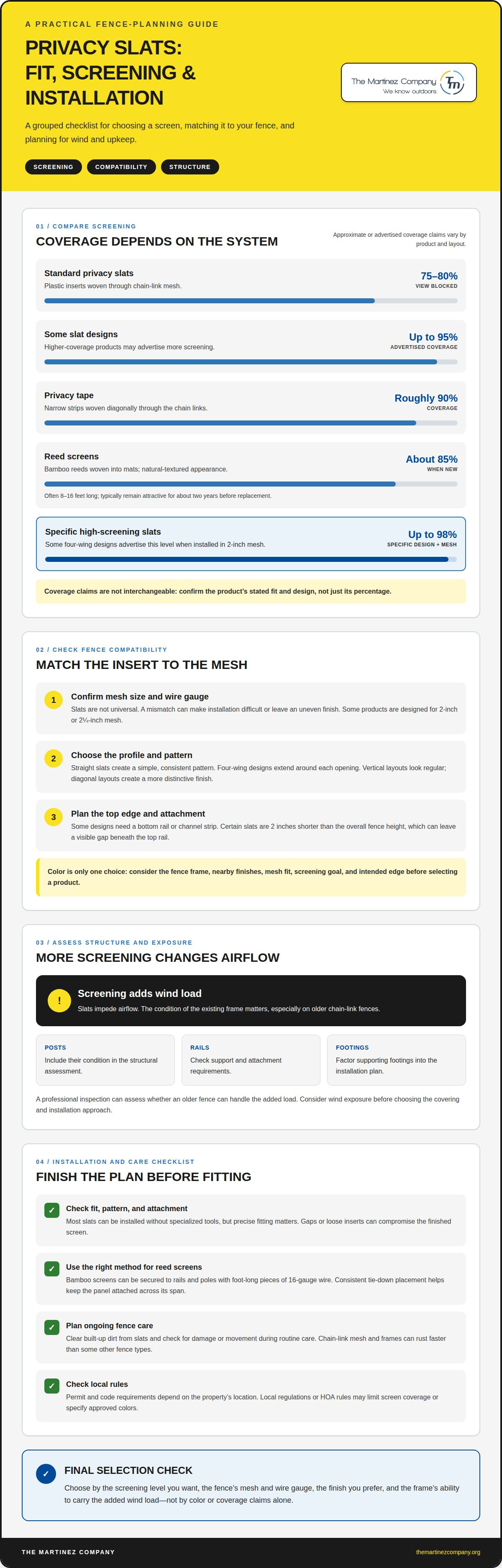
Chain-link privacy slats are narrow inserts woven through a fence’s mesh to reduce visibility without replacing the fencing. They’re commonly made from plastic, sometimes UV-stabilized to help resist sun exposure. Depending on the product and layout, slats generally block 75 to 80 percent of the view, while some designs advertise coverage up to 95 percent.
Package size and fence height affect material costs. Long-term performance also depends on material and exposure: higher-end slats are designed to withstand intense sunlight and heat for decades.
Maintenance is straightforward, but still matters. Clear built-up dirt from slats and check for damage or movement during routine fence care. Chain-link fencing can rust faster than some other fence types, so the condition of the mesh and frame also affects how well the finished screen holds up.
Privacy tape offers a different look and installation method. Narrow strips are woven diagonally through the chain links, creating roughly 90 percent coverage. Its woven pattern can suit a fence where continuous strips are preferred over individual vertical inserts.
Reed screens provide a natural-textured alternative, with about 85 percent privacy when new. They’re made from thin bamboo reeds woven into mats, often 8 to 16 feet long. Reed screens typically remain attractive for about two years before replacement, making their appearance less enduring than long-lasting slats.
In the United States, permit and code requirements depend on the property’s location. Local regulations and HOA rules may limit screen coverage or specify approved colors, so check the requirements that apply to the property.
3. Slat designs and installation
Privacy slats can be woven through chain-link mesh in different patterns. Vertical designs create a clean, regular finish, while diagonal layouts add a more distinctive look. The pattern affects how inserts sit across the fence, so plan the finished appearance around the level of screening you want.
Fit comes first. Slats need to match the fence’s mesh size and wire gauge, and some designs require a bottom rail or channel strip for a secure fit. Most slats can be installed without specialized tools, but precise fitting still matters. Gaps, loose inserts, or incompatible dimensions can compromise the finished screen.
Privacy coverings also change how wind moves through a fence. Slats impede airflow and increase wind load, making the frame’s condition important. A professional inspection can assess whether an older chain-link fence can handle the added load. Posts, rails, and supporting footings all factor into a sound installation plan.
Standard slats and privacy tape are among the more straightforward options for professional installation because both fit into the existing mesh. A qualified installer should assess mesh size, wire gauge, attachment requirements, and wind exposure before choosing the system and installation approach.
Bamboo screens call for a different attachment method. They can be secured to fence rails and poles with foot-long pieces of 16-gauge wire. That tie-down approach needs consistent placement along the fence, especially where the screen meets rails and poles, to keep the panel attached across its span.
For a clean result, the installer should plan the pattern, confirm compatibility, and inspect the fence structure before fitting the covering. If you’re planning professional fence installation, a project assessment can align the design with the existing fence and its exposure.
4. Chain link fence privacy slats
Privacy slats vary in material, profile, and finish. Common materials include high-density polyethylene (HDPE) and aluminum. A straight slat creates a simple, consistent pattern across the mesh. A four-wing design adds screening around each opening, changing both the fence’s appearance and the view through it. Consider color alongside the fence frame and nearby finishes.
Fit is precise, not universal. Slats must match the chain-link mesh size and wire gauge, and some products suit only particular openings. Certain designs are made for 2-inch and 2 1/4-inch mesh. Matching the insert to the fence matters: a mismatch can make installation difficult or leave an uneven finish.
Some high-screening slats are advertised to reduce visibility by up to 98 percent when installed in 2-inch mesh. That figure describes a specific design and mesh combination, not every slat system. Some of these slats also have four wings, which extend around the opening to increase screening. Review the product’s stated fit and design together rather than judging by the coverage claim alone.
Slat height can affect the finished edge. Certain designs are built 2 inches shorter than the overall fence height, leaving a visible gap beneath the top rail. That detail may suit a particular installation, but it won’t create a uniform edge on every fence. The fence dimensions and intended finish should guide product selection.
Privacy inserts also affect airflow. Slats obstruct open mesh and increase wind load, so the existing fence’s condition matters, especially for older fencing. Higher-end slats are designed to withstand intense sunlight and heat for decades, while material choice also influences upkeep. Choose based on mesh fit, desired screening, finish, and the fence’s ability to carry the added load, not color alone.
4. What plants or living screens work well along a chain-link fence for privacy?
Living screens suit property owners who want greenery to soften a fence instead of a uniform surface. Climbers such as English ivy grow against the mesh, while shrubs such as arborvitae or holly create a planted backdrop. These alternatives to chain-link fences with privacy slats need space and care as they grow.
Choose a climber with the fence layout in mind. Vines can spread across rails and around gates, so manage their growth to keep openings accessible. Deciduous climbers may also leave more of the fence visible during colder months. English ivy offers a different look, but its growth needs attention along the fence line.
Shrubs create a separate green screen rather than attaching to the mesh. Arborvitae and holly can suit a broader planting area, where there is room for mature plants and access for trimming. Consider sunlight and soil before choosing species, as these conditions influence how well a living screen establishes.
For immediate coverage without waiting for growth, artificial ivy panels offer a ready-made leafy surface. They need no watering or pruning, while living plants bring natural growth and seasonal change. These alternatives to a chain-link fence with privacy slats create different finishes, so choose based on the look you want and how much plant maintenance you prefer.
Plan the planting or panel layout around gates, access, and the surrounding outdoor space. A professional fence installation plan can coordinate the fence with the privacy approach and the property’s design.
The Martinez Company: Fence Installation
The Martinez Company provides fence installation for residential and commercial properties, including projects that add privacy to chain-link fencing. If you’re weighing slats, screens, or a different fence design, the installation plan can account for the look you want and the existing structure’s condition.
A privacy upgrade involves more than choosing a color. Fence layout, mesh compatibility, attachment details, and added wind exposure all shape the result. The Martinez Company installs fencing and can coordinate it with outdoor living spaces, bringing the boundary and surrounding area into one considered plan.
When you’re ready to move from comparing options to planning professional fence installation, turn to The Martinez Company. Contact the team to discuss your fencing project.
Shape a privacy plan that fits your property
The right chain-link fence privacy solution should feel intentional, not like an afterthought. When weighing an alternative to a chain link fence with privacy slats, consider how the finished boundary will fit the way you use your property, from everyday privacy to the look of an outdoor living space.
The Martinez Company includes fence installation in residential and commercial contracting projects and can coordinate the fence with outdoor living spaces. A clear project plan can turn your preferred level of privacy and visual style into a finished feature that suits its surroundings.
Ready to plan the next step? Contact The Martinez Company to discuss your project and move toward a fence that feels right for your property.
Frequently Asked Questions
What Are Chain Link Fence Privacy Slats?
Privacy slats are inserts fitted through the openings in chain-link mesh to reduce visibility while keeping the existing fence framework. Designs vary by material and profile, so fit depends on the fence’s mesh and wire gauge. For example, some slat types are made for 2-inch mesh, while others suit different opening sizes. The key is matching the insert to the fence.
What Can You Install Instead?
Alternatives include privacy tape, mesh screens, reed or bamboo rolls, artificial ivy panels, and replacement fencing. Each changes the fence line differently: tape weaves through the mesh, while screens and rolls cover its face. Artificial ivy creates a leafy appearance without growing plants. Replacement materials such as wood or aluminum change the structure rather than simply covering the chain link.
What are the best alternatives to privacy slats for a chain-link fence?
The best choice depends on whether you value immediate screening, airflow, natural texture, or a different fence appearance. A mesh screen can provide coverage while allowing some air passage. Reed or bamboo offers a woven look, while artificial ivy creates a green surface without plant growth. For a lasting design change, consider replacing the fence material.
How do privacy screens, mesh, and reed or bamboo rolls compare for chain-link fences?
Mesh screens made from UV-rated polypropylene allow water and wind to pass through, which can suit exposed fence lines. Reed and bamboo rolls create a more natural, textured finish, unlike uniform mesh. Choose by the appearance you want and how much airflow the covering should preserve. Flexible screens and rolls also differ in how they attach.
How much do chain-link fence privacy alternatives cost per linear foot?
Project cost depends on the covering material, fence dimensions, access, and installation complexity. A project-specific price follows a quote request. For example, a long, unobstructed run may require different labor and materials than a shorter section with gates or changes in direction. Compare options by the full installed scope rather than material cost alone.
How do wind resistance and durability compare among chain-link fence privacy options?
Solid or dense coverings impede airflow and increase wind load on the fence. A wind-permeable mesh screen lets some air pass through, while slats and less-open coverings place greater demands on the supporting structure. For a fence planned for slats, heavier-gauge steel and larger concrete footings are recommended. Aluminum fencing resists rust more readily than chain link, which can rust faster.
Comments