
Does a New Fence Increase Property Value? Weighing the Costs
A professionally installed privacy fence can increase a home’s value by 1% to 10%, but it won’t automatically return its full cost. The effect depends on the fence’s construction, condition, location, and fit with buyer preferences. A sound, well-matched fence can add useful function and strengthen the property’s presentation.
For homeowners weighing the investment, two questions help clarify the decision: Does a new fence increase property value enough to justify the project, and does a new fence increase property value in your local market? Appraisals consider a fence as part of the entire property, while buyers may also weigh privacy, security, and outdoor usability. This guide explores those factors, along with materials, installation considerations, and potential drawbacks, so you can judge how a fence fits your home and plans.
Table of Contents
Does a fence increase the value of a home?
A professionally installed privacy fence may increase a home’s value by 1% to 10%. The question is whether its design and condition suit the property and local buyer preferences.
Buyer Appeal Benefits
A fence can shape buyer appeal by providing privacy, defining boundaries, and giving the yard a more finished look. For example, a privacy fence may reduce street noise and limit views into a busy backyard. Fencing can also help keep children and pets away from nearby traffic. Buyers weigh these practical benefits alongside curb appeal, so an attractive, well-maintained fence matters more than a neglected-looking barrier.
Curb Appeal and Backyard Utility
Curb appeal comes from what buyers see at the front, while backyard utility depends on how the fence supports daily use. A neat front boundary can complement the home’s appearance; an enclosed backyard can create a more private place to relax or play. A tall fence that blocks a valued view may undermine that benefit. Consider the fence from both the street and the yard before choosing its placement.
Buyer Interest and Faster Sales
A fence can help a listing stand out when buyers value enclosed outdoor space. Homes with fenced yards reportedly sell about 18 days sooner on average, though that figure doesn’t mean a fence alone determines a sale date. In real estate, buyer interest also reflects the home’s condition, location, and price. Before listing, address visible damage or leaning sections, since needed repairs can weaken the polished impression a fence is meant to create.
Home Value and Ownership Costs
A fence doesn’t automatically raise homeowners insurance rates. A policy’s “Other structures” coverage may cover fence damage from a covered peril, subject to its coverage limit. Property taxes also don’t rise automatically with a fence; any effect depends on how local assessment treats property improvements. Weigh these ownership costs separately from resale value. A privacy upgrade may appeal to buyers, for example, while ongoing maintenance or repairs can affect its overall value.
Disadvantages and installation considerations
A fence can add function, but poor placement, delays, or weak construction can complicate a sale. Plan for boundaries, neighborhood rules, timing, and upkeep before treating it as an upgrade.
Installation Timing Before Listing
Installation timing matters because approvals and construction can delay listing preparations. Homeowners planning to sell are advised to install a fence two to three years beforehand, giving it time to settle into the property.
From deciding to build through completion, allow 6-12 weeks. HOA approval commonly takes 2-8 weeks. Local rules and HOA requirements can restrict height, materials, and placement. Before construction, confirm boundaries using a plat, the county assessor’s office, or a land surveyor. Neighbor approval requirements depend on applicable local rules and agreements.
Installation Costs and Resale Return
Resale return compares the fence’s contribution to buyer appeal with the project’s overall cost. A well-built fence may return 30% to 70% of its cost, depending on the project and market. That range makes the choice of design and function important, especially when selling soon.
Include the full scope in your budget, such as gates, removing an existing fence, and any permit or survey expenses. A decorative aluminum fence, for example, may suit a neighborhood where open views matter, while a privacy design serves a different purpose. Don’t treat the upgrade as a guaranteed profit.
Fence Condition and Maintenance
Condition affects how buyers and appraisers perceive a fence’s contribution. A leaning, broken, or rotting section signals needed repairs and can undermine the neat finish buyers expect. Address visible damage before listing rather than presenting a worn barrier as a completed improvement.
Maintenance also protects appearance over time. Outdoor fences should be cleaned at least every five years to remove dirt, moss, mildew, and buildup. A sound installation helps preserve the fence’s function, while neglected surfaces can make even an attractive material look tired. For a lasting result, consider professional fence installation as part of your property plan.
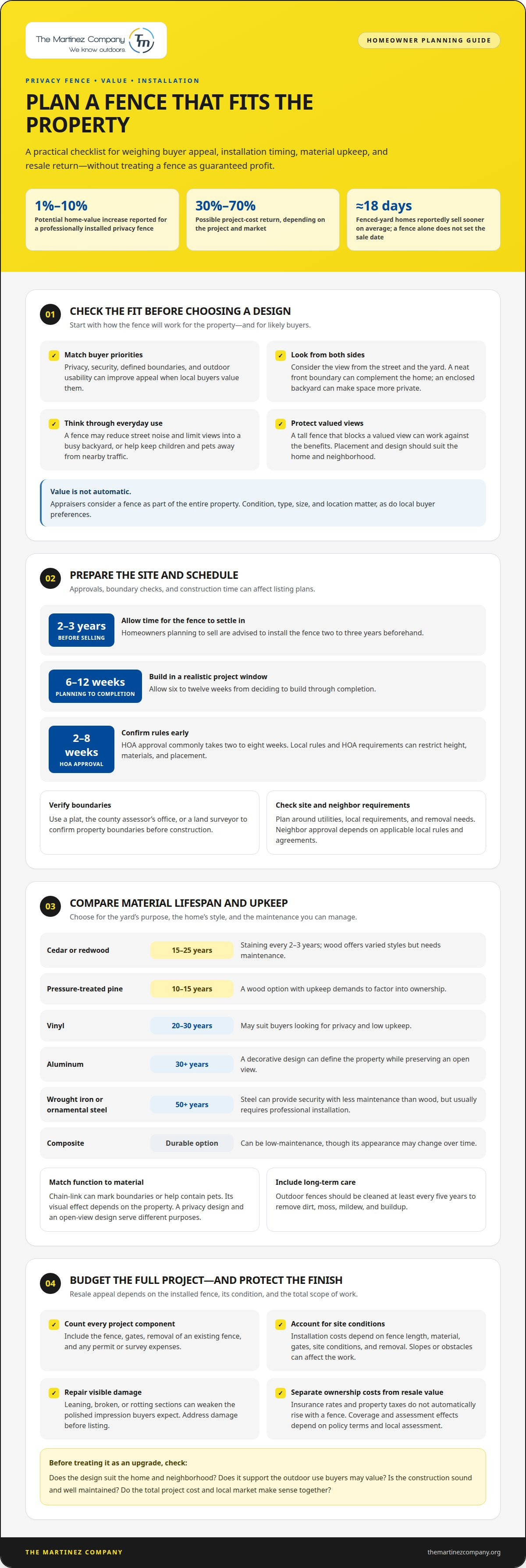
Fence materials and installation costs
Material affects a fence’s appearance, upkeep, lifespan, and cost. Match your choice to the backyard’s purpose and the home’s style, then weigh installation needs against likely resale appeal.
How Materials Compare
Wood offers varied styles, but needs maintenance to retain its value. Cedar and redwood fences last 15-25 years, with staining every 2-3 years. Pressure-treated pine typically lasts 10-15 years. These upkeep demands matter to owners who want a natural feature without recurring maintenance becoming a burden.
Vinyl typically lasts 20-30 years, while aluminum typically lasts 30+ years. Wrought-iron and ornamental steel fences can last 50+ years. Steel can provide security with less maintenance than wood, but usually requires professional installation. Composite fencing can be a durable, low-maintenance option, though its appearance may change over time.
Resale Appeal by Material
Choose a material that fits the home and neighborhood. Vinyl may suit buyers seeking privacy and low upkeep; a decorative aluminum design can preserve an open view while defining the property. Chain-link can mark boundaries or help contain pets, while its visual effect depends on the property. The best choice depends on which function buyers are likely to value.
A material’s condition also shapes its visual impact. A maintained cedar fence can complement a home’s natural finishes, while peeling or weathered boards may distract from them. Consider how the fence looks from both the street and the backyard before adding a feature intended to improve the property.
What Shapes Installation Costs
Installation costs depend on the fence’s length, material, gates, site conditions, and removal of an existing structure. A long boundary requires more material than a short enclosure, while slopes or obstacles can affect the work. Include upkeep in the comparison: staining wood every 2-3 years adds ongoing work that vinyl doesn’t require in the same way.
Whether a fence increases appraised value
An appraiser considers a fence as one feature of the property, not as a guaranteed increase in home value. The assessment reflects the fence’s construction, material, size, condition, location, and purpose. A sturdy backyard enclosure that suits local buyer preferences can support value; an expensive fence that clashes with the property may contribute less.
Material and condition shape the appraisal. Cedar wood fencing has an estimated 50% to 70% value return, while chain-link has an estimated 30% to 45%. These figures describe estimated returns, not a fixed amount an appraiser adds to every home. A leaning chain-link fence, for example, presents differently from well-maintained cedar that complements the landscaping.
Location and function matter, too. A fence that creates a safe play area for children or contains pets can meet a practical need for local buyers. In a neighborhood where open views are prized, the same barrier may feel less useful. Appraisers consider how the fence fits the property and what buyers nearby are likely to value.
Think of fencing as an investment in the whole property, not a stand-alone route to a higher appraisal. The fence’s scale, condition, and relationship to the home and yard all shape its contribution. A clean boundary that supports outdoor use can strengthen the property’s overall presentation, while deferred repairs can work against it. For a carefully planned upgrade, explore professional fence installation suited to your property.
The Martinez Company: Commercial Contracting
The Martinez Company installs fences to create a built feature suited to your property. Fence Installation is a natural next step once you’ve weighed buyer appeal, maintenance, and how the enclosure will fit your yard.
For a broader outdoor upgrade, Residential Contracting and Outdoor Living Spaces can connect the fence with the surrounding design. Commercial Contracting serves commercial projects. The right scope depends on the property and purpose of the work; a fence isn’t a substitute for addressing other repairs or features that influence an appraisal.
Bring your goals into the planning conversation, whether you’re preparing a home for sale or improving how you use the yard. Contact The Martinez Company to discuss your fence project.
Plan a Fence That Fits Your Property
Choose a fence as part of your broader property plan, not as a stand-alone promise of resale gain. Decide what matters most: privacy, a defined boundary, or a more usable outdoor space. Then consider how the design fits the home and the priorities of likely buyers. Ask yourself: does a new fence increase property value for this property? The answer depends on how well it meets those needs.
If you’re ready to turn an idea into a built feature, The Martinez Company offers Fence Installation alongside Residential Contracting, Commercial Contracting, and Outdoor Living Spaces. These services can support a fence project or a wider improvement plan, depending on your property’s needs.
Before choosing a scope, consider one more question: does a new fence increase property value in a way that matters to your plans? Contact The Martinez Company today to discuss the project you have in mind and take the next step with confidence.
Frequently Asked Questions
What Type of Fence Adds to Property Value?
A well-maintained fence that suits the home and serves a clear purpose is the strongest choice. For a property beside a busy street, privacy fencing addresses a practical need; for a landscaped yard, an open ornamental design preserves sightlines. Plan the fence as part of the property’s overall presentation, including how its gates connect the yard to paths and outdoor areas.
Is a Privacy Fence Worth It?
A privacy fence is worth considering when seclusion matters to your household or likely buyers. It creates a more enclosed outdoor setting for relaxing, dining, or play. Before choosing one, consider whether the yard benefits more from privacy or open views. A fence that blocks a valued vista can conflict with the outdoor experience the property is meant to offer.
What Are the Different Types of Fences and Their Benefits?
Wood offers a traditional look and varied designs; vinyl provides a low-maintenance privacy option. Chain-link marks boundaries and contains pets, while aluminum and ornamental steel define space with open sightlines. Composite fencing offers durability with limited upkeep. Match each material to the job: a private backyard retreat calls for a different approach than an attractive boundary around a front garden.
What Are the Disadvantages of Adding a Fence?
A fence adds upkeep and can limit views or make a small yard feel enclosed. Wood needs maintenance to preserve its appearance, while any material can become a concern if sections loosen or deteriorate. Installation also involves planning around boundaries and local requirements. A fence placed without clear property lines, for example, can create avoidable friction with a neighbor and complicate future work.
What Are the Factors That Affect a Fence’s Value?
A fence’s value reflects its size, construction, material, location, and condition, as well as local buyer preferences. Its fit with the home matters, too. A sturdy enclosure that complements the yard’s layout serves a clearer purpose than a fence that interrupts landscaping or blocks useful access. Consider the whole property: the fence should look intentional beside the home, not like an unrelated addition.
What Do Buyers Want in a Fence?
Buyers look for a fence that suits their needs and feels ready to use. A household with children or pets may value a contained yard; another buyer may prioritize privacy or an attractive boundary. Practical details matter: clear gate access, a consistent appearance, and no visibly damaged sections help show how the yard functions. A fence that fits the property’s style also supports a more cohesive impression.
Comments