
Decorative Metal Fence Panels for Custom Homes and Yards
A fence can define a boundary without dictating your home’s style. Decorative metal fence panels add pattern and finish, while their layout and mounting determine how they work across fences, gates, and railings.
You may already know the look you want, but the right panel choice also needs to suit the structure it will join. This guide explains how custom patterns, colors, and mounting options shape a residential project, and what to consider as those choices come together.
Learn how panel design influences the finished look, how mounting suits the application, and how professional installation brings the details together. From early design decisions to the completed fence, aim for a structure that feels considered, secure, and at home in your yard.
Table of Contents
Custom decorative metal fence panels
Custom panels add pattern and proportion to a yard boundary. Choose the material, dimensions, and finish to suit the site layout and the fence’s intended use.
Metal Material Choices
Aluminum, steel, and wrought iron differ in weight, appearance, and structural feel. Aluminum can suit designs where lighter panels are useful; steel offers a substantial frame, while wrought iron lends itself to traditional, detailed ornament. Compare the pattern, panel span, and supporting structure as a set. For example, an intricate gate may call for a different material choice than a long, simple boundary run.
Panel Sizes and Dimensions
Panel dimensions depend on the product and application, so measure the intended run and opening before settling on a layout. US-market examples include a garden fence measuring 32 inches high by 24 feet long and a metal privacy screen measuring 71 inches high by 40 inches wide. These examples illustrate different formats, not a universal custom-panel standard. Align panel width with post spacing and gate openings to avoid awkward gaps.
Maintenance and Rust Prevention
Maintain panels with regular visual checks of the finish, joints, and lower edges, where dirt and moisture can collect. Clear loose debris and clean buildup with a soft cloth and mild cleaning solution. If a scratch exposes metal, address it promptly with a compatible touch-up coating. Keep vegetation from pressing against panels, and watch for early rust around fasteners or damaged finish. These steps help maintain the appearance and catch small issues early.
Climate Durability
Local conditions affect how panels weather. Persistent moisture can challenge exposed finishes, while coastal air can speed corrosion on unprotected metal. In freeze-thaw areas, water around posts and connections can stress the assembly. Match the material and protective finish to the exposure, and consider drainage and panel attachment. Sound installation remains essential: wind exposure and post condition also affect long-term performance.
Permits, setbacks, and fence-height limits vary by local rules and property location, so requirements depend on the project site. For privacy, open decorative patterns preserve sightlines, while denser layouts screen more of the yard. Metal panels mark a boundary, but pattern and spacing determine how much visibility remains.
Custom patterns, colors, and mounting options
Pattern, color, and attachment choices shape a fence’s character and how well it fits its surroundings. A geometric panel beside brick, for example, creates a different effect from a floral motif along a garden path.
Panel Styles and Patterns
Start by matching the motif to the home’s existing lines. Straight vertical bars suit a restrained façade, while scrollwork or repeated geometric openings can echo a curved walk or patterned entry door. A custom design can carry one motif across a fence and gate, creating a visual connection. Review the pattern at full panel scale, not only in a small sample. Opening size changes the balance between ornament, visibility, and the solid frame.
Color Options
Choose a finish with nearby materials in mind. A dark neutral can complement light siding, while warm bronze may work naturally beside brick or wood. Muted gray offers a restrained option against stone or concrete. Consider the color across the full fence line, including gates and visible posts. A consistent finish helps the pattern stand out without making each panel feel disconnected.
Mounting and Installation
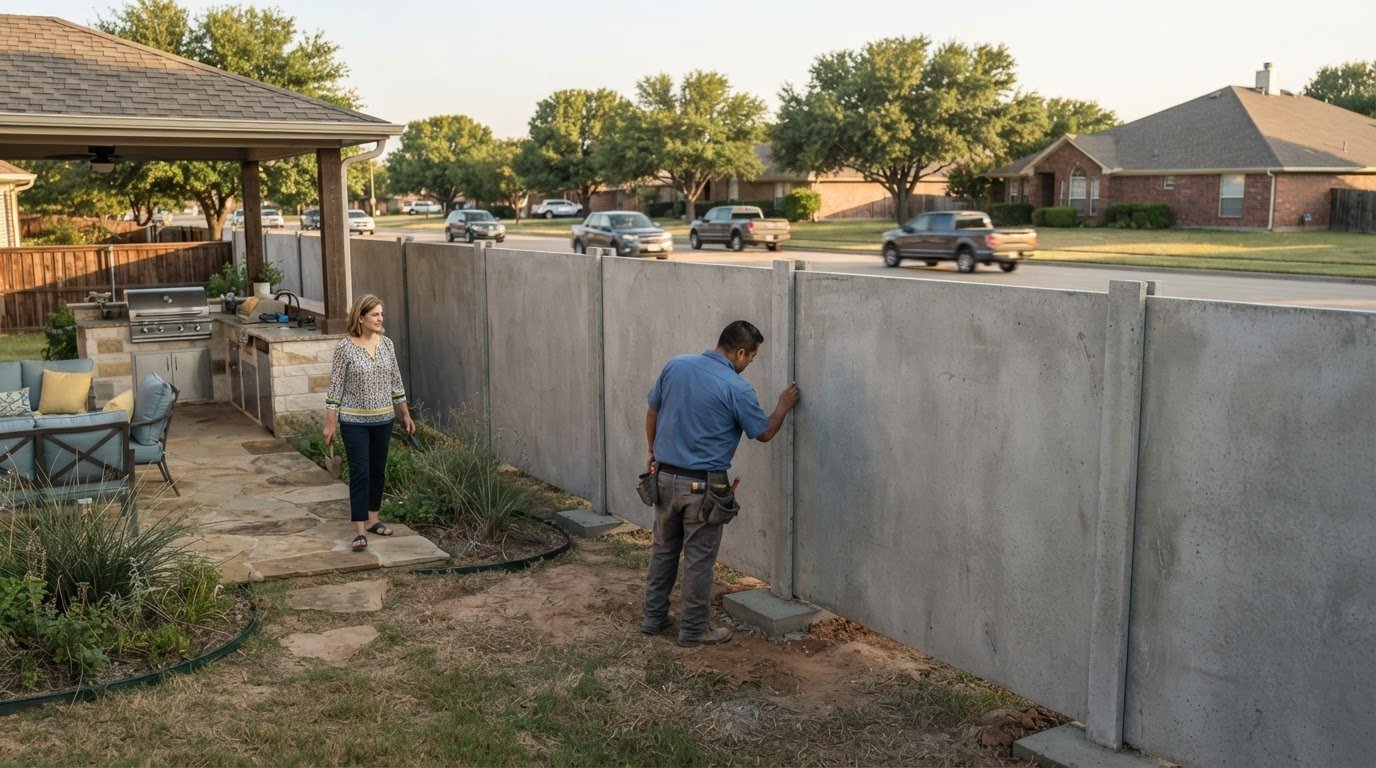
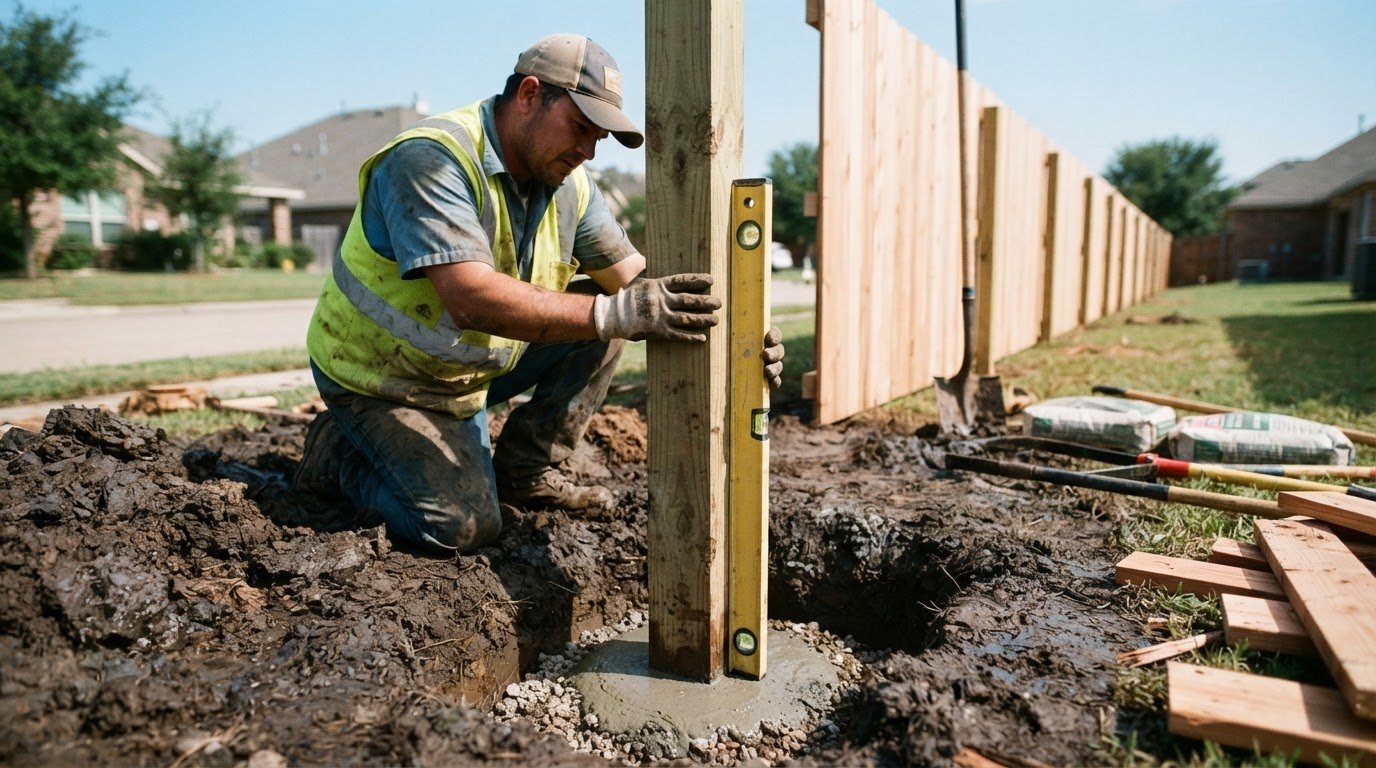
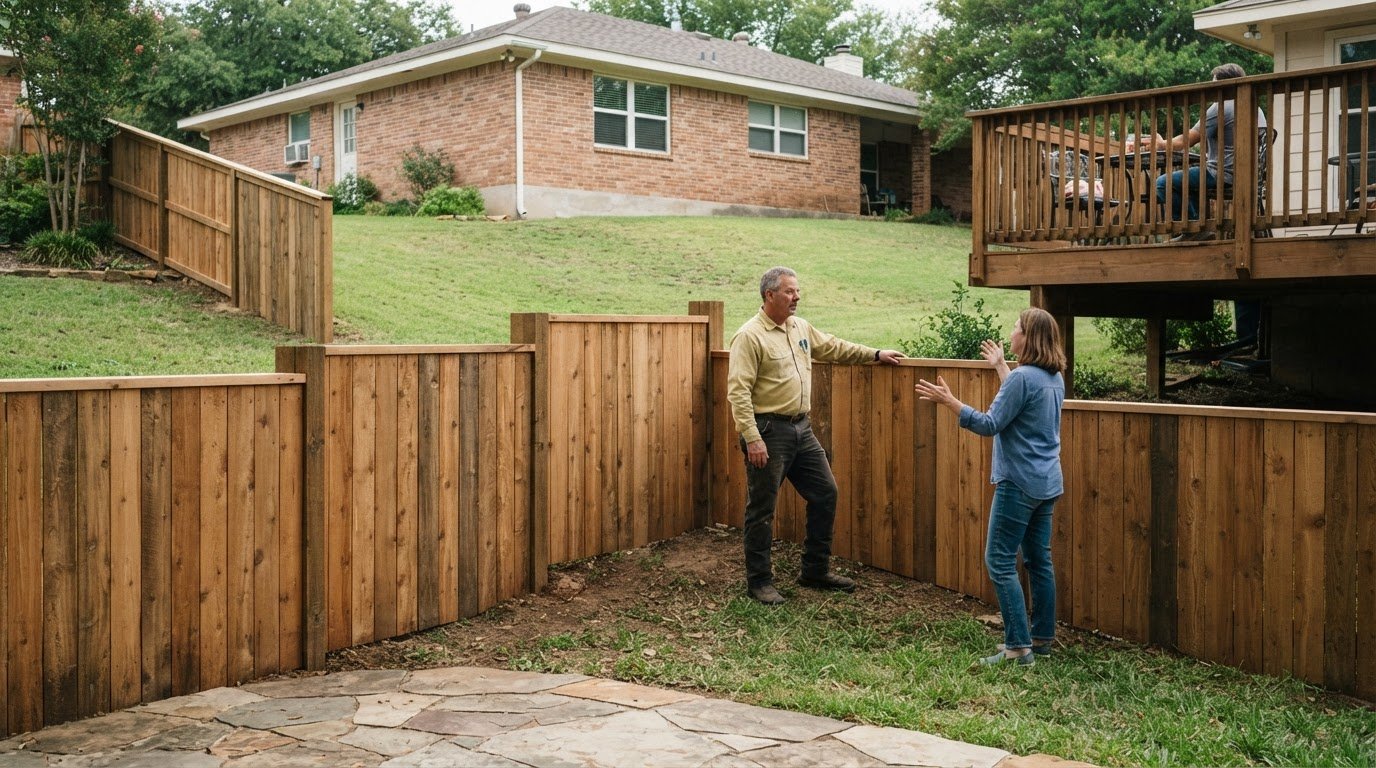
Mounting depends on the supporting structure and each panel’s location. A professional measures the run, identifies corners and gate openings, then plans post positions and connections. Panels can attach between posts or to an existing structure when its condition and layout suit that approach. The installer aligns the sections, secures the connections, and checks that transitions are consistent. Site access, ground conditions, slopes, and the existing fence structure can all affect the work. For example, a sloped yard may call for a stepped layout or panels that follow the grade.
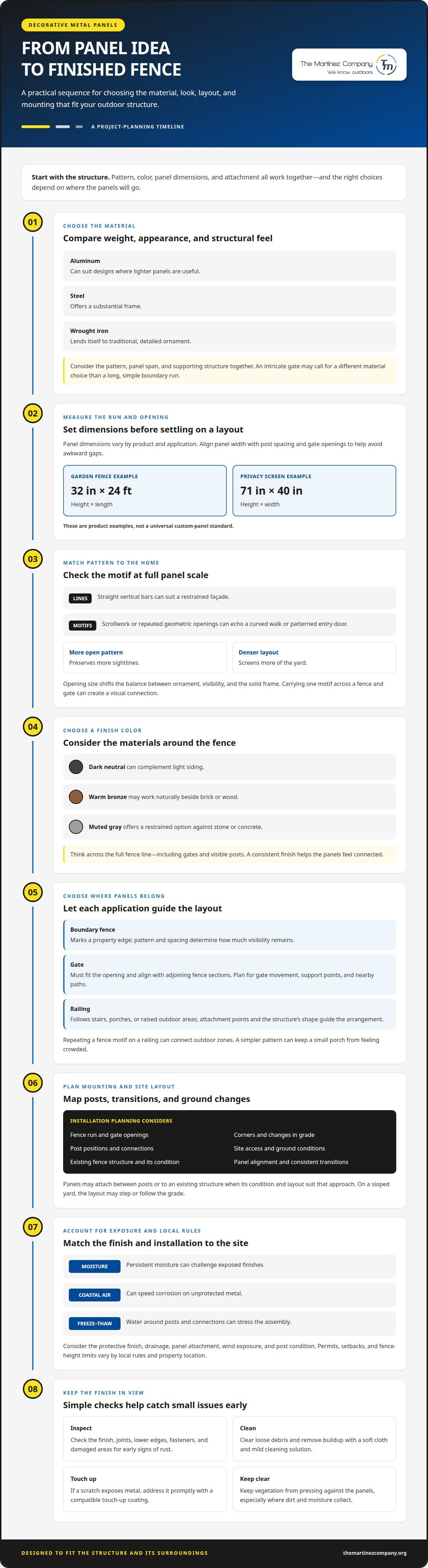
Residential gates, fences, and railings
Decorative metal panels can mark a property line, frame an entrance, or add detail to a railing. The layout depends on the structure’s purpose: a boundary fence marks an edge, a gate creates a passage, and a railing follows stairs, porches, or raised outdoor areas. Keep the pattern consistent across connected sections for a composed look.
For garden borders, a listed metal fence measures 18 inches high by 20 feet long. A separate five-panel garden fence example measures 24 inches high by 24 inches wide. These dimensions show how products can suit different placements, from edging a planting bed to forming a more visible boundary. Match panel width to the intended run and consider how posts, corners, and transitions will appear.
Gate panels need to fit the opening and align with the adjoining fence. A listed 10-panel no-dig garden fence with a gate measures 34 inches high. Treat that as one product example, not a general gate dimension. A professional installation accounts for the opening, gate movement, support points, and nearby paths so the entrance works with the yard’s layout.
Railings call for a different design approach. A panel beside porch steps or along a raised outdoor area should follow the structure’s shape without disrupting its visual rhythm. Repeating the fence motif on a railing can connect separate outdoor zones, while a simpler pattern can keep a small porch from feeling crowded. The dimensions and attachment points guide the final arrangement.
Before installation, the professional maps the fence line, gate openings, corners, and changes in grade. This layout helps determine panel quantities and transition points. For example, a run that turns around a garden bed needs panels and posts arranged to follow the edge cleanly. Precise placement helps gates, fences, and railings read as one deliberate residential design.
What types and styles of decorative metal fence panels are available?
Residential options range from open garden borders to taller privacy screens. A repeating geometric pattern can frame a front yard, while scrollwork adds a traditional accent around an entry. Choose a panel style for its purpose: a boundary can preserve visibility, while a screen can conceal equipment or create a more sheltered corner. The pattern’s openings and overall height shape that balance.
Garden panels suit planting beds, paths, and defined yard edges. Some products connect several sections into a longer run; others form compact borders around one feature. For example, a listed 12-panel no-dig garden fence for dogs measures 42 inches high by 25.67 feet long. A separate no-dig metal screen for an air conditioner measures 42 inches high by 38 inches wide. These examples show how the intended location influences panel format and coverage.
Privacy screens provide more visual coverage than open ornamental fencing. Consider one near outdoor equipment, a patio, or a seating area where you want to screen a view. A screen’s width and height affect how much it covers, while its pattern influences how enclosed it feels. For a cohesive design, repeat the motif on nearby gates or railings rather than introducing competing patterns.
Style selection works best when every choice serves a clear purpose. Review these points:
Identify whether the panel marks a boundary, edges a garden, or screens equipment.
Compare the panel’s height and width with the space it needs to cover.
Choose open or denser ornament based on desired visibility and screening.
Carry one pattern or finish across connected sections for visual continuity.
Bring your preferred style and intended layout together through professional fence installation.
The Martinez Company: Fence Installation
The Martinez Company installs fences for homeowners turning a panel concept into a defined yard boundary, gate, or outdoor feature. Bring your preferred pattern, color, and intended use to the project conversation. These choices help shape a layout for the property, including panel placement, transitions, and the relationship between the fence and existing outdoor spaces.
Choose professional installation when you’re ready to move from selecting a style to planning how it will fit on site. The work can account for the fence line, openings, grade changes, and how the finished structure connects with the home and yard. For a broader residential project, fencing can complement outdoor living spaces.
Contact The Martinez Company to discuss your fence installation project.
Shape the Boundary Around Your Home
Plan the fence around how you use your property, not just the line it marks. A thoughtful design can connect an entry, yard boundary, and outdoor gathering area. Before moving ahead, decide how you want the finished space to feel, then bring that direction into the installation plan.
Decorative metal fence panels can make a strong design statement and give a home’s exterior a clear, intentional edge. The Martinez Company brings fence installation together with residential and commercial contracting and outdoor living spaces, helping align the work with the broader property vision.
Start the next step with your ideas, priorities, and desired outcome. Contact The Martinez Company to discuss your project and move from concept toward a finished space.
Comments