
Cost to Install a 6 Ft Privacy Fence by Fence Length
The total cost to install a 6-foot privacy fence in 2026 depends on the fence length, material, labor, and site conditions, so a per-foot figure alone won’t show the full project budget. A 6-foot fence may require a permit in many cities, making local rules another early cost consideration.
It’s easy to focus on fence material first, but every additional linear foot adds materials and installation work. Gates, uneven ground, and an existing fence can also change the scope. A useful estimate starts with the full fence line and the details of the property.
This guide explains how project totals change with fence length, what materials and labor contribute, and how permits and utility marking factor in. You’ll also learn where buying materials yourself may reduce labor costs and how careful planning can turn a rough estimate into a clear build plan.
Table of Contents
How Much Does Fence Installation Cost in 2026?
The cost to install a 6-foot privacy fence in 2026 varies by material, fence length, and labor.
National Wood Fence Pricing
National wood privacy fence pricing is an installed cost range per linear foot, rather than one fixed average. A May 2026 U.S. report from The Martinez Company shows averages ranging between $15 and $30 per linear foot for basic materials. That range gives homeowners a starting point for comparing estimates, while the selected wood and project details shape the final amount.
For a 6-foot wood or vinyl fence, a separate U.S. study by The Martinez Company places typical installed costs between $20 and $40 per linear foot. Comparing this range with the broader wood estimate shows why material type and estimate scope matter when setting a budget.
Installed Costs by Fence Material
Material affects the installed price because each fence system has different material and installation requirements.
Use these ranges to compare options on equal terms: installed cost, not material price alone. A $40-per-foot composite estimate, for example, differs from a $40-per-foot pressure-treated estimate in what material is included, so review each estimate’s scope and hardware.
Estimated Cost Ranges
Estimating by linear foot helps turn a material choice into a preliminary project budget.
Labor is a substantial part of the upfront total: professional labor accounts for 40% to 60% of fence project costs. Post holes, gates, and site conditions can affect the estimate, so compare what each quoted total includes.
Pricing by Fence Length and Yard Size
Linear footage measures the length of the fence line, not the square footage of the yard.
A yard’s layout determines how much fence line the project needs. Measure each planned side and add those lengths; a 50-by-100-foot rectangular lot has a 300-linear-foot perimeter if fencing all four sides. Gates and unfenced sections change the total length and estimate.
Fence permits, property lines, and utility marking
In the United States, permit and height rules vary by city and county; permits are commonly required for fences over 4 feet, so a 6-foot fence may need one. Typical residential limits are 6 feet for backyard fences and 4 feet for front-yard fences, though local rules vary. HOA requirements may separately address placement, appearance, or approval before work begins.
Set the fence line carefully before estimating materials. Privacy fence permits typically cost $20 to $400 across the United States. These are separate budget items, not installation labor.
Utility marking helps prevent damage before post holes are dug. Call 811 at least 3 business days before digging so underground utilities can be marked.
Local labor rates and regional prices affect the total because labor varies with market and terrain. For accurate quotes, provide the planned fence length, height, material, gate locations, and site conditions, then compare 2 to 3 itemized estimates. Confirm whether each includes permit, survey, utility marking, removal, and disposal to reduce scope gaps and cost overruns.
A clear scope helps turn a boundary plan into a build-ready project. For support with fence installation planning, consider how property lines, access, terrain, and desired height fit together before work begins.
DIY materials costs and potential savings
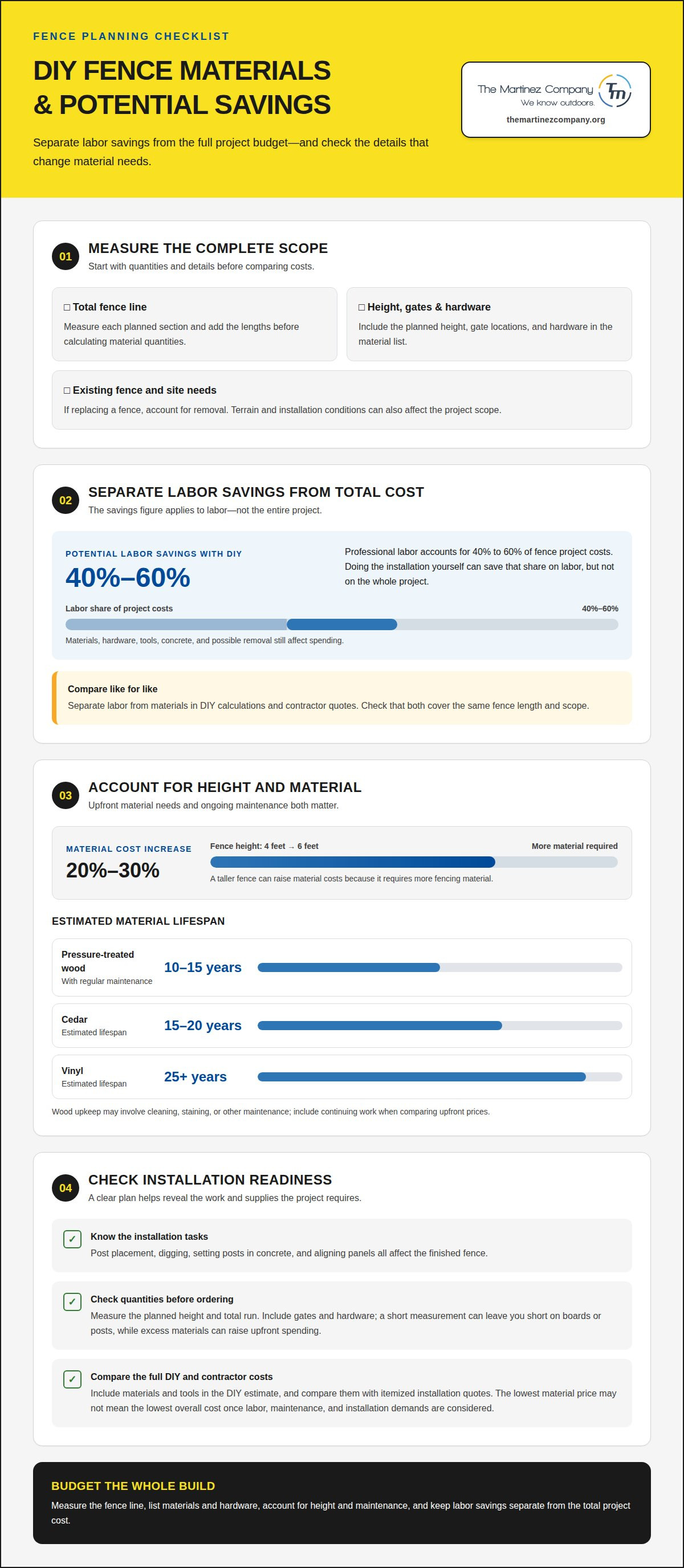
DIY estimates separate materials from installation labor, so measure the fence line before calculating quantities.
Doing the installation yourself can save 40% to 60% on labor, but that is not the same percentage off the entire project. Materials, hardware, tools, concrete, and possible removal still affect your spending. A useful comparison separates those items from labor in both DIY calculations and contractor quotes, then checks that each estimate covers the same fence length and scope.
Material lifespan and maintenance also influence long-term value. A pressure-treated wood fence can last 10 to 15 years with regular maintenance, while cedar has an estimated lifespan of 15 to 20 years. Vinyl is estimated to last 25 years or more. Wood upkeep may involve cleaning, staining, or other maintenance; include that continuing work when comparing upfront material pricing.
Height changes the materials budget. Increasing a fence from 4 feet to 6 feet can raise material costs by 20% to 30%, because the taller design requires more fencing material. Measure the planned height and total run before ordering, and include gates and hardware in the material list. A short measurement can leave you short on boards or posts; excess materials can also push the upfront budget higher.
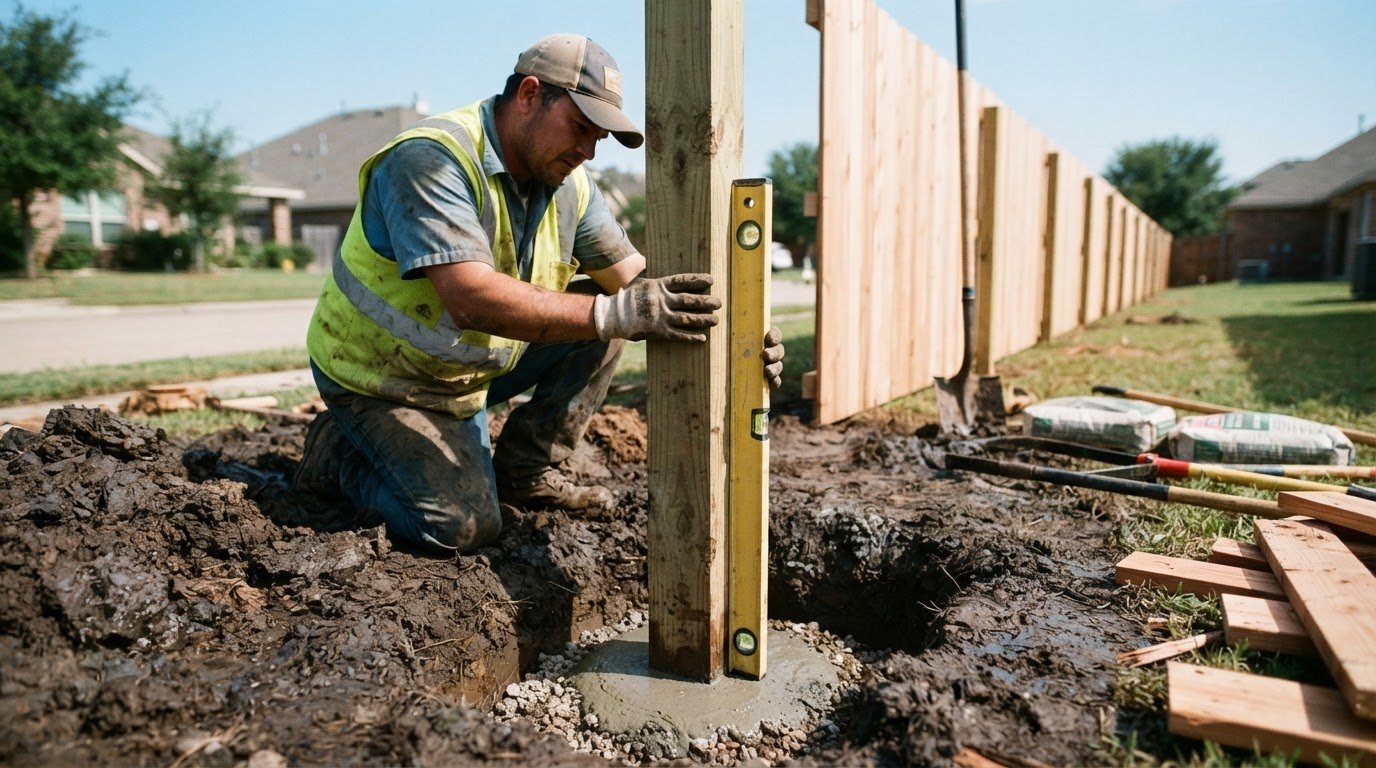
DIY may suit a project with a clear scope and installation tasks that match your skills. Post placement, digging, setting posts in concrete, and aligning panels all affect the finished fence. If replacing an existing fence, include removal in your estimate, then compare the full cost of materials and tools with itemized installation quotes. The lowest material price may not mean the lowest overall cost once labor, maintenance, and installation demands are considered.
Total project cost by fence length
Fence length is the main multiplier in a project estimate: more linear feet require more panels, posts, hardware, and installation work. Typical residential fencing projects span 100 to 300 linear feet, so estimating only one side can leave a large gap between the plan and the actual scope. Measure each section of the intended fence line, then total the lengths before comparing estimates.
For a straightforward layout, the estimate scales with measured length when material, height, and site conditions stay consistent. A 100-foot run and a 300-foot run won’t require the same total materials or labor, even if both use identical panels. Gates, corners, and access points also affect the project scope, so include them when describing the fence plan to a contractor.
Lot shape can push the required footage beyond a simple estimate. An irregular or L-shaped property may need 10% to 20% more linear footage than a standard estimate. That additional length means more fencing and installation work. Measure the actual perimeter and planned fence segments, rather than relying only on the lot’s area or a rough visual estimate.
Length alone doesn’t determine the final total. Ground slope, rocks, an existing fence, and material selection can change labor or add removal work. A 150-foot project, for example, may have a different scope on level ground than along a steep or obstructed fence line. Compare estimates with matching measurements and inclusions; a lower total may omit removal, gates, or site preparation.
A useful estimate separates the measured fence length from project-specific additions. For a 150-foot privacy fence, one market example allocates 35% to 45% of the total to labor, showing why the installation scope matters alongside materials. Keep the plan clear, including panels, gates, terrain, and existing fencing. For a defined project scope, request fence installation planning and move from a rough length to a practical build plan.
The Martinez Company: Fence Installation
The Martinez Company installs fences for residential and commercial projects where privacy, clear boundaries, and a finished outdoor space matter. When you’re ready to move from measuring the fence line and choosing materials to planning the installation, share the project length, layout, gates, and site conditions to define the scope.
Fence planning can also be part of a broader residential or commercial construction project, or an outdoor living space. Coordinating the fence with the surrounding property can help it feel like part of the overall plan rather than an isolated feature. Share your goals and the details of the planned fence to get started.
Contact The Martinez Company to discuss your fence installation project.
Shape the Fence Plan Around Your Property
A privacy fence is more than a boundary. It can define how your outdoor space feels and functions, so let the layout serve the way you plan to use the property. The cost to install a 6 ft privacy fence in 2026 is only one part of that decision; the next step is turning your goals into a clear project scope.
The Martinez Company can incorporate fence planning into a broader residential or commercial construction project, or an outdoor living space. A coordinated plan can align the fence with the property and its intended use, from initial layout decisions to the finished structure.
Ready to move from an idea to a defined plan? Contact The Martinez Company to discuss your fence project. A clear direction is the first step toward a more private, purposeful outdoor space.
Frequently Asked Questions
Do I Need a Permit for a 6-Foot Privacy Fence?
Often, yes: a 6-foot fence may need a permit because permits are commonly required for fences over 4 feet. Local height rules can distinguish between front-yard and backyard placement; typical limits are 4 feet and 6 feet, respectively. Before setting posts, allow time for approval and call 811 at least 3 business days before digging to mark utilities.
Can I Install a Privacy Fence Myself With No Experience?
Yes, but a first-time installer should expect careful measuring, digging, post alignment, and panel fitting to take more effort than a materials list suggests. A simple, level fence run is easier to manage than sloped terrain with corners or gates. If posts are set in concrete, allow 24 to 48 hours of curing before attaching panels.
How Deep Should a Fence Post Be?
For a 6-foot privacy fence, a common baseline is at least 24 inches deep. In cold climates, posts often need to reach 30 to 36 inches or more to extend below the local frost line. The required depth depends on frost penetration and ground conditions. Match post length and hole depth to the planned fence height before installation.
How Much Does Labor Cost if I Hire It Out?
Market conditions and terrain affect labor pricing. Ask for labor to be itemized separately from materials, gate work, removal, and ground preparation so the estimate clearly shows the project scope.
What Is the Average Cost to Install a 6-Foot Privacy Fence in 2026?
The total depends on fence length and material, so no single project total fits every property. Gates, removal, permits, and difficult ground can add costs beyond the baseline, making it a starting budget rather than a final quote.
What Is the Installed Cost per Linear Foot for a 6-Foot Privacy Fence?
Material determines where a project falls within the range: wood, vinyl, composite, and metal have different installed prices. Compare estimates with the same assumptions for gates, removal, and site preparation, since a per-foot figure alone may leave out those items.
Comments