
Concrete vs. Asphalt Driveway Durability: Which Holds Up Better?
The driveway material with the longer advertised lifespan may not be the one that lasts longer at your home. Concrete vs asphalt driveway durability depends on more than the surface: weather swings, standing water, vehicle loads, and the quality of the base and installation all affect how well pavement holds up.
A tough driveway should handle years of daily use without demanding constant attention. But concrete and asphalt respond differently to heat, freeze-thaw cycles, moisture, and routine maintenance. Asphalt’s flexibility can help in some conditions, while concrete may be a stronger fit in hot, sunny weather. A general lifespan estimate cannot tell you how either material will perform at a particular property.
This comparison explains how each material handles wear, weather, water, and upkeep, then shows how to weigh those trade-offs against your site and how you use the driveway. You’ll also see why drainage, a stable base, and careful workmanship matter as much as the material itself. The Martinez Company specializes in concrete work and approaches durability as a complete project, from site conditions to the finished surface.
Table of Contents
Concrete vs. Asphalt Driveway Durability: What Does 'Lasting Longer' Really Mean?
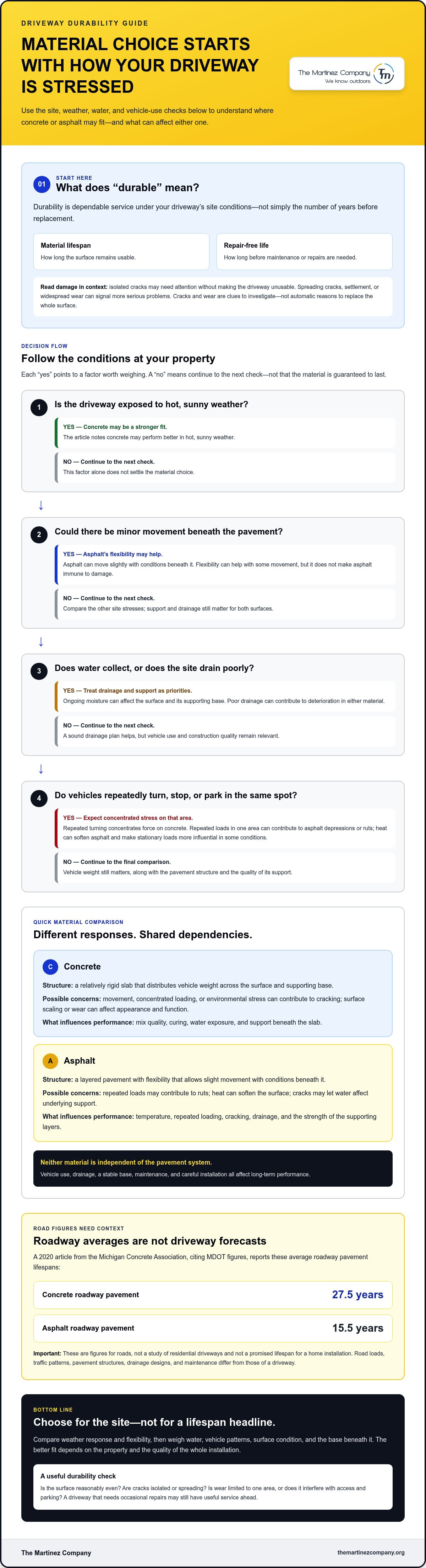
A driveway can remain usable without looking new. Durability is more than the number of years before replacement: it includes how often repairs are needed, how well the surface performs, and how effectively it withstands stresses at the site. A few visible cracks may need attention without making the entire driveway unusable. Settlement, spreading cracks, or widespread wear can point to more serious problems.
Durability is a driveway’s ability to provide dependable service under its site conditions. Material lifespan is the total time it remains usable, while repair-free life is the time before maintenance or repairs become necessary. These measures are related, but they are not interchangeable. Whether damage calls for repair or replacement depends on its location and severity, the driveway’s function, and whether the affected area can be addressed without replacing the whole surface.
What counts as driveway durability?
Assess the surface and its performance together. Does it remain reasonably even? Are cracks isolated or spreading? Is wear limited to one area, or does it interfere with access and parking? A driveway that needs occasional repairs may still have years of useful service ahead. Conversely, an intact-looking surface can conceal problems below it. Cracks, settlement, and wear are clues to investigate, not automatic reasons to replace the driveway.
Both materials are affected by maintenance, vehicle use, drainage, and construction quality. Repeated turning or parking in the same place can concentrate stress, while water that collects or drains poorly can contribute to deterioration. The material matters, but so do the site, the construction, and how the driveway is cared for.
Can road lifespan statistics predict a driveway's life?
Roadway figures can offer context, but they are not residential-driveway forecasts. A 2020 article from the Michigan Concrete Association, citing Michigan Department of Transportation (MDOT) figures, reports average roadway pavement lifespans of 27.5 years for concrete and 15.5 years for asphalt. Those figures describe road pavement, not a study measuring how long home driveways last. They should not be treated as a promised lifespan for a residential installation.
The settings differ. Roads are designed for traffic patterns and loads that do not match the mix of vehicle weight, repeated turning, and long-term parking at an individual home. Road pavement structures, drainage designs, and maintenance programs also differ from those of driveways. A residential surface may face fewer total vehicle passes but still experience concentrated stress in a narrow area, such as where a vehicle regularly turns or sits.
Asphalt concrete is a mixture used in pavement. Its composition and uses help explain why it behaves differently from a rigid concrete slab. See Asphalt concrete composition and uses for background. For a sound driveway decision, treat published lifespan figures as broad reference points, then weigh the project’s actual use, drainage, upkeep, and construction quality.
How Concrete and Asphalt Respond to Loads, Water, and Temperature
Concrete and asphalt handle stress differently. Concrete forms a relatively rigid slab that distributes vehicle weight across its surface and supporting base. Asphalt is a layered pavement with more flexibility, allowing it to move slightly with conditions beneath it. That flexibility can be useful where minor movement occurs, but it does not make asphalt immune to damage. The performance of either surface depends on the entire pavement system, including its support and drainage.
Concrete resists stress as a firm slab, while asphalt can flex with some movement. Either material can deteriorate when loads, moisture, temperature, or weak support exceed what the driveway can handle. That is the practical distinction in concrete vs asphalt driveway durability. Consider not only how much a vehicle weighs, but also where it turns, stops, and stays parked.
Why concrete develops cracks, scaling, or surface wear
A concrete slab can crack when it experiences movement, concentrated loading, or environmental stress. A crack does not automatically mean structural failure. Its location, pattern, and change over time matter. Surface scaling or wear can also affect appearance and function. Mix quality, curing, and exposure to water influence how the surface performs, while weak support beneath the slab can contribute to movement and stress.
For example, a vehicle that repeatedly turns in the same spot concentrates force there. Water that collects near the driveway can expose the surface and its support to ongoing moisture. These conditions do not guarantee damage, but they can affect where problems appear. Assess cracks in context rather than treating each one as proof that the driveway has reached the end of its service life.
Why asphalt can rut, soften, or develop cracks
Asphalt’s flexibility can help it accommodate some movement, but repeated loads in the same area may contribute to depressions or ruts. Heat can soften the surface, making heavy or stationary loads more influential in some conditions. Cracking may develop as the pavement ages or shifts. Water that enters through cracks can affect underlying support and contribute to further movement and visible deterioration.
A spot where a vehicle regularly sits or turns may wear differently from a section used mainly for passing. The outcome depends on the pavement layers, base, drainage, climate exposure, and patterns of use, not simply on the word “asphalt.”
Water is a risk for both materials, not a verdict on one. If runoff pools on the surface or seeps into vulnerable areas, it may weaken support or worsen existing defects over time. Good drainage directs water away from the pavement and limits prolonged exposure. After rain, note where water flows, where it collects, and whether the driveway’s edges remain supported.
Temperature shifts matter, too. Concrete can experience stress from expansion, contraction, and freezing moisture. Asphalt may respond to heat with softening and to movement with cracking or distortion. The impact depends on site conditions and construction. A useful assessment starts with the actual stress pattern: vehicle weight, turning, parking duration, water flow, and temperature exposure.
The Martinez Company brings a focus on precision and durability to concrete project planning. Explore concrete project expertise as you consider how the surface, site, and workmanship fit together.
Concrete vs. Asphalt Driveway Durability: Compare the Trade-Offs
Neither material is the right choice for every driveway. Concrete is often favored for long-term performance and less frequent routine maintenance, while asphalt offers flexibility that can be useful where the surface experiences some movement. These are general tendencies, not guarantees. The base, drainage, weather exposure, vehicle use, and quality of the finished work all influence how either option performs.
Use site conditions, drainage, vehicle demands, and installation quality to guide the choice. Broad material averages should come second. The lifespan figures above describe roadway pavement, not residential driveway study results. Roads differ from driveways in design, traffic patterns, loading, drainage, and maintenance, so the figures cannot predict a home driveway’s service life.
Where concrete may offer a durability advantage
Concrete can offer strong long-term potential when its design and construction suit the site. The International Ready Mixed Concrete Association (IRMCA) discusses concrete’s durability and maintenance advantages, but broad association guidance is not a promise about every driveway. A specific result depends on conditions such as water management, support, exposure, and workmanship. Concrete’s reputation for longevity is worth considering, but it does not replace project-specific planning.
Where asphalt's flexibility may suit the project
Asphalt’s ability to flex can be useful where pavement faces some movement. That does not make it immune to stress: heat may soften the surface, and regular upkeep remains part of ownership. Weigh its maintenance needs and weather response alongside its adaptability. Asphalt is not inherently short-lived; its performance depends on the pavement system, use, drainage, and construction.
For a practical comparison, picture how vehicles enter, turn, and park. Then consider where water flows and how much upkeep you are prepared to manage. The Martinez Company brings specialized concrete experience and a focus on precision to project planning. Explore concrete project planning as you weigh material trade-offs against the demands of your property.
How to Choose a Durable Driveway Surface for Your Property
Choose for the driveway you have, not for a broad lifespan claim. A surface suited to light daily use may face very different demands from one that carries heavier vehicles or sees frequent turning. To compare concrete vs asphalt driveway durability for your property, assess the site first, then decide which material best fits its demands and your expectations for care.
Assess how the driveway is used. Consider vehicle weight, how often vehicles come and go, where they turn, and how long they remain parked. Repeated loading in one area can stress either surface differently from occasional, straight-in parking.
Look closely at the site. Note the slope, low spots, signs of soil movement, and condition of the existing surface. These details can affect pavement stability and reveal where stress may concentrate.
Trace the water. Observe where rainwater runs, drains, or collects. Planning for runoff matters because persistent moisture can affect the surface or its supporting layers, whatever the material.
Consider climate exposure. Think about exposure to heat, temperature swings, and freezing conditions. Concrete and asphalt respond differently, so local exposure should inform the design instead of relying on a universal material rule.
Set your maintenance expectations. Decide how much routine surface care you are willing to manage and how you feel about repairs or visible wear. Asphalt commonly involves more recurring surface maintenance, while concrete can still need attention as conditions change.
Choose the material last. Weigh your observations together. A site-specific design that accounts for use, ground, water, and climate is a stronger basis for selection than a material label or average lifespan figure alone.
Match the material to driveway use and site conditions
Light residential traffic and frequent or heavier vehicle use place different demands on pavement. A tight turning area, regular parking in the same location, or a slope that channels runoff may call for careful attention to support and water management. Neither material automatically solves those challenges. A durable plan starts with how the driveway will function and how the ground and drainage affect it.
Existing cracks, uneven areas, or signs of movement also provide clues about site conditions. Rather than covering those symptoms with a new surface, consider what may be contributing to them. The goal is to match material and construction to the site, not to assume a published lifespan will apply unchanged.
Set realistic expectations for upkeep and repairs
Think beyond how a new surface will look on installation day. Asphalt generally calls for more recurring surface care, while concrete often needs less frequent routine maintenance. Both can require attention as wear or damage develops. Your tolerance for visible repairs, ongoing care, and changes in surface condition should help shape the choice.
Keep water moving away from vulnerable areas and pay attention when damage or drainage changes appear. Timely care can help limit deterioration, though it cannot remove every site-related risk. The Martinez Company brings specialized concrete experience to project planning, with attention to site conditions and workmanship. Plan your concrete project around the demands of your property and the performance you want from the finished surface.
Build for Long-Term Driveway Performance with Concrete Expertise
A durable driveway starts with more than choosing a surface. Long-term performance depends on how well the material fits the project and how carefully the work is planned and carried out. A concrete driveway, for example, should be considered in relation to its intended use, site conditions, drainage, and the role the finished surface needs to serve. Material selection and execution work together.
That is the practical conclusion of the concrete vs asphalt driveway durability comparison: broad lifespan claims offer context, but they cannot account for every property. A well-considered plan focuses on the conditions the driveway will actually face, then carries that understanding through the project.
What careful concrete project planning should address
Start with the surface’s purpose. A driveway used for everyday parking has different demands from one that also needs to accommodate frequent vehicle movement or heavier loads. The site matters just as much: slope, water flow, ground conditions, and existing surface issues can all inform planning. Addressing these factors helps shape a concrete project around the property rather than relying on a generic specification.
Precision matters from planning through execution. Decisions for the site need to align with how the surface will be used and how water moves across and around it. Attention to those details supports the goal of durable concrete work, but it does not mean a driveway will be maintenance-free or have a fixed lifespan. Realistic expectations are part of a sound project plan.
Turn a material comparison into a lasting project plan
Before settling on a material, clarify your priorities: how the driveway is used, what the site demands, and how much ongoing care you are prepared to manage. Then consider the finished surface’s appearance and how you want it to perform over time. This grounds the decision in your property instead of making it a contest decided by one broad average.
The Martinez Company provides residential and commercial construction services, including specialized concrete work, with a focus on precision, durability, and quality execution. The company has focused on construction and renovation since 2014. That experience informs a considered approach to concrete projects, from understanding their purpose to shaping the work around the site.
Ready to turn your priorities into a clear plan? Discuss your concrete project with The Martinez Company.
Make Your Driveway Plan the First Step
A long-lasting driveway begins with a clear picture of what you need it to do. Before choosing a surface, think about how the space should function day to day and what you want the finished project to contribute to your property. That practical starting point turns concrete vs asphalt driveway durability from a general debate into a decision shaped by your priorities.
Bring those priorities into a concrete project conversation. The Martinez Company can help translate your goals into thoughtful planning and quality execution, with concrete craftsmanship at the center of its work. Discuss the project itself, how you will use the driveway, and the result you want to create.
Discuss your concrete project and take the first step toward a driveway plan built around your property. A well-planned project gives you a strong foundation for moving forward with confidence.
Frequently Asked Questions
Which is more durable for a driveway, concrete or asphalt?
Concrete often has the edge in expected service life, while asphalt’s flexibility can be useful where some ground movement occurs. The better choice for concrete vs asphalt driveway durability depends on the property, not just the material. A driveway with frequent heavy vehicle traffic or a recurring drainage issue, for example, needs a plan suited to those demands. Consider how you use the surface and what kinds of wear you are prepared to manage.
How long does a concrete driveway last compared with an asphalt driveway?
Commonly cited estimates put a properly installed concrete driveway at roughly 25 to 40 years and a maintained asphalt driveway at about 15 to 30 years. These are broad expectations, not a countdown for an individual home. The condition of the supporting ground, water management, installation, and ongoing care can all change the outcome. Treat the ranges as context, then evaluate the driveway’s actual use and setting.
Does asphalt last as long as concrete in hot weather?
Not necessarily. Asphalt can soften in heat, so repeated loading or long-term parking in a sun-exposed area may affect its surface. Concrete generally handles heat well, but it is not immune to cracking or other wear. A steep driveway, a shaded area, and a vehicle that stays parked in one place present different conditions. Consider sun exposure and parking habits together rather than assuming one material always wins in hot weather.
Can water or poor drainage shorten a concrete or asphalt driveway's life?
Yes. Water that repeatedly pools or flows beneath a driveway can contribute to deterioration in either material. A downspout that empties beside the pavement may keep one edge wetter than the rest, while runoff crossing the surface can carry debris into cracks. Observe the driveway during and after rain. Managing where water flows can help limit persistent exposure, though it cannot eliminate every source of damage.
Does concrete crack more easily than asphalt?
Concrete can develop visible cracks, but asphalt can crack too. The difference is partly in how each surface responds: concrete is rigid, while asphalt has more flexibility. A crack does not automatically mean the pavement has failed. Look at whether it is widening, branching, or accompanied by uneven areas, and note whether water collects nearby. Those signs provide more useful context than comparing crack counts alone.
Which driveway material requires more maintenance over time?
Asphalt typically calls for more recurring surface care, including periodic sealcoating, while concrete often needs less frequent routine maintenance. Neither material is maintenance-free. For a practical choice, think about the kind of care you are willing to keep up with and how quickly you would want to address visible wear. A household that prefers minimal ongoing surface work may weigh that differently from someone comfortable with regular asphalt upkeep.
Do roadway lifespan statistics apply to residential driveways?
No. Roadway lifespan figures describe pavement under road conditions, not the expected life of a home driveway. Roads differ in design, traffic loads, drainage, and maintenance practices. A driveway may experience fewer vehicle passes but repeated turning or stationary parking in the same spot. Use roadway data only as background, not as a prediction or promise for your property. Residential performance depends on its own design and conditions.
Comments