
Best Texas Fence Materials: 2026 Durability Guide
- estrellahernandezt9
- 3 days ago
- 11 min read
Most fences in Texas don't die from old age. They are systematically dismantled by shifting clay soils that pull at the posts and an unforgiving sun that leaches the life out of every plank. You've likely watched a once-perfect perimeter begin to lean or rot, feeling the frustration of a major investment losing its structural integrity. It's a common struggle for homeowners who realize that standard construction often fails against our unique climate.
Choosing the best fence material for Texas weather requires a shift from temporary fixes to prioritizing permanent stability. You deserve a solution that maintains its beauty and security for twenty years or more while requiring minimal maintenance. We believe that a fence should be a lasting realization of your vision, built with the meticulousness required to withstand the elements.
This 2026 durability guide examines the materials engineered to survive extreme heat and high humidity. We'll explore why specific options like Japanese Cedar and modern composites outperform the rest and how integrating expert concrete mastery ensures your fence remains upright through every season of soil movement.
Table of Contents
The Brutal Daily Test: How Extreme Weather Destroys Fences
Texas weather is a relentless structural antagonist. It challenges every joint, fiber, and footing of a perimeter wall through a cycle of environmental stress that few materials are designed to survive. When you search for the best fence material for Texas weather, you're looking for more than a barrier; you're looking for a structure capable of resisting molecular-level degradation. Intense heat, heavy humidity, and aggressive UV radiation work in tandem to compromise structural integrity from the moment the project is completed.
High-Heat Thermal Expansion
On days when temperatures exceed 100°F, materials undergo significant physical changes that threaten their alignment. Metal expands linearly, while vinyl may experience bowing if the installation doesn't account for movement. Darker stains or paints exacerbate this effect by absorbing higher levels of solar radiation, which increases surface temperatures and accelerates material fatigue. Thermal fatigue in a 2026 climate context is the cumulative internal stress and subsequent weakening of a material caused by the constant, aggressive cycling of extreme heat and rapid cooling.
The Humidity-Rot Correlation
Humidity acts as a silent catalyst for decay across much of the state. High moisture levels in the air provide the perfect environment for Basidiomycetes and other wood-decaying fungi to thrive. These organisms consume the structural components of wood, leading to soft rot and eventual failure. The ground contact zone is particularly vulnerable because it traps moisture against the posts, creating a permanent damp environment that invites microbial attack. Proper airflow is vital for longevity. Without a gap for ventilation, moisture builds up and ensures that even treated materials begin to fail prematurely.
The sun's UV rays cause photodegradation, a process that breaks down the lignin in wood and the polymers in a Synthetic fence if they lack high-grade stabilizers. This leads to graying, surface cracking, and eventual brittleness. This solar damage is often coupled with the swell and shrink cycle. When a fence absorbs rain during a sudden thunderstorm only to be baked dry hours later, the rapid moisture loss leads to structural checking. These deep splits allow water to penetrate the heart of the material, bypassing surface treatments and rotting the structure from the inside out. Precision in material selection isn't a luxury; it's the only way to ensure permanence in a landscape that fights every build.
Wood Fencing: Comparing Cedar, Pine, and 2026 Trends
Wood remains the quintessential choice for many, yet it requires a discerning eye to select the best fence material for Texas weather. The choice between natural resilience and chemical treatment defines the structural future of your property. While traditional aesthetics are a priority, the technical performance of the timber determines whether your investment survives the next decade of environmental stress.
Western Red Cedar vs. Pressure-Treated Pine
Western Red Cedar is the gold standard for high-end residential projects. Its natural oils act as a built-in defense mechanism, repelling the wood-decaying fungi that thrive in our humidity. In contrast, pressure-treated pine relies on chemical salts injected into the wood fibers to prevent rot. While pine is cost-effective, it's often sourced from younger trees with less stable grain patterns. This makes pine significantly more susceptible to the aggressive warping and twisting caused by the Texas sun. Over a 15-year period, a cedar fence typically requires three professional staining cycles to maintain its integrity. A pine fence often requires structural board replacements by year ten as the chemical protection leaches out and the wood begins to check and split. When planning your residential fence installation, selecting a timber that matches your property's specific moisture exposure is the first step toward a 20-year structure.
Emerging Timber: Japanese Cedar and Modified Woods
Japanese Cedar, or Sugi, is the standout 2026 trend for moisture-heavy climates. It offers a high tannin content similar to Western Red Cedar but remains more dimensionally stable during rapid humidity shifts. For those seeking absolute permanence, modified woods like Accoya provide a high-performance alternative. Through a process called acetylation, the wood's cellular structure is altered so it no longer absorbs water, effectively eliminating the swell and shrink cycle. Redwood also remains a premier option for high-end applications, though its availability can be more limited than cedar. The 'tannin factor' is the internal chemical concentration of naturally occurring polyphenols that serves as a biological defense system, dictating the wood's inherent ability to neutralize fungal growth and repel invasive insects. Whether you choose the rugged reliability of Sugi or the refined finish of Redwood, the focus must remain on the journey from a raw timber selection to a completed, stable perimeter.
High-Performance Alternatives: Metal, Vinyl, and Composite
Timber isn't the only path to a beautiful perimeter. For many, the best fence material for Texas weather is found in the precision of metal and the resilience of advanced polymers. These high-performance alternatives eliminate the maintenance cycle while providing the structural finality required for a 20-year lifespan. Selecting the best fence material for Texas weather means looking beyond the first year of ownership to the second decade of performance.
The Structural Superiority of Ornamental Metal
Ornamental iron and aluminum stand as the ultimate choice for security and wind resistance. Their open-picket architecture allows storm-force winds to pass through the structure. This prevents the sail effect that often topples solid privacy fences during severe weather. Modern powder-coating technologies ensure these metals resist the corrosive effects of high humidity. While aluminum is naturally immune to rust, galvanized steel provides the rugged impact resistance necessary for commercial applications. These materials offer an aesthetic of permanence that transforms a property's curb appeal while remaining virtually maintenance-free.
Vinyl and Composite: The No-Stain Solutions
Modern vinyl (PVC) offers a clean, architectural finish that ignores the rot issues of organic wood. You must choose panels enriched with high levels of UV inhibitors, specifically Titanium Dioxide, to prevent the sun from turning the material brittle. Virgin vinyl is the only acceptable standard; recycled plastics lack the molecular stability to survive 100°F+ days without sagging. Composite fencing achieves a balance between wood's texture and polymer durability. It doesn't rot, but it does require expert engineering. We utilize specific expansion joints in long-run composite fences to accommodate the material's thermal movement. While composites retain more surface heat than natural wood, they offer a density and security profile that is nearly impossible to breach.
Chain link remains the industrial-strength solution for vast perimeters and storm-prone zones. It offers the lowest wind load profile and ensures maximum visibility for security monitoring. Whether you opt for the elegance of ornamental iron or the low-maintenance promise of vinyl, the focus remains on the transition from a concept to a completed, high-performance physical result. These materials are built to survive the elements that dismantle inferior structures, ensuring your investment remains stable and secure for decades.
Engineering for Stability: Concrete Mastery and Soil Dynamics
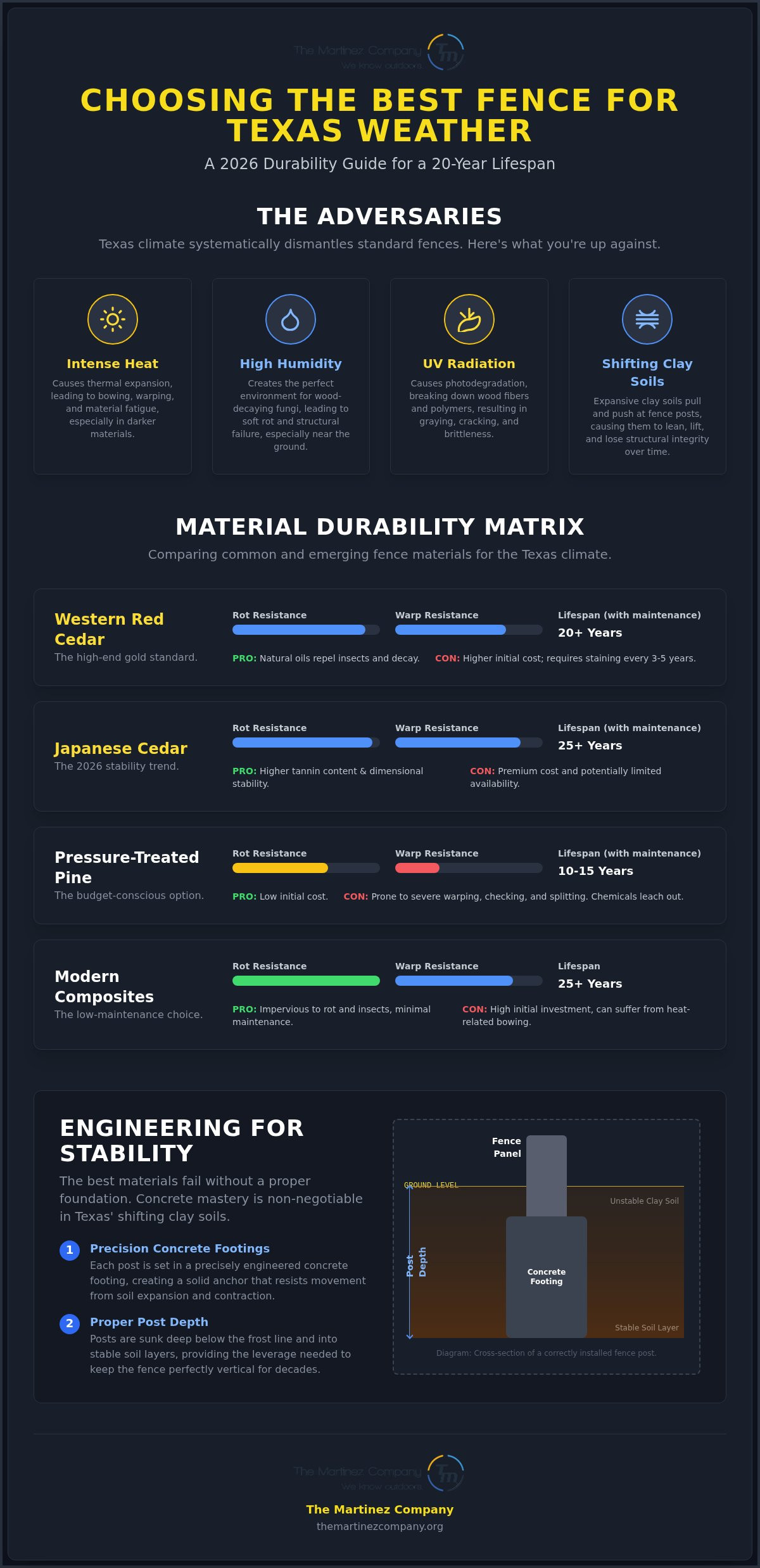
Stability in Texas isn't a suggestion. It's an engineering requirement. Even the best fence material for Texas weather will fail prematurely if the foundation doesn't account for the aggressive movement of expansive clay soil. This soil acts like a sponge, swelling with moisture during spring rains and shrinking into deep fissures during the summer heat. This constant shifting exerts immense lateral pressure on fence posts, eventually leading to the unsightly lean seen in many neighborhoods.
The Foundation: Precision Concrete Footings
Structural integrity begins below the surface. We utilize a bell-bottom footing technique, where the base of the post hole is flared wider than the top. This shape creates a mechanical anchor that prevents the soil's swell-and-shrink cycle from heaving the post upward. To ensure permanence, posts must be set at a depth of 30 to 36 inches, far exceeding the standard 24-inch depth that often fails in our climate. Utilizing high-strength concrete with a minimum 3,000 PSI rating provides the density required to resist moisture penetration and soil acidity. Our background in concrete contractor services allows us to treat every fence post as a precision structural element rather than a simple stake in the ground.
Structural Steel in Wood Fencing
The most common failure point in a wood fence is the ground-level rot of a 4x4 timber post. Even treated wood eventually succumbs to the moisture trapped at the concrete-to-soil interface. We solve this by integrating galvanized steel posts, often referred to as Postmaster-style inserts, into our wood designs. These steel supports are invisible from the front but provide the wind load resistance of a commercial structure. This approach aligns with our perpetual post philosophy. We believe the structural skeleton of your fence should last long after the pickets have reached their natural lifespan.
Precision engineering also requires calculating wind load for high-velocity gusts. We optimize post spacing based on the specific height and material density of your project. This ensures your perimeter remains a rigid, secure barrier regardless of the weather. If you are ready to transition from a temporary fix to a permanent asset, contact us for a professional fence installation that prioritizes structural perfection.
Soil Anchoring: Bell-bottom footings prevent vertical movement during moisture cycles.
Depth Standards: A 30 to 36-inch depth ensures posts reach stable soil layers.
Steel Integration: Galvanized posts eliminate the rot-at-the-base syndrome common in wood structures.
Wind Resistance: Engineered post spacing accounts for the sail effect of privacy panels.
Choosing Your Solution: The Martinez Company Standard
Selecting the best fence material for Texas weather is only the first step in protecting your property. The true value of your investment lies in the technical accuracy of the execution. We don't just help you select the best fence material for Texas weather; we ensure it's installed with the meticulousness required for decade-long performance. At The Martinez Company, we've spent years refining a protocol that prioritizes stability and perfection. We view every project as a transition from a client's abstract vision to a permanent physical structure that enhances both security and curb appeal.
Custom Outdoor Integration
A superior fence does more than mark a property line. It anchors your entire environment. For many homeowners, the perimeter serves as the architectural backdrop for a complete transformation. We specialize in aligning your fence design with broader goals, such as framing a custom pool or securing a high-end kitchen. As an experienced outdoor living space builder, we focus on the synergy between all outdoor structures. We often utilize decorative concrete to bridge the gap between the fence line and your entertainment areas, ensuring a polished finish that radiates professionalism and aesthetic finality.
The Reliable Visionary Approach
Our company was established in 2014 with a clear mission: to provide stability in a landscape that demands it. We've spent over a decade studying how different materials respond to the local climate, from the expansion of polymers to the decay of timber. This history allows us to act as a capable partner, fueling your excitement for the project while providing the security of a seasoned contractor. We manage the entire process from the first point of contact to the final walkthrough. Every post, picket, and footing undergoes rigorous inspection to meet our high standards of craftsmanship. We don't settle for "good enough" because we know the sun and soil won't either. Our goal is to deliver a result that stands as a local institution on your street. Contact The Martinez Company for your precision fence installation and experience the difference that expert engineering makes for your property's future.
Tailored Selection: We match material durability to your specific property goals, whether commercial or residential.
Seamless Management: Our team handles the logical progression of the project from concept to completion.
Structural Integrity: Every installation follows a strict protocol to ensure long-term verticality and strength.
Aesthetic Finality: We focus on the "how" of the build to ensure the "what" remains beautiful for decades.
Investing in Permanent Perimeter Excellence
A fence should be a finality, not a recurring expense. You now understand that selecting the best fence material for Texas weather is a balance of high-grade timber like Japanese Cedar and the precision of structural metal. However, the true difference between a structure that leans and one that lasts for decades is the engineering beneath the surface. From the depth of the concrete footings to the integration of galvanized steel posts, every detail must be calculated to resist our aggressive soil and sun.
Since 2014, The Martinez Company has focused on this intersection of high-end design and structural stability. We specialize in transforming outdoor living spaces into secure, aspirational environments through a commitment to perfection. We believe in the journey from an initial concept to a completed, immovable result that enhances your home's security and value. Don't leave your property's protection to chance or inferior construction methods. Secure Your Property with Professional Fence Engineering and build a perimeter that stands as a testament to quality craftsmanship. Your vision for a perfect outdoor space is within reach.
Frequently Asked Questions
What is the longest-lasting fence material for hot and humid climates?
Ornamental iron and high-performance composites are the longest-lasting solutions. These materials don't rot or warp when exposed to 100°F days and high humidity. While timber has a natural appeal, metal provides a 30-year structural lifespan with zero risk of microbial attack. Choosing these ensures you have the best fence material for Texas weather by prioritizing chemical stability over organic vulnerability. It's the definitive choice for those seeking a permanent perimeter.
Is Western Red Cedar worth the extra cost compared to treated pine?
Western Red Cedar is a superior investment due to its natural tannins and dimensional stability. Pressure-treated pine relies on chemical salts that eventually leach out, leaving the wood vulnerable to the intense Texas sun. Cedar resists warping and twisting far better than pine, which often requires board replacements within five years. The reduced maintenance and longer structural life of cedar justify the initial cost for any high-end residential project.
How do I prevent my fence from leaning in shifting clay soil?
Preventing a lean in expansive clay soil requires setting posts at a depth of 30 to 36 inches. We utilize a bell-bottom footing technique to anchor the post against the soil's vertical heave. Integrating galvanized steel posts into your design also eliminates the structural failure caused by wood rot at the ground line. This engineering-first approach ensures your fence remains perfectly vertical regardless of how much the earth beneath it shifts.
Can vinyl fences withstand the intense UV rays in the South?
High-quality vinyl fences can withstand intense Southern UV rays if they are manufactured from virgin PVC enriched with titanium dioxide. This additive acts as a permanent sunscreen, preventing the material from becoming brittle or yellowing over time. You should avoid cheaper, recycled plastics that lack these stabilizers. When correctly specified, modern vinyl remains one of the best fence material for Texas weather because it never requires staining or painting.
What are the best fence styles for high-wind areas?
Open-picket designs, such as ornamental iron or aluminum, are the most effective styles for high-wind areas. These structures allow air to flow through the fence rather than acting as a sail that catches the wind. If privacy is required, board-on-board wood designs with reinforced steel posts offer better resistance than standard side-by-side panels. Proper post spacing and deep concrete footings are non-negotiable for maintaining integrity during severe storm gusts.
How often should I stain or seal a wood fence to prevent rot?
You should stain or seal a wood fence every two to three years to maintain its protective barrier. The Texas sun leaches natural oils from the timber, while humidity invites fungal growth into the resulting cracks. A high-quality, oil-based stain penetrates the fibers to repel water and block UV radiation. Regular maintenance prevents the checking and splitting that leads to premature structural failure, ensuring your wood fence lasts its full intended lifespan.
Does a metal fence require any maintenance in humid weather?
Metal fencing requires very little maintenance, though you should inspect the powder coating annually for any deep scratches. High humidity can cause rust if the underlying steel is exposed to moisture. Aluminum is naturally corrosion-resistant and is an excellent choice for areas with high moisture levels. Simply washing the fence with water to remove salt or dirt buildup is usually enough to keep the finish looking pristine for decades.
Why is professional concrete work essential for fence longevity?
Professional concrete work is the anchor of your entire project. We use specific PSI ratings and precise depths to ensure the footing can withstand the lateral pressure of shifting soil. Without expert concrete mastery, even the most expensive materials will eventually fail as the posts shift or sink. Our commitment to perfection means we treat every footing as a structural foundation, providing the stability required for a fence to stand for 20 years.


Comments