
4 Fence Materials for High Wind Areas and How to Choose
The strongest-looking fence isn’t always the best at handling wind. In exposed areas, the best fence material for high-wind areas is often paired with a design that lets air pass through, such as chain link or spaced pickets. Solid panels catch more wind. Material matters, but so do post spacing, embedment, and footing depth.
Durability is a natural place to start, but the right choice also depends on the privacy you want, the appearance you prefer, and how much maintenance you’re prepared to do. This guide compares wood, vinyl, composite, and chain link, including how each balances airflow, strength, upkeep, and appearance. Installation details matter too, so consider the whole fence, from visible panels to the posts and footings that anchor them.
Table of Contents
1. What Are the Most Durable Fence Materials for High-Wind Areas?
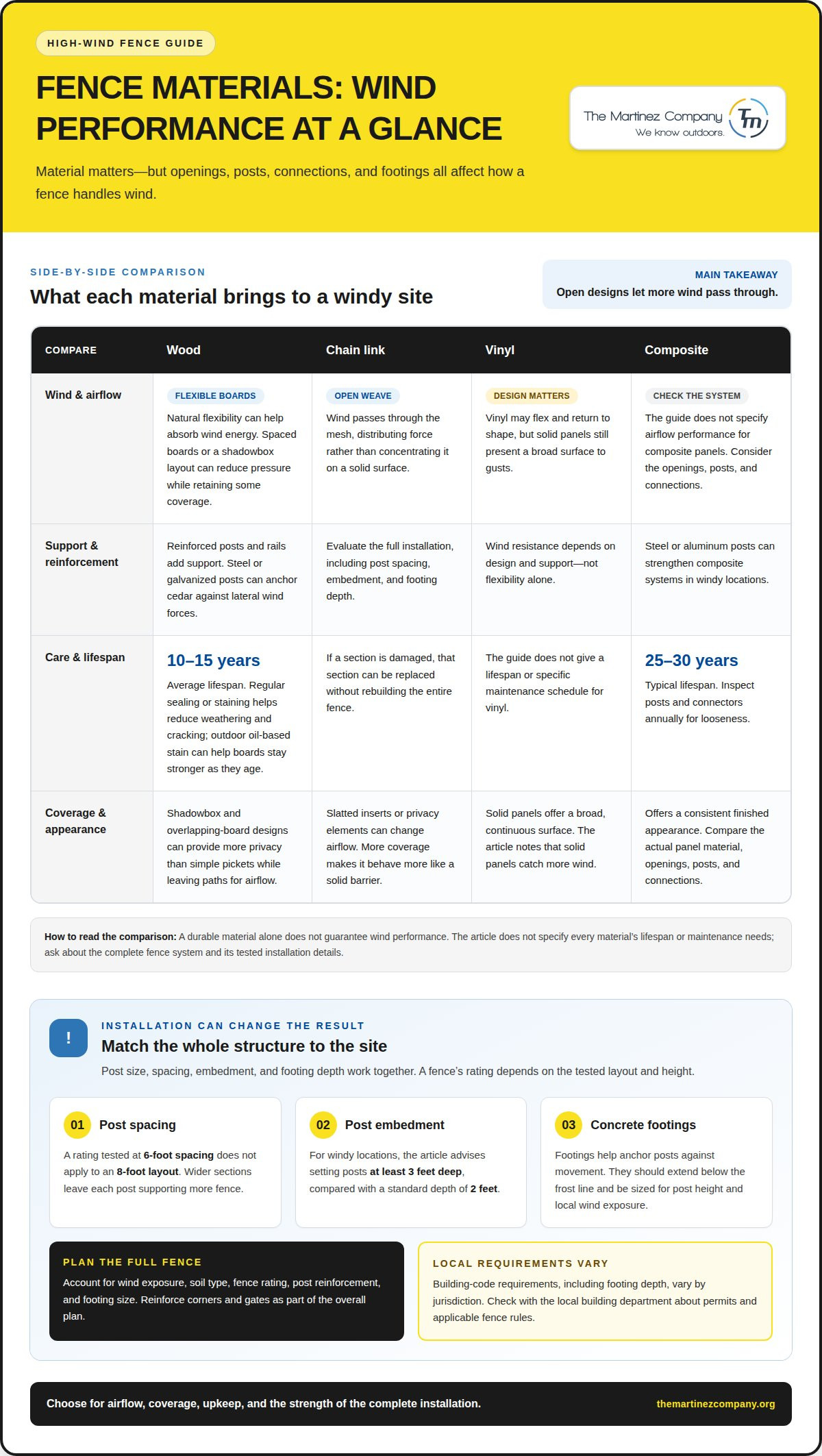
The best fence material for high-wind areas depends on more than panel strength. Wind exposure, fence design, post reinforcement, privacy needs, and maintenance all affect durability. Compare the full structure, from its surface material to its supports, before choosing an option.
Wood has natural flexibility that can help it absorb wind energy instead of resisting every gust. Spaced boards or a shadowbox layout can reduce pressure while retaining some coverage. Reinforced posts and rails add support, and steel or galvanized posts can anchor cedar against lateral wind forces. Wood fences average 10 to 15 years, so regular sealing or staining helps reduce weathering and cracking. An outdoor oil-based stain can help boards stay stronger as they age.
Chain-link fencing lets wind pass through its open weave, distributing force across the mesh rather than concentrating it on a solid surface. If a section is damaged, that section can be replaced without rebuilding the entire fence. Vinyl may flex in the wind and return to its original shape, but solid vinyl panels still present a broad surface to gusts. Design and support matter.
Composite fencing combines a longer lifespan, typically 25 to 30 years, with a consistent finished appearance. Steel or aluminum posts can strengthen composite systems in windy locations. Inspect posts and connectors annually for looseness. The extra durability may appeal to homeowners seeking less frequent replacement, while wood offers a different balance of natural character and ongoing care.
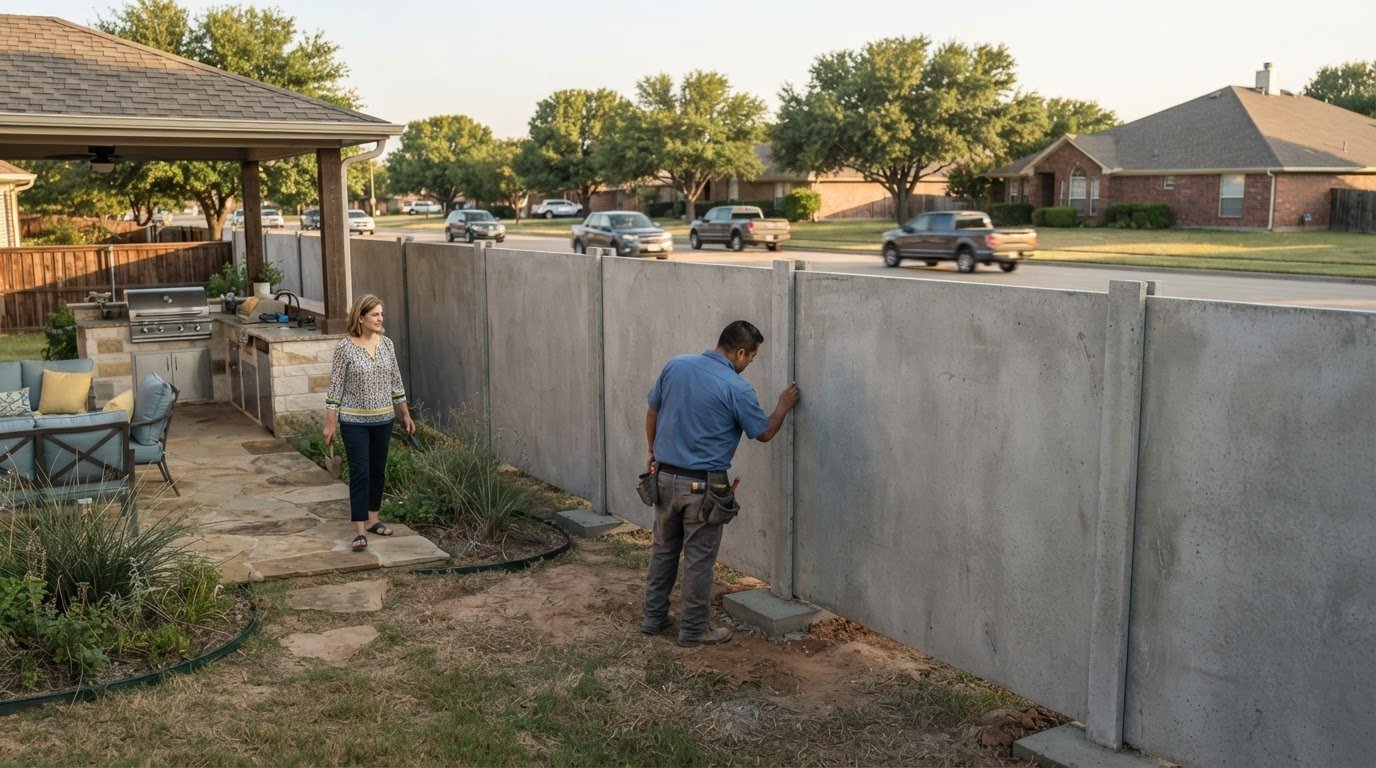
Simulated wood and rock fence systems can resemble natural materials, but appearance alone doesn’t show how a fence handles wind. When comparing systems, identify the panel material, openings, posts, and connections. Check whether damaged panels or mesh can be replaced individually, too. That can shape the long-term maintenance plan for a property with recurring wind exposure.
Building-code requirements, including footing depth, vary by jurisdiction. Before installation, ask the local building department whether a permit is required and which fence rules apply.
2. Fence designs that allow wind to pass through
Fence design affects wind resistance as much as material does. A solid panel blocks airflow, leaving a broad surface for wind to push against. An open or semi-privacy layout lets some air pass through, reducing pressure buildup while providing more coverage than widely spaced pickets.
In a wood shadowbox fence, boards alternate on either side of the rails. Overlapping boards can also leave narrow paths for airflow while providing more privacy than a simple picket fence. These designs balance screening and wind relief, but the size of the gaps and the board arrangement determine how much air can pass through.
Metal fencing can use spaced slats or panels rather than a continuous sheet, allowing airflow and reducing the solid surface exposed to gusts. Open-style aluminum fencing is another option: its rails and pickets let wind pass through, unlike a solid metal barrier. Look for openings built into the design instead of relying on metal strength alone.
Chain-link fencing’s open weave lets wind flow through. Slatted inserts or privacy elements can give it a more finished look, but they also change airflow, so consider how much coverage you add and where. A mostly covered fence behaves more like a solid barrier than open chain link.
Solid privacy fences face greater wind pressure because they block airflow across their full surface. That added force can strain posts, rails, connections, and panels, increasing the risk of damage. Semi-privacy fences allow some airflow and reduce the barrier effect, but their performance still depends on the openings and structural support.
During installation, match the design to the site’s wind exposure and your privacy needs. First choose the amount of coverage, then select a layout with suitable openings and plan the supporting structure for the resulting wind load. Spaced wood boards or open aluminum, for example, allow airflow without making the fence look bare.
3. Post spacing, embedment, and footing depth
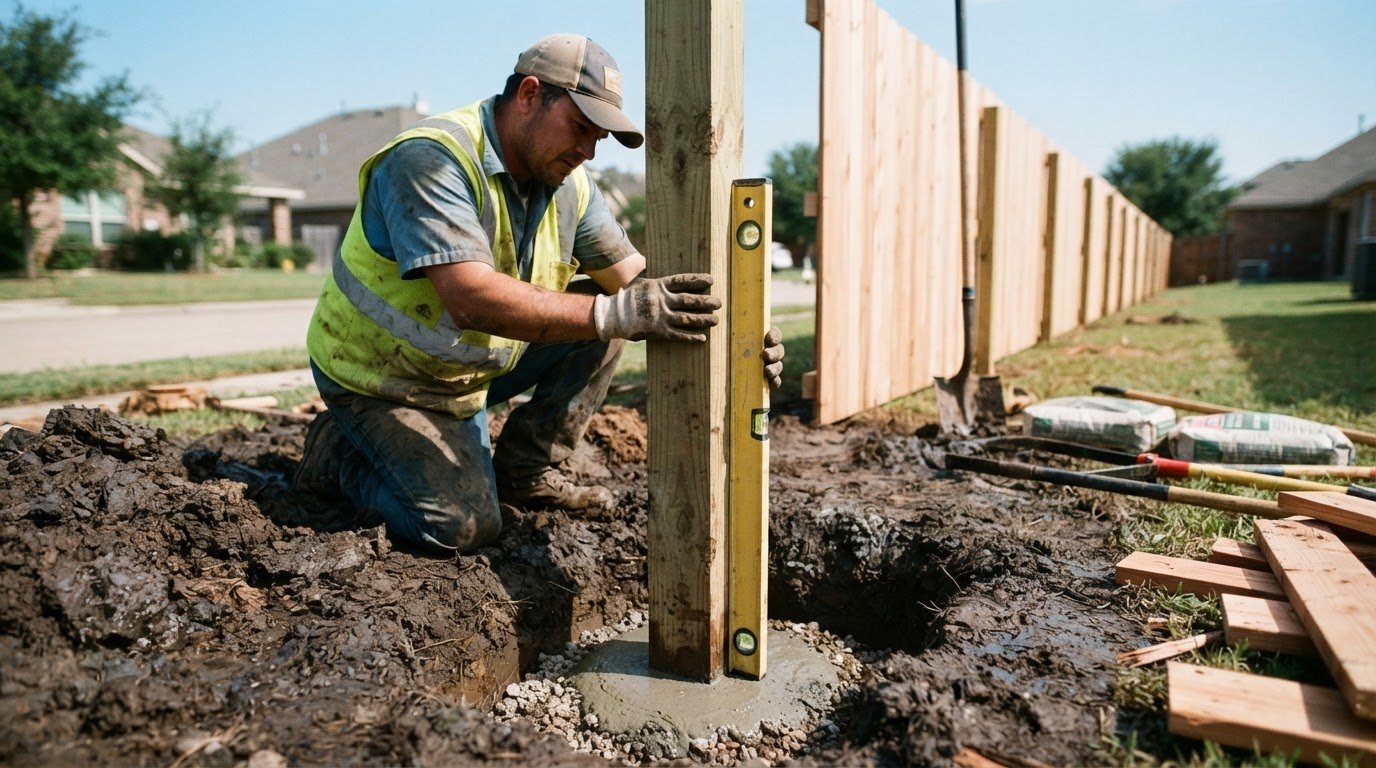
Strong panels still rely on posts that resist wind forces and transfer them to stable footings. Posts in high-wind areas should be set in concrete and deeper than standard. Post size, spacing, embedment, and footing depth work together, so changing one can affect the strength of the entire design.
Spacing must match the tested wind rating. A rating based on 6-foot post spacing doesn’t apply to an 8-foot layout. The certificate also applies only when the installed fence matches its tested spacing and maximum height. Wider sections leave each post supporting more fence, so the rating can’t simply be carried over when dimensions change.
For windy locations, set posts at least 3 feet deep, compared with a standard depth of 2 feet. Post length and exposure also affect embedment, while reinforced posts can add strength where gusts place greater lateral force on the fence. Match the post material and size to the panels they must support.
Concrete footings help anchor posts against movement. They should extend below the frost line and be sized for post height and local wind exposure. Their depth and width affect resistance to shifting, so footing design should account for the fence structure and ground conditions.
Soil type, wind exposure, and the fence’s rating all affect installation. Loose or moisture-sensitive soil can change how securely a footing holds a post. A rated fence, meanwhile, depends on its tested spacing and height. Local wind conditions also inform post reinforcement and footing size. These factors shape the build, not just the panel choice.
Plan the fence as a complete system. Match sections to the applicable rating, set posts in concrete at the required depth, and reinforce corners and gates. Coordinating these details supports stability through changing weather rather than relying on panel material alone.
4. Fence material selection based on needs, budget, and appearance
Start with what the fence needs to do. Solid wood or vinyl panels provide more visual privacy, but their broad surfaces catch more wind. If airflow matters more, consider spaced pickets, open aluminum, or chain link. Match the layout to your property’s exposure before choosing a finish.
Next, weigh durability against upkeep. Composite fencing typically lasts 25 to 30 years, while wood averages 10 to 15 years and benefits from sealing or staining. Aluminum resists rust and needs no painting, but can bend under extreme pressure or debris impact. Steel resists bending, yet can rust if it isn’t galvanized. The right structural choice depends on the wind exposure and maintenance you’re prepared to manage.
Appearance can help narrow the options. Wood has natural variation and can be installed with spaced boards or a shadowbox pattern. Composite offers a consistent finish, while ornamental aluminum keeps sightlines open with rails and pickets. For a wood-like or rock-like look, examine the actual panels and supports, not just the surface. Make sure the design still allows suitable airflow and uses sturdy posts.
How much does wind-resistant fencing cost per linear foot by material? There’s no single rate. Estimates depend on material, fence height and length, design, site exposure, post spacing, footing depth, and installation requirements. Because cost depends on the project, compare the complete build after receiving a quote rather than judging by panel material alone.
Use a simple decision order: set your privacy and appearance priorities, choose the airflow level, then balance maintenance and durability against the structural demands of your site. A homeowner prioritizing low-maintenance open sightlines may favor ornamental aluminum; someone seeking a natural look may choose reinforced, spaced wood. For a fence plan shaped around your property, plan your fence installation.
The Martinez Company: Fence Installation
The Martinez Company installs fences for residential and commercial properties, bringing material and design choices together in a completed structure. If you’re weighing privacy against airflow or comparing the appearance and upkeep of different materials, include those priorities in the project plan.
A high-wind fence depends on more than its visible panels. Material, layout, post spacing, embedment, and footing depth need to work together for the site and intended use. The Martinez Company can help plan these details as part of a residential or commercial contracting project, considering both function and appearance.
Ready to turn your comparison into a fence plan? Contact The Martinez Company to discuss your project.
Turn Your Fence Plan Into a Lasting Structure
Choosing the best fence material for high-wind areas is a starting point, not the whole design decision. Next, shape a plan around your property, the coverage you want, and the balance between appearance and practical performance. A clear project brief helps turn those priorities into a finished fence that complements your outdoor space.
The Martinez Company includes fence installation in residential and commercial contracting projects and can connect the design with broader outdoor living spaces. This helps keep the fence’s purpose, setting, and appearance in view as the project takes shape. Decide what matters most for your property, then move forward with a plan built around those goals.
Ready to discuss your project? Contact The Martinez Company and take the next step toward a fence designed for your space.
Frequently Asked Questions
What Are the Most Durable Fence Materials for High-Wind Areas?
There isn’t one best fence material for high-wind areas for every property. Chain link suits homeowners who prioritize airflow and straightforward section replacement. Wood offers a natural look but needs ongoing maintenance, while vinyl and composite create different finished appearances. Compare each system against your privacy needs, repair preferences, and site exposure, then consider whether its posts and connections suit the material.
What Makes the Best Privacy Fence for High Winds?
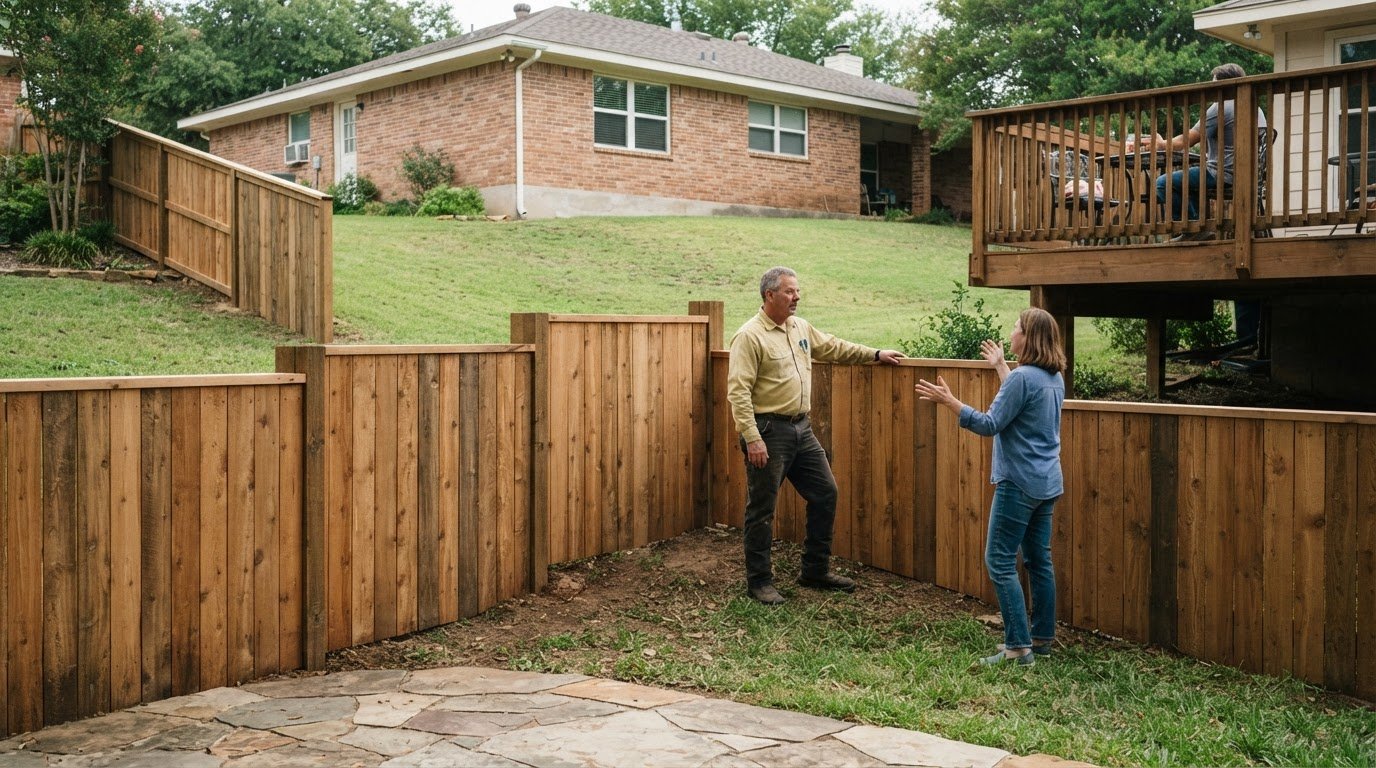
A privacy fence on a windy, exposed boundary needs to balance screening with openings that reduce wind pressure. Semi-privacy layouts provide visual coverage while allowing some airflow, unlike uninterrupted panels. Consider where privacy matters most: a property might use more screening beside a sheltered patio and a more open design along an exposed edge, if the overall layout suits the site.
Is Wood Fencing a Good Option for High Winds?
Yes, wood can work well when its design and support suit the exposure. If you want a natural appearance, consider spaced boards and reinforced posts rather than assuming a solid layout is the only choice. Include ongoing care in your decision: sealing or staining helps protect boards, and damaged components should be addressed before they weaken adjacent sections.
Why Not Just Get Fencing from a Box Store?
A box store can be one source of fence materials, but the purchase location alone doesn’t determine wind performance. Compare the complete system: panels, posts, connections, spacing, and installation requirements. A panel rating, for example, applies only to the tested configuration. Match the product’s stated conditions to your planned layout rather than judging by material or appearance alone.
What Fence Materials Perform Best in High-Wind Areas?
Open designs, including chain link and spaced or ornamental pickets, let more air through than solid panels, making them practical when airflow is a priority. Wood, vinyl, and composite can also suit windy properties when their design and support are appropriate. Start with the site’s exposure and the privacy you want, then compare materials against those needs rather than choosing by appearance alone.
What Wind Speeds Can Vinyl, Wood, Metal, and Composite Fences Withstand?
There isn’t a single wind-speed limit that applies to every vinyl, wood, metal, or composite fence. A wind rating is tied to the tested fence height and post spacing; for example, certificates commonly cap height at 4 or 5 feet. Treat a rating as relevant only when the installed fence matches its tested configuration, rather than assuming a material has one universal mph limit.
Comments